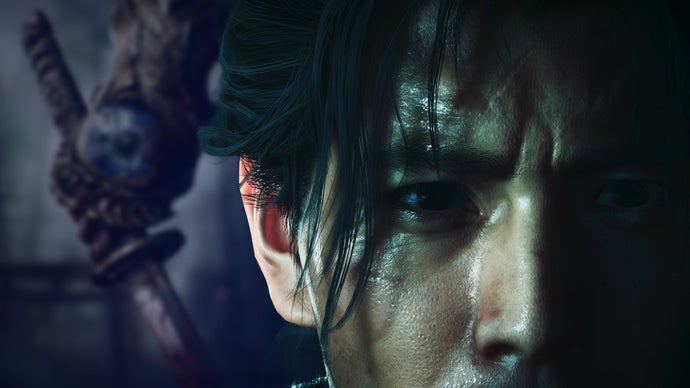
Capcom's Onimusha: Way of the Sword blends the minimalist philosophy of Miyamoto Musashi with a brutal, momentum-based combat system. It's a challenging journey through a war-torn Kyoto.
- Deeply rooted in the philosophy of Miyamoto Musashi's 'The Book of Five Rings'.
- Combat system focusing on momentum and high-risk 'Issen' counter-strikes.
- Authentic motion capture developed with professional swordsmen.
- A punishing difficulty curve that rewards observation over aggression.
Onimusha: Way of the Sword is more than just another action-adventure title; it is a digital manifestation of the life and strategic mind of Miyamoto Musashi, the legendary 16th-century swordsman. Capcom has cleverly internalized Musashi's belief that 'less is more,' resulting in a game that avoids over-complication in favor of artisanal precision and minimalist brilliance.
The core of the experience lies in its combat. By employing actual swordsmen for motion capture and refinement, Capcom has created a system where the blade feels heavy and purposeful. The gameplay revolves around the 'Issen'—a precision counter-strike that interrupts enemy attacks. Unlike many modern action games, Musashi is designed as a reactor rather than an instigator, making the act of reading an opponent's 'tell' far more valuable than mindless aggression.
Why This Matters
BozokMedia analysis shows that while titles like Sekiro or Nioh emphasize acrobatic speed and reflex-heavy action, Onimusha: Way of the Sword prioritizes aptitude and application. It transforms the act of gaming into a study of martial arts, forcing the player to adopt the mindset of a strategist. This shift from 'button-mashing' to 'mind-reading' sets a new benchmark for historical role-playing games.
"This game isn't just a power fantasy; it's a psychological duel where a single lapse in concentration leads to immediate failure."
The setting—a crumbling, atmospheric Kyoto—serves as a haunting backdrop for the struggle against the Genma, nefarious beings seeking dominion over the human and demon realms. While the exploration is semi-linear and some side missions can feel repetitive, the world-building effectively conveys the stakes of the conflict.
To guide the player through this brutality, Capcom utilizes a sophisticated visual language. Red glows indicate undodgeable attacks, while blue denotes dodge-only moves. While some might call these 'Simon Says' cues, they actually create a fair environment where the difficulty feels earned rather than arbitrary.
Gameplay Comparison
| Feature | Onimusha: Way of the Sword | Sekiro/Nioh |
|---|---|---|
| Core Focus | Strategy & Counter-striking | Reflexes & Acrobatics |
| Combat Pace | Calculated & Lethal | Fast & Aggressive |
| Inspiration | Historical Philosophy | Dark Fantasy Mythology |
Frequently Asked Questions
Q1: Is the game accessible for newcomers to the genre?
A: It is intentionally difficult. Newcomers will find a steep learning curve that requires significant patience.
Q2: What is the significance of the 'Book of Five Rings' in the game?
A: The game's mechanics, especially the emphasis on observation and intuition, are directly inspired by Musashi's famous strategic manual.