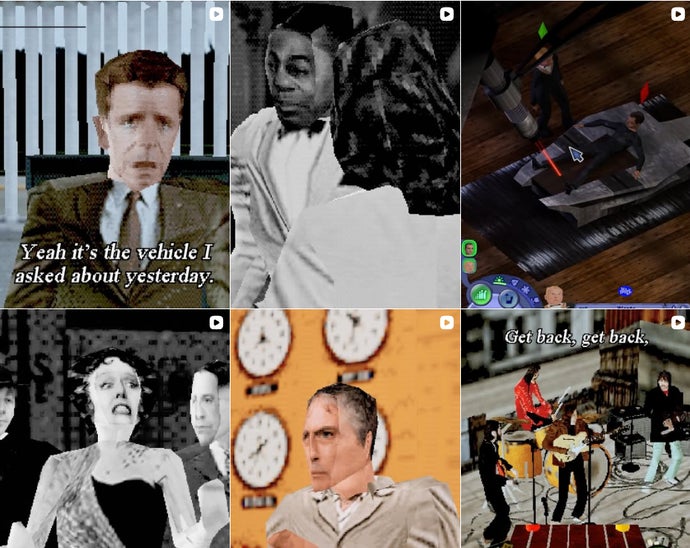
Digital artist Miles Buckle is blurring the lines between cinematic masterpieces and retro video games. From The Shining to Twin Peaks, witness how he reimagines legends through the lens of low-poly aesthetics.
- Miles Buckle reimagines cinematic classics using video game visual languages.
- His work utilizes iconic titles like The Sims 2 and SimCity 2000.
- He explores the connection between graphical fidelity and human memory.
Navigating through Miles Buckle's Instagram feed feels less like scrolling social media and more like stumbling into a parallel universe. In this digital realm, the titans of cinema—David Lynch, Alfred Hitchcock, Federico Fellini, and Stanley Kubrick—are reborn through the stilted, nostalgic visual language of vintage video games.
The execution is nothing short of surreal. Buckle has recreated the terrifying "here's Johnny" scene from The Shining using the quirky, comedic aesthetic of The Sims 2. He has even used the landscapes of SimCity 2000 to tell the opening sequence of Twin Peaks. These are not just parodies; they are "perfect fever dreams" that exist only within the boundaries of these short, evocative clips.
Why This Matters
BozokMedia analysis shows that Buckle’s work transcends mere internet memes. He is engaging in a sophisticated dialogue between medium and memory. By using low-poly graphics, he mimics the way human memory functions—vivid at first, but becoming increasingly pixelated and fragmented as we retreat further into the past.
Buckle’s artistry lies in his ability to justify stylistic choices through narrative, rather than just technical limitations.
A student of graphic communication design at Central St. Martin's in London, Buckle’s journey began with Minecraft and Blender. His university project, Nights Bridge, utilized a refurbished 90s PC to explore how graphical fidelity correlates with the clarity of memory. In his vision, a hyper-realistic present transitions into PS1-era graphics as memories fade, eventually becoming a simple side-scroller.
Despite the brilliance of his work, the specter of copyright looms large. Many of his most ambitious experiments, such as his Twin Peaks fan game, have been removed from platforms like itch.io due to legal restrictions. This highlights a growing tension in the digital age: the struggle between transformative fan art and strict intellectual property laws.
Ultimately, Buckle challenges the industry's perception of retro aesthetics. While many assume 8-bit or low-poly styles are merely the hallmark of small indie teams, Buckle proves they can be deliberate, high-concept stylistic decisions used to evoke specific emotional responses.
Frequently Asked Questions
1. What inspired Miles Buckle's unique art style?
His obsession with the limitless creativity of tools like Blender, combined with an interest in how video games represent reality, drove his low-poly approach.
2. Why can't we play all of his projects?
Due to the use of copyrighted cinematic elements and complex engine exports, many of his works remain non-playable digital art pieces.