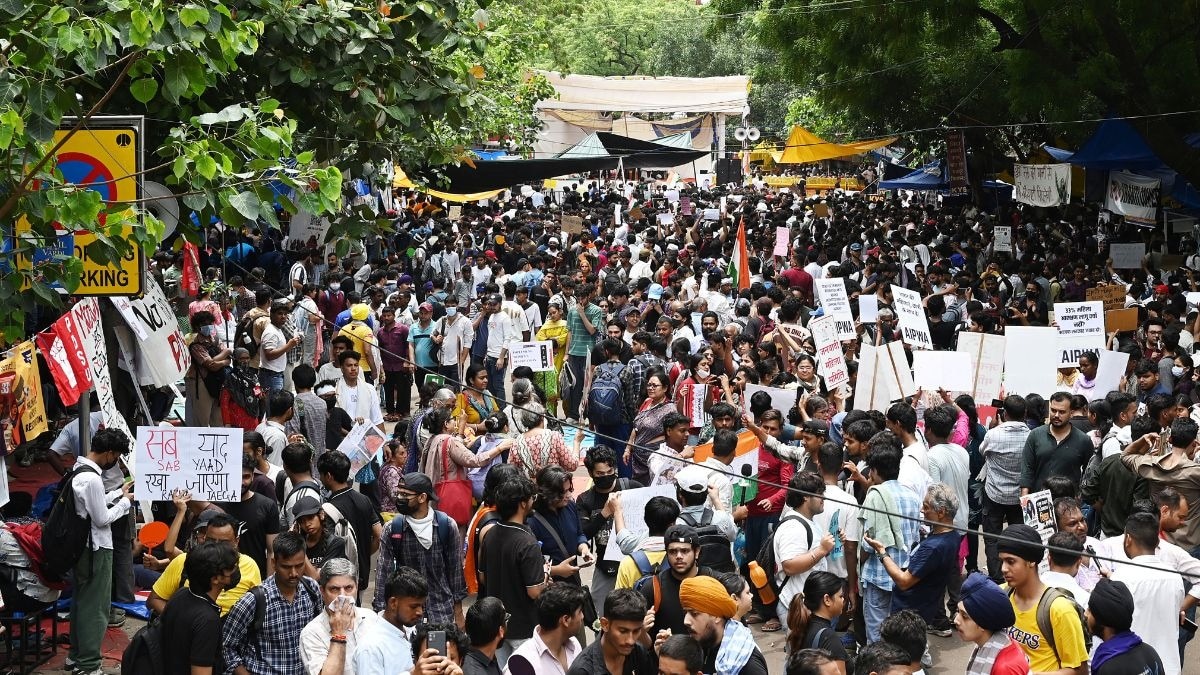
Thousands gathered at Jantar Mantar demanding education reforms, with volunteers providing continuous water, food, and medical aid. The protest's energy remained high despite heat and police presence.
Key Takeaways
- Over 10,000 participants gathered at Jantar Mantar
- Escalating demand for comprehensive education reform
- Volunteers supplied nonstop water, food, and first‑aid
On July 22, Delhi’s historic Jantar Mantar turned into a massive rally ground. Despite sweltering heat and humidity, students, exam aspirants, and ordinary citizens converged to voice their demand for overhauling the education system.
The crowd ranged from schoolchildren to working professionals, all holding placards, the Indian flag, and copies of the Constitution. Many carried books, water bottles, and even the tricolour, symbolizing unity across diverse backgrounds.
Volunteers stationed near the stage kept the crowd refreshed with ORS, cold drinks, pizza, samosas, fruits, and more. A young man repeatedly fanned others with a handheld fan, creating a rotating breeze that kept participants comfortable.
Every time police passed, chants of “loser, loser” echoed, yet the organizers urged the crowd to ignore the police and focus on the global audience watching their peaceful protest.
Why This Matters
BozokMedia analysis shows that the movement has expanded beyond exam‑takers to include professionals and rural students, highlighting a collective responsibility to restore trust in the education system.
"Without education reform, India's future remains precarious," says education policy expert Prof. Ajay Singh.
Frequently Asked Questions
Question 1: What is the primary goal of the protest?
Answer: To demand transparency, accountability, and systematic changes in the Indian education and examination framework.
Question 2: Are any political parties officially involved?
Answer: The stage has declared a non‑political stance, though various civil society groups are present.