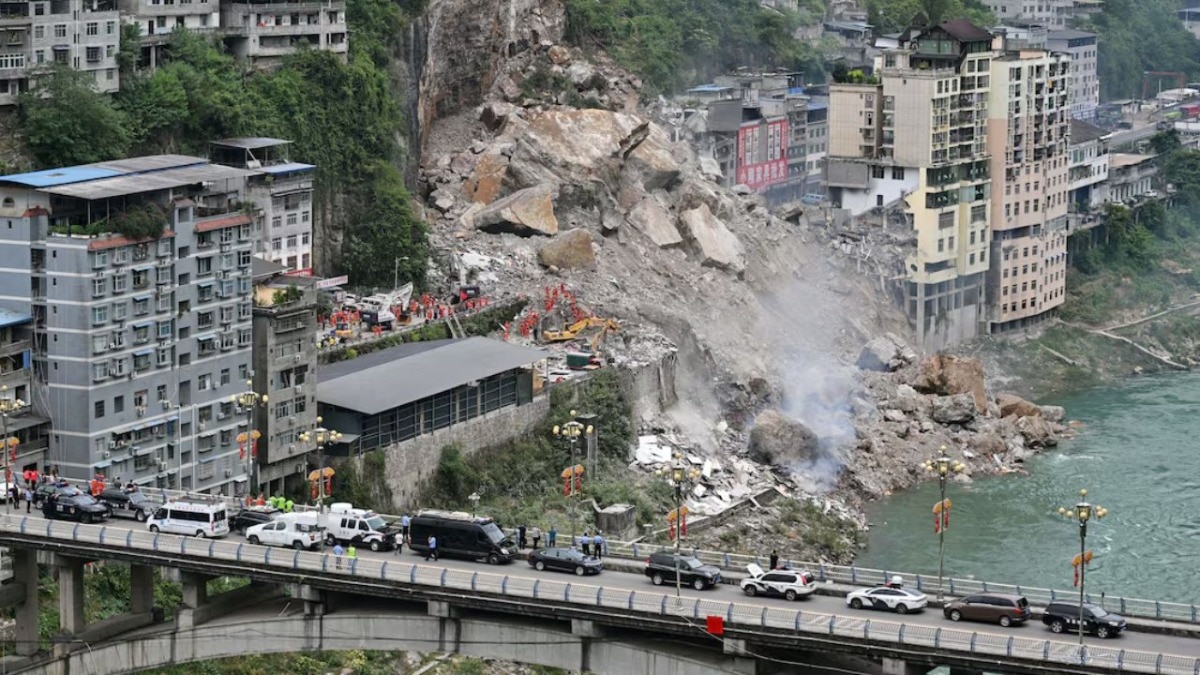
A sudden landslide in Chongqing, southwest China, has claimed at least 11 lives, injured 10 and left 50 people still missing. Rescue teams continue intensive search operations amid challenging conditions.
Key Takeaways
- 11 confirmed deaths
- 50 people still missing
- 10 injured individuals
On July 17, a massive landslide struck the mountainous outskirts of Chongqing in southwest China, killing at least 11 people and injuring ten. State media reported that 50 individuals remain unaccounted for as rescue crews scramble to locate them.
China’s official Xinhua news agency confirmed that specialized rescue teams are still combing the debris for bodies and survivors. The death toll, initially reported at eight, was later revised upward to eleven as more victims were identified.
Local authorities have mobilized emergency shelters, medical aid, and evacuation routes for affected residents. The incident is linked to heavy rainfall that saturated the slope, weakening its stability.
Why This Matters
BozokMedia analysis shows that the frequency of landslides in China's mountainous regions has risen by 15% over the past five years, underscoring the urgent need for improved early‑warning systems and infrastructure resilience.
"Intense precipitation combined with inadequate slope reinforcement is the primary driver behind such catastrophic landslides," says geotechnical expert Dr. Li Wei.
Frequently Asked Questions
Q1: Are rescue operations still ongoing?
A: Yes, specialized teams continue to search for the missing amid difficult terrain.
Q2: What caused the landslide?
A: Excessive rainfall and unstable geological conditions are identified as the main triggers.


