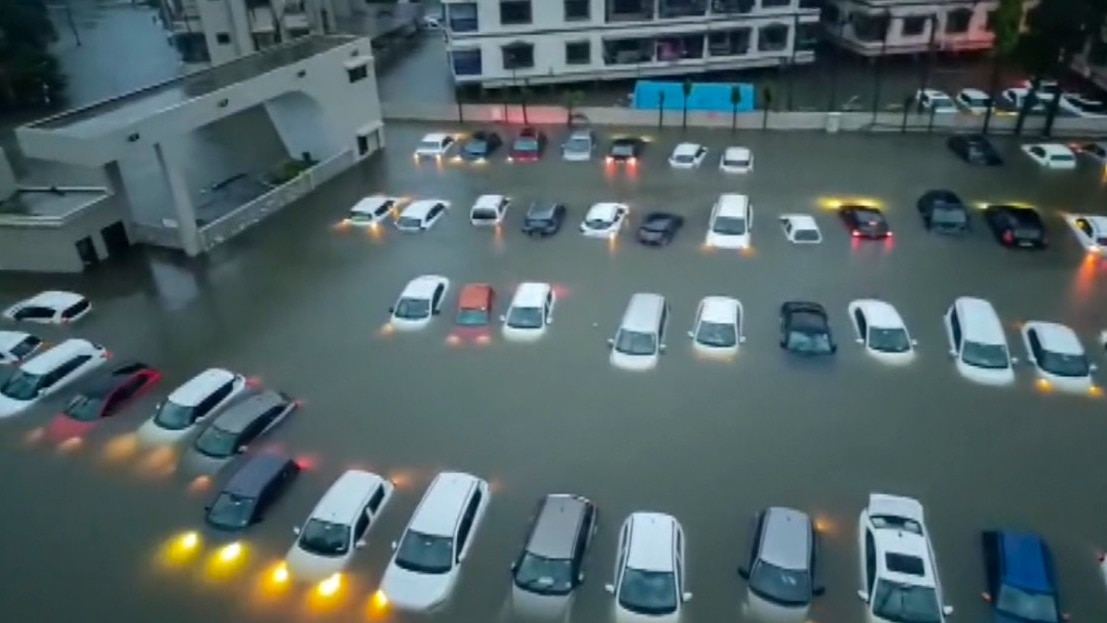
Severe monsoon rains have triggered catastrophic flooding across Gujarat, Maharashtra and Jammu‑Kashmir. Over 1,200 people have been rescued in Valsad while dozens of vehicles are submerged and emergency teams race against rising waters.
Key Takeaways
- Valsad recorded >1,100 mm rain in 24 hrs, rescuing 1,200+ people
- Saurashtra and Surat face several feet of water, rescue boats deployed
- Central government mobilised NDRF, SDRF, Air Force and Coast Guard assets
Current Flood Situation
South Gujarat’s Valsad district saw more than 1,100 mm of rain within a single day, submerging streets and parking lots. Cars, buses and even school vans are now floating, their roofs the only visible parts. In Maharashtra’s Palghar and Vasai, water levels rose several feet, while Jammu‑Kashmir reported flash floods and landslides.
Over 1,200 residents have been rescued across the state, with additional thousands shifted to relief camps. Heavy rain also hit Surat, Navsari and neighboring districts, forcing the deployment of rescue boats and helicopter teams.
Government Response and Relief Operations
Prime Minister Narendra Modi spoke with Gujarat’s Chief Minister Bhupendra Patel, assuring full central assistance. Home Minister Amit Shah also pledged resources for Valsad and other hard‑hit areas. NDRF, SDRF, Indian Air Force and Coast Guard units are on high alert, conducting swift rescue and evacuation missions.
In Surat and Navsari, temporary shelters have been set up for thousands, schools remain closed, and several highways are temporarily shut down. Dam overflows have been reported, prompting higher‑level alerts in multiple villages.
Historical Background
India’s monsoon season traditionally spans June‑September, but climate change has intensified rainfall intensity in recent decades. The 2019‑2020 monsoon saw record‑breaking rains in Gujarat and Maharashtra, causing widespread flooding and economic loss. Experts warn that this year’s events follow the same escalating trend.
Why This Matters
BozokMedia analysis shows that recurring monsoon‑driven floods not only threaten lives but also disrupt agriculture, industry and infrastructure, slowing economic growth and straining public finances.
"Community participation is the strongest asset in flood management, yet it requires robust national policy support," says climate specialist Dr. Arvind Singh.
Frequently Asked Questions
Q1: Can the existing flood‑warning system prevent such disasters?
A: Alerts are rapid, but gaps in evacuation planning and infrastructure often magnify damage.
Q2: What is the biggest challenge for relief teams?
A: Accessing inundated areas, restoring essential services, and providing sustainable rehabilitation for displaced families.