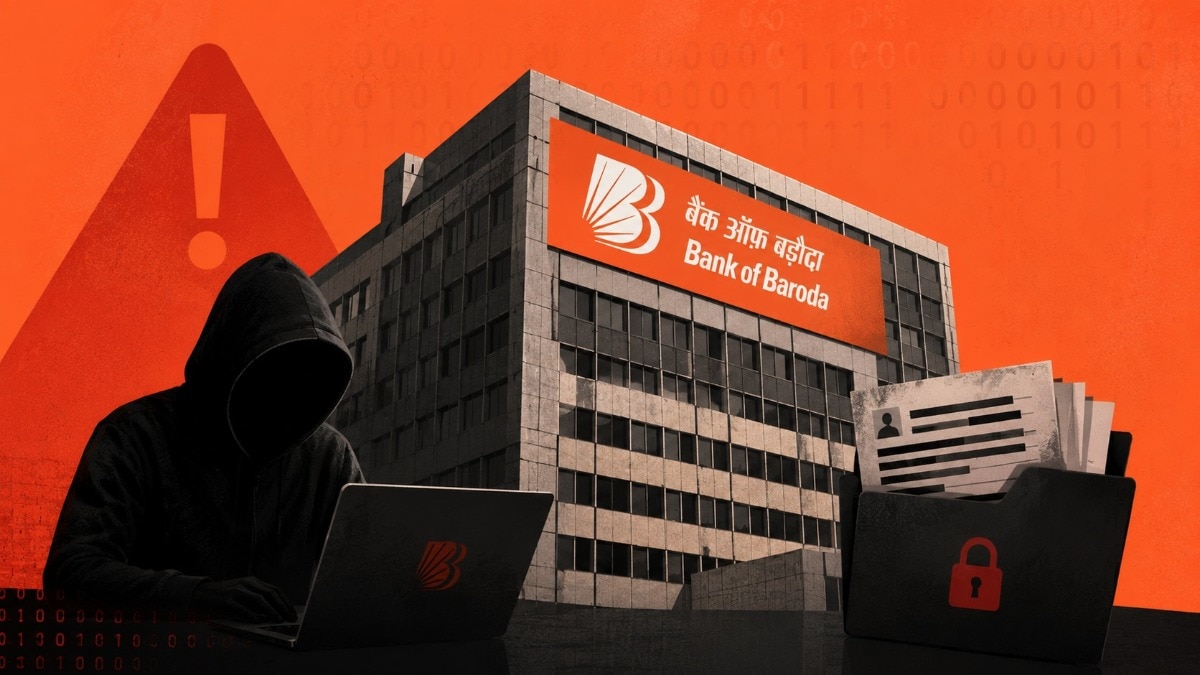
Nearly 1TB of Bank of Baroda customer data is alleged to have surfaced online, sparking fears of fraud. Experts warn that phishing, not direct hacking, is the immediate threat. Customers should change passwords, enable two‑factor authentication and monitor their accounts closely.
Key Takeaways
- Nearly 1TB of customer data allegedly exposed online.
- Immediate risk is phishing, not direct account theft.
- Customers should update passwords, enable 2FA, and monitor accounts.
Scope of the Leak
Reports indicate that approximately 1TB of data linked to public‑sector lender Bank of Baroda has appeared on the internet. The compromised dataset reportedly contains customer names, Aadhaar numbers, account details, loan records, internet‑banking credentials and other sensitive information. The bank says it is investigating the claim but has not yet confirmed the authenticity of the leak.
Is Your Money Safe?
The short answer is yes—in most cases. Modern banking platforms employ multiple layers of security; merely possessing a name or account number does not enable money withdrawal. Banks rely on login passwords, transaction passwords, UPI PINs, OTPs, debit‑card PINs, device authentication, behavioural fraud detection and real‑time transaction monitoring. These safeguards mean that a single piece of leaked data is rarely enough to compromise an account.
The Bigger Threat: Phishing
Ironically, the greatest danger after a data breach is not a hacker breaking into your account, but a fraudster convincing you to hand over the final credential. Using leaked personal details—such as your name, mobile number, branch, or partial account number—attackers can pose as Bank of Baroda officials, request OTPs, or direct you to malicious links. Once they obtain an OTP, they can log in and move funds.
Immediate Steps for Customers
1. Change passwords – Update both internet‑banking and mobile‑banking passwords immediately. Choose a long, unique password that avoids birthdays, names or simple sequences. 2. Enable two‑factor authentication (2FA) – Wherever possible, activate 2FA so that a password alone is insufficient for access. 3. Turn on all security features – Keep biometric authentication, device‑based checks and transaction alerts switched on. 4. Monitor your account regularly – Do not wait for the monthly statement. Review the app daily for unfamiliar transactions, failed login alerts or changes to registered details. Early detection of small, test transactions can prevent larger fraud. 5. Be cautious of phone calls – No legitimate bank employee will ever ask for your OTP, ATM PIN, CVV, UPI PIN or internet‑banking password over the phone.
Why This Matters
BozokMedia analysis shows that a breach of this magnitude can erode public trust in the banking sector, prompting regulators to tighten data‑privacy norms across India.
"After a data leak, phishing attacks become dramatically more effective; customers must stay vigilant," says cybersecurity expert Anjali Singh.
Frequently Asked Questions
Q1: Can thieves instantly steal money from my account after the leak?
A: No. The leaked information alone does not grant access; additional authentication steps are required.
Q2: How can I identify a phishing call?
A: If anyone asks for an OTP, PIN, or password, hang up and verify the request through the official banking app or helpline.