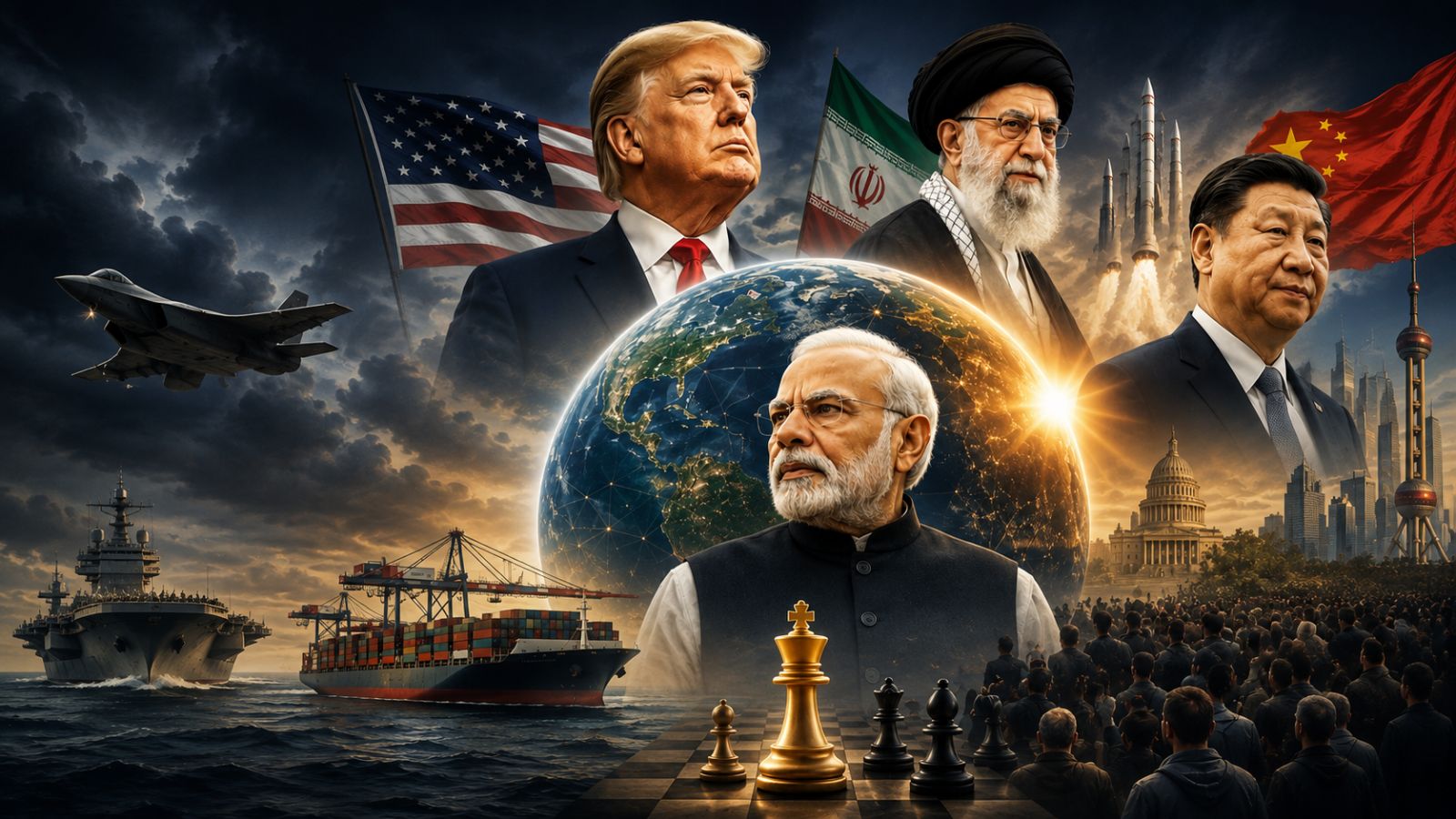
Public intellectuals Pratap Bhanu Mehta and C. Raja Mohan discuss the Iran war, US‑China rivalry, and India’s strategic choices, linking domestic reforms to global power dynamics.
Key Takeaways
- Long‑term implications of the Iran conflict
- India’s strategic position amid US‑China rivalry
- Domestic reforms will shape India’s global role
Renowned scholars Pratap Bhanu Mehta and C. Raja Mohan, joined by Anant Goenka, engaged in a wide‑ranging conversation about the Iran war, America’s shifting role, China’s rise, and India’s place in a fragmented international order. Their dialogue spans politics, philosophy, arts, economic competitiveness, and democracy.
The Iran war is framed not as a simple win‑lose match but as a question of long‑term outcomes. While the regime survived, survival alone does not equate to victory; economic sanctions, social unrest, and internal power struggles are equally decisive.
The United States commands an economy close to $31 trillion, dwarfing Iran’s sub‑$0.5 trillion GDP. This structural advantage makes American sanctions severe, yet military might cannot indefinitely offset economic weakness.
Why This Matters
BozokMedia analysis shows that India must strengthen economic reforms, institutional resilience, and a balanced foreign‑policy approach to become a credible mediator in the evolving global power contest.
"Economic stability and democratic institutions will be the decisive factors in the next global power balance."
Historical Background
The 1979 Iranian Revolution altered regional power structures, while the Cold War cemented a bipolar world. Today, China’s rapid ascent and India’s economic growth challenge that old dichotomy, ushering a more multipolar order.
Frequently Asked Questions
Q1: How might India’s foreign policy shift after the Iran conflict?
A: India is likely to pursue a more active role in multilateral forums, balancing economic cooperation with security partnerships.
Q2: Which side will India align with in the US‑China rivalry?
A: India will prioritize strategic autonomy, seeking to engage both powers while safeguarding its own interests.