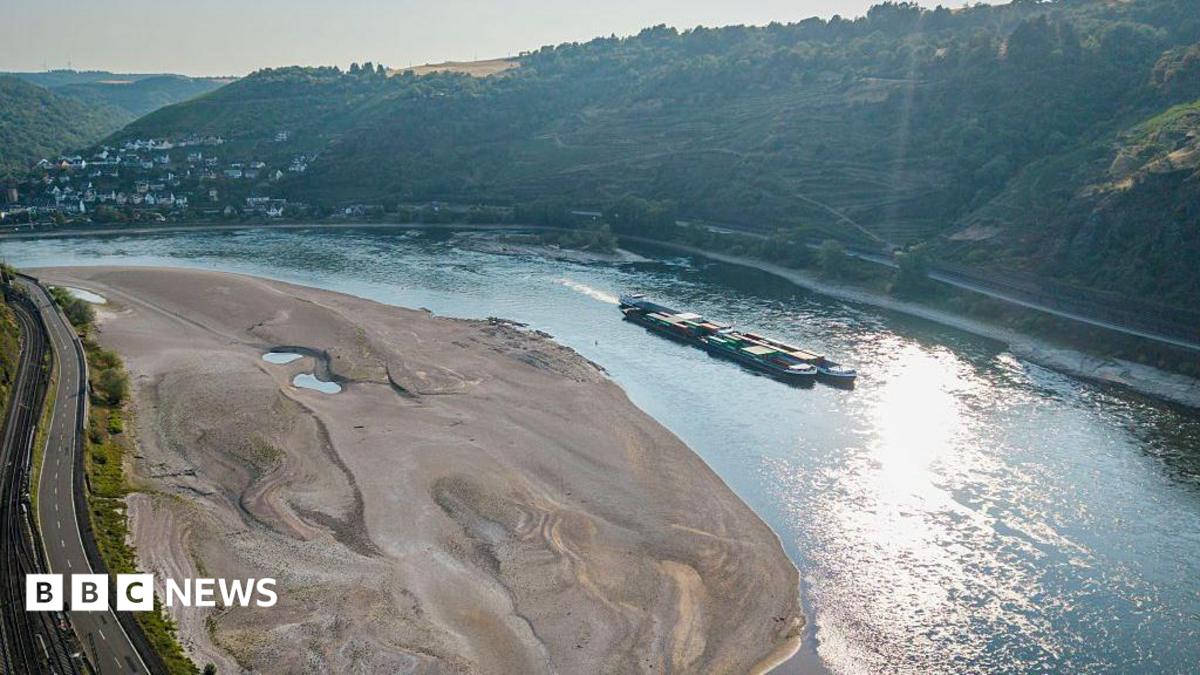
The Rhine, along with the Danube and Po, has reached unprecedented low water levels, disrupting freight transport and reducing power generation across Europe. Heatwave conditions are expected to persist, amplifying economic and ecological risks.
Key Takeaways
- Rhine River reaches historic low levels in Germany and the Netherlands.
- Danube and Po also record minimum water levels, affecting energy and agriculture.
- Heatwave may keep temperatures above 40°C for a week, raising economic losses.
Historical Background
The Rhine, originating in the Swiss Alps and emptying into the North Sea, has long been one of Europe's busiest waterways. While seasonal fluctuations are normal, this summer’s heatwave has driven water levels to an all‑time low.
The Danube, flowing through ten countries, and Italy’s Po river are facing similar crises. The Danube hit its lowest level in 30 years, forcing Hungary to shut down its sole nuclear plant. In the Po Valley, saltwater intrusion threatens both ecosystems and irrigation for farmers.
| River | Length (km) | Low‑Water Stations (%) |
|---|---|---|
| Rhine | 1,230 | 44% extremely low |
| Danube | 2,850 | 78% extremely low |
| Po | 652 | High drought alert |
Why This Matters
BozokMedia analysis shows that falling water levels will not only hike freight costs but also strain Europe’s industrial supply chains. Reduced cargo loads and navigation limits mean higher shipping expenses and potential bottlenecks for downstream manufacturers.
"These record lows highlight the direct impact of climate change on vital waterways and underscore the urgent need for adaptive water‑management policies," said climate scientist Dr. Anna Müller.
Frequently Asked Questions
Question 1: Will navigation on the Rhine be completely halted?
Answer: Not entirely, but cargo volumes will drop and navigation will be severely limited.
Question 2: How will the drought affect Europe’s energy production?
Answer: Lower water availability hampers hydroelectric output and cooling for nuclear plants, potentially driving up electricity prices.
