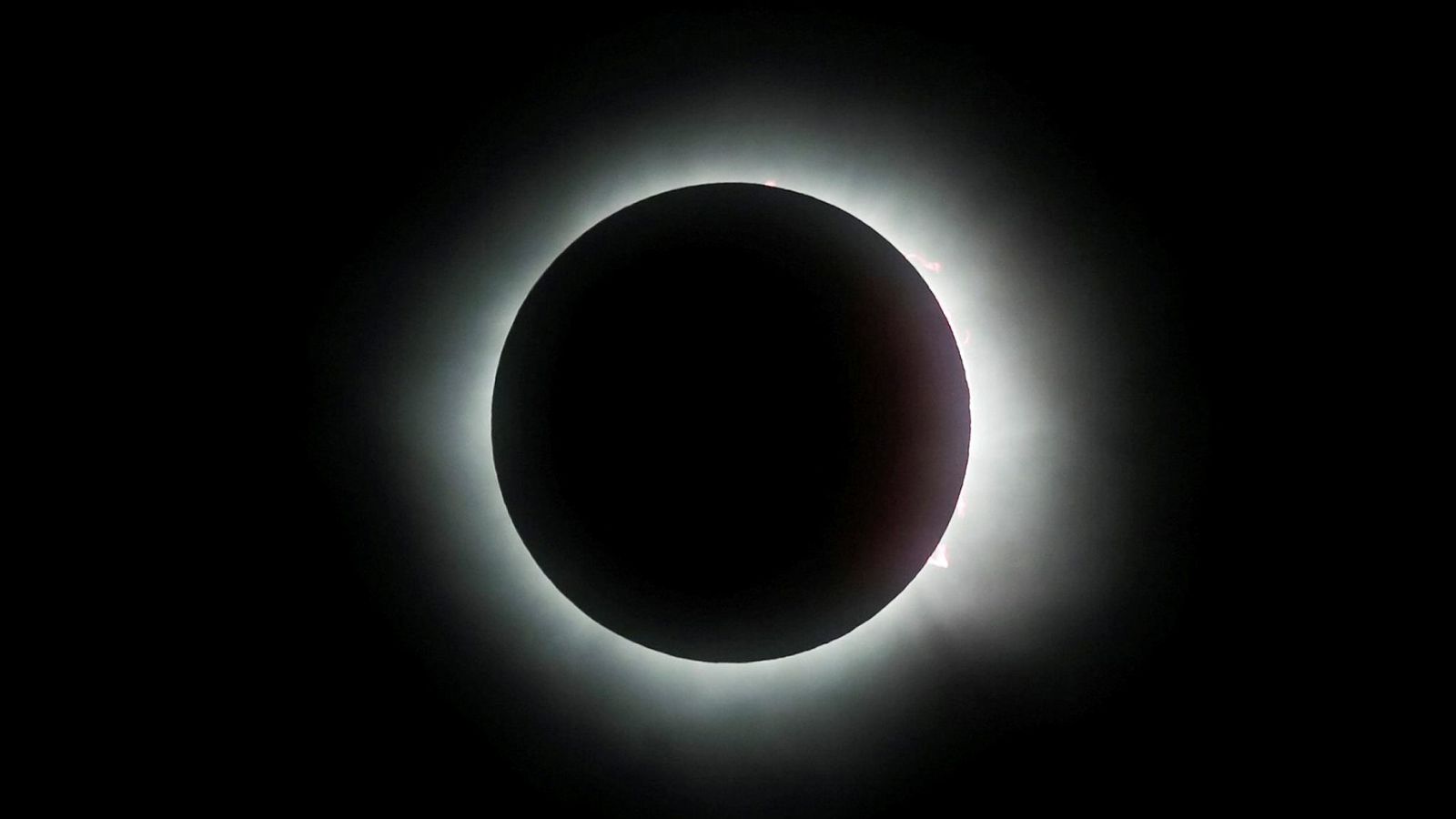
On August 12, a perfect alignment of the Sun, Moon, and Earth will produce a total solar eclipse visible from Spain, Iceland, and Greenland. The maximum totality will last 2 minutes 18 seconds, making it the longest total eclipse in the region in a century. Scientists and the public alike are gearing up for this rare celestial event.
Key Takeaways
- August 12 total solar eclipse
- Up to 2 minutes 18 seconds of totality in Spain
- Iceland and Greenland also in the path
On August 12, the Sun, Moon, and Earth will align perfectly, casting a total solar eclipse across the Iberian Peninsula, parts of Iceland and Greenland. The eclipse’s total phase will reach a maximum of two minutes and eighteen seconds, the longest totality recorded over mainland Spain in more than a century.
The Moon’s umbral shadow will travel roughly 5,130 miles (8,260 km), mostly over the Atlantic Ocean. Maximum totality will occur off Iceland’s west coast, while the shadow will skim the northern tip of Spain for about a minute before ending over the Mediterranean Sea. Partial phases will be visible as far north as Alaska and Siberia.
Why This Matters
BozokMedia analysis shows that the eclipse offers a unique platform for atmospheric research, public outreach, and cross‑border scientific collaboration. Agencies such as ESA, NASA, and multiple European universities are deploying high‑altitude balloons, ground‑based telescopes, and live webcast stations to capture data on the Sun’s corona and the temporary cooling of Earth’s atmosphere.
"Even a few minutes of totality can produce valuable scientific insights and inspire a whole generation of sky‑watchers," says Dr. Angela Des Jardins, lead of the NASA‑funded balloon project.
Frequently Asked Questions
Q: How can I safely view the eclipse?
A: Use ISO‑certified solar eclipse glasses at all times, even when only a sliver of the Sun remains visible.
Q: What scientific experiments are planned during the event?
A: Teams will launch over 60 high‑altitude balloons from Spain and Iceland, operate ESA’s Proba‑3 satellite, and conduct ground‑based spectroscopy to study the Sun’s corona and atmospheric temperature drops.