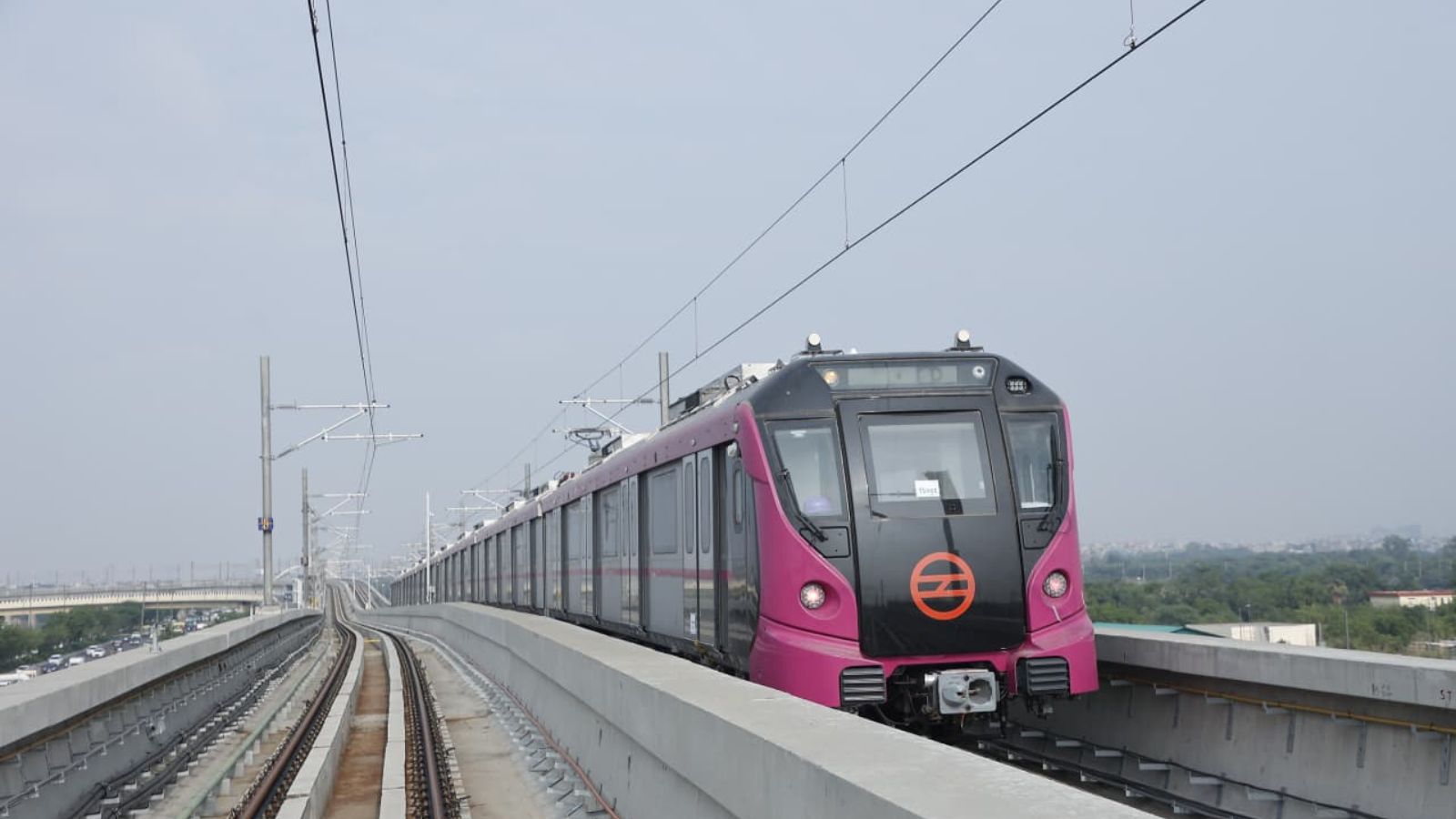
The Delhi Metro Rail Corporation (DMRC) achieved an unprecedented 99.95% punctuality rate in 2026, placing it among the world’s most reliable urban rail networks. The milestone reflects improved train headways and rigorous international benchmarking.
Key Takeaways
- Delhi Metro achieved 99.95% punctuality in 2026.
- Headway on busiest corridors reduced to 2 minutes 18 seconds.
- DMRC outperforms several leading global metro systems.
Record Punctuality Achieved
DMRC reported a punctuality rate of 99.95% for 2026 across its 416.5‑km network, encompassing 12 lines and 303 stations. A train is deemed delayed if it arrives more than 59 seconds after the scheduled time.
Historical Background
In 2003, Delhi Metro’s punctuality stood at 98.27%, rising to 99.64% in 2005. Despite network expansion and fleet growth over 23 years, DMRC has defied the typical decline in reliability seen in many urban rail systems.
International Comparison
| Metro System | Punctuality (%) |
|---|---|
| Delhi Metro (2026) | 99.95 |
| Hong Kong Metro | 99.70 |
| Paris Metro | 99.60 |
| New York Subway | 99.55 |
Why This Matters
BozokMedia analysis shows that such high punctuality not only boosts commuter confidence but also positively impacts the city’s economic productivity, as reduced delays lead to more reliable business schedules.
"Maintaining sub‑minute delays across a 416‑km network is a benchmark for urban rail worldwide," says Dr. Priya Nair, transport analyst.
Frequently Asked Questions
Q1: How is the punctuality rate calculated?
A: A train is considered late if it arrives more than 59 seconds after its scheduled time; the percentage is derived from the aggregate performance of all services.
Q2: What drove the recent improvement?
A: Advanced signalling, rigorous maintenance regimes, and reduced train headways were the primary contributors.