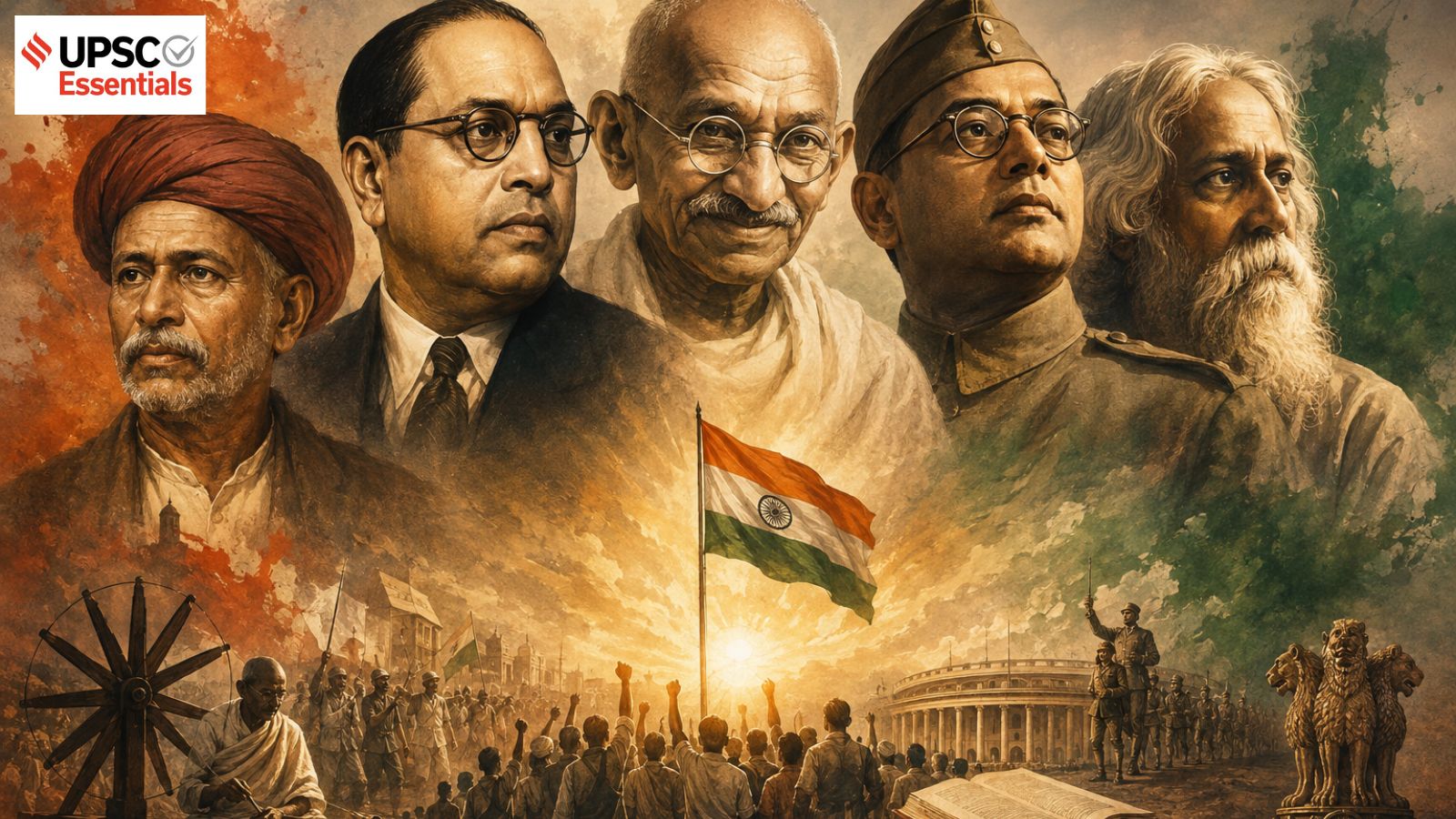
The UPSC mains exam repeatedly focuses on five pivotal personalities—Gandhi, Ambedkar, Bose, Phule and Tagore—whose ideas shaped India's freedom struggle and continue to guide nation‑building today.
Key Takeaways
- Gandhi, Ambedkar, Bose, Phule and Tagore are core topics in UPSC mains
- Their philosophies form the pillars of freedom, social justice, and nation‑building
- Understanding them is essential for aspiring civil servants
Historical Background
India’s independence movement was a confluence of diverse ideas, social reforms, and strategies—from the 1857 Revolt to the 1947 freedom. Leaders adopted distinct paths—non‑violent mass movements, constitutional advocacy, and armed resistance—to dismantle colonial rule. This rich tapestry is embedded in the UPSC syllabus under History of India and General Studies I.
Five Prominent Personalities
1. Mahatma Gandhi – Introduced Satyagraha and non‑violence, arguing that Swaraj is both political self‑rule and personal moral transformation.
2. Dr. B.R. Ambedkar – Architect of the Constitution, he fought untouchability and enshrined equality through Articles 14‑17, guaranteeing substantive social justice.
3. Subhash Chandra Bose – Championed armed resistance via the Azad Hind Fauj, urging total liberation and unity across communities.
4. Jyotirao Phule – Pioneered anti‑caste education reforms, emphasizing mass literacy and social equality.
5. Rabindranath Tagore – Embodied humanism and cultural freedom, using literature to inspire a national identity.
| Personality | Core Idea | Contribution to Freedom |
|---|---|---|
| Gandhi | Non‑violence, Swaraj | Mass mobilization |
| Ambedkar | Social Justice, Constitution | Legal equality |
| Bose | Armed Struggle | Military inspiration |
| Phule | Caste‑free education | Social reform |
| Tagore | Humanism | Cultural awakening |
Why This Matters
BozokMedia analysis shows that grasping these thinkers not only secures UPSC marks but also equips future officers with leadership, equity, and ethical governance frameworks essential for modern India.
"The principles of freedom articulated by these five leaders remain the backbone of India's public policy," says Prof. Ravi Shankar, historian.
Frequently Asked Questions
Q1: What does Gandhi’s concept of Swaraj entail for contemporary administration?
Q2: How does Ambedkar’s vision of social democracy influence today’s constitutional debates?