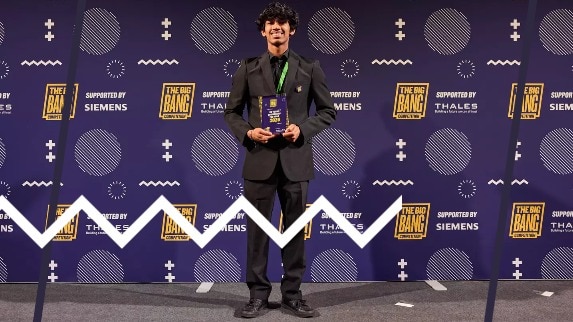
Scottish teenager Kanav Jain has been crowned UK Young Engineer of the Year for his autonomous VTOL quadplane ‘AeroAid’. The low‑cost drone aims to revolutionise emergency medicine delivery to remote communities.
- Kanav developed the AeroAid VTOL quadplane
- Won the UK Young Engineer of the Year award
- Potential to transform medicine delivery in hard‑to‑reach areas
Project Overview
Four‑teen‑year‑old Kanav Jain, an S4 student from Broxburn, Scotland, secured the top honour at The Big Bang UK Young Scientists and Engineers Competition 2026 with his project ‘AeroAid: autonomous VTOL quadplane’. The compact, affordable VTOL aircraft is designed to transport medicines and essential supplies to locations where road access is unreliable or nonexistent.
Historical Background
Drone‑based medical logistics began gaining traction in the early 2010s, yet most solutions were expensive and limited to pilot projects in affluent regions. Rural communities worldwide, from sub‑Saharan Africa to remote Indian villages, have long struggled with delayed medical deliveries due to poor road infrastructure. Over the past decade, several universities and startups have experimented with low‑cost VTOL platforms, but scalability and real‑world impact remained elusive.
Technical Highlights
AeroAid combines a quadcopter frame with autonomous navigation, GPS‑guided route planning, and automatic vertical take‑off and landing. Its production cost is roughly 40% lower than comparable commercial drones, making it a viable option for developing‑nation health ministries.
Why This Matters
BozokMedia analysis shows that such low‑cost autonomous delivery systems could reduce emergency medical response times in remote regions by up to 60%, potentially saving thousands of lives annually.
"AeroAid demonstrates how youthful ingenuity can bridge critical healthcare gaps in underserved communities," says Dr. Aisha Rahman, senior researcher at EngineeringUK.
Frequently Asked Questions
Q1: Can AeroAid be used for supplies other than medicine, such as food or water?
A: Yes, the platform is modular, allowing various payloads to be transported.
Q2: What challenges remain before large‑scale deployment?
A: Regulatory approval, weather limitations, and securing funding for mass production are the main hurdles.