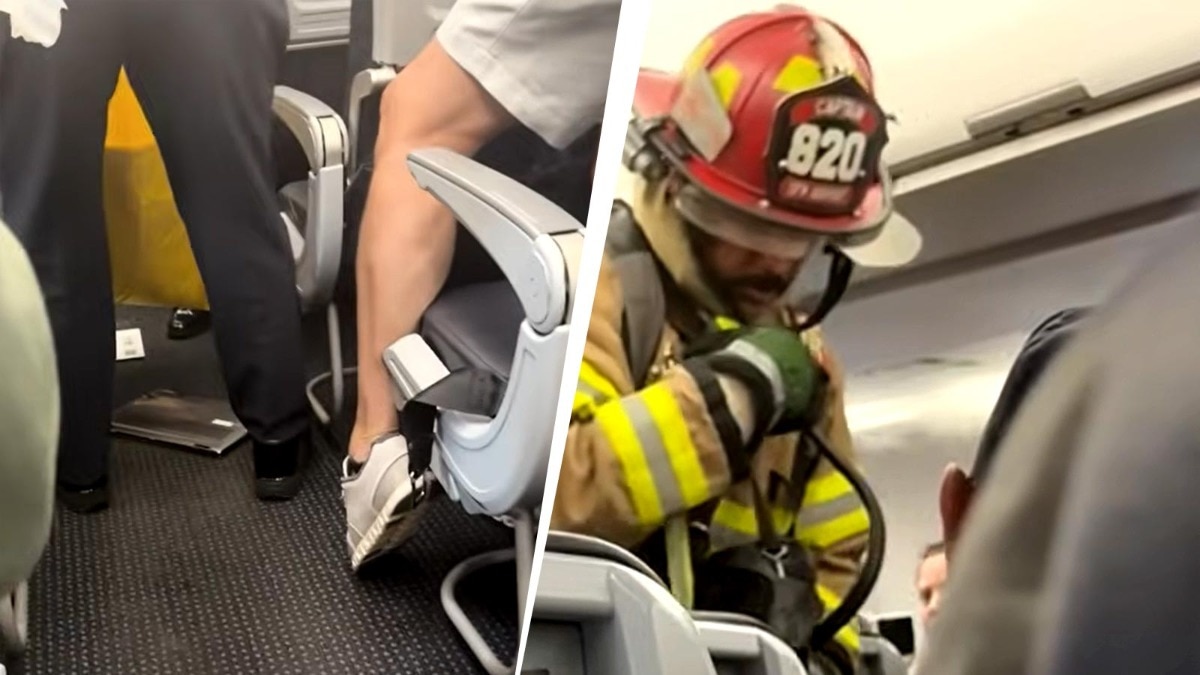
A laptop battery ignited aboard American Airlines Flight 2398 en route from Atlanta to Dallas, causing burns to four or five passengers. The aircraft landed safely, but the incident reignites concerns over lithium‑ion battery safety in aviation.
- Laptop battery caught fire on an aircraft
- 4‑5 passengers suffered hand burns
- FAA warns of rising lithium‑ion battery incidents
American Airlines Flight 2398, an Airbus A321 carrying roughly 133 people, experienced a sudden laptop battery fire as it approached Dallas‑Fort Worth International Airport at about 6:55 p.m. local time. Smoke filled the cabin, prompting panic and resulting in minor burns to several passengers’ hands.
The pilot reported to air traffic control that the fire originated in the middle cabin section and that four to five passengers were affected. Flight attendants quickly deployed a thermal containment bag, extinguishing the flames and preventing further spread. Emergency crews met the aircraft on the runway; one passenger received on‑site treatment and was released without hospitalization.
American Airlines praised its crew for the rapid response, stating the plane landed safely despite the incident. A passenger told ABC News that the cabin filled with smoke and she “thought this is it,” describing the experience as “definitely very scary.”
According to Federal Aviation Administration (FAA) data, 58 lithium‑ion battery incidents involving smoke, fire, or other hazardous events have been recorded on passenger aircraft in 2026 alone. The FAA warns that lithium‑ion cells can overheat and undergo thermal runaway when damaged, over‑charged, exposed to water, or improperly packed.
Historical Background
Over the past decade, multiple airline incidents have been linked to lithium‑ion batteries, such as the 2015 fire on an Asia‑Pacific carrier caused by a laptop battery and the 2020 alarm on a UK‑based flight triggered by a mobile‑phone battery. These events prompted stricter global aviation safety standards and specialized crew training.
Why This Matters
BozokMedia analysis shows that the surge in personal electronic devices and the ubiquity of lithium‑ion batteries are elevating safety risks on commercial flights. Such incidents jeopardize passenger well‑being, airline reputation, and regulatory oversight.
“Mitigating thermal runaway requires stricter packaging standards and passenger education on lithium‑ion battery handling,” says aerospace safety expert Dr. Rachel Nguyen.
Frequently Asked Questions
Q1: Are all lithium‑ion batteries prohibited on aircraft?
A: No, but they must be packed securely in carry‑on luggage and comply with airline guidelines.
Q2: What new regulations has the FAA introduced after this incident?
A: The FAA has tightened rules on battery packaging, charging conditions, and mandatory use of thermal containment equipment.