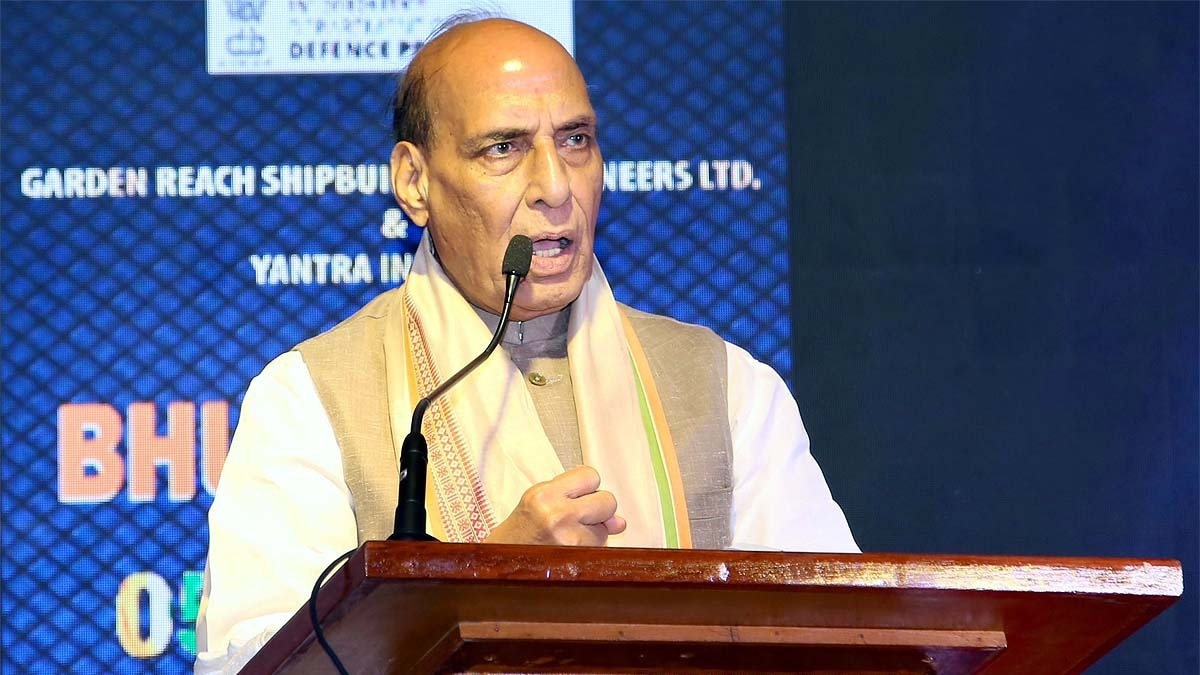
In Kolkata, Defense Minister Rajnath Singh inaugurated five shipbuilding projects worth ₹3,500 crore, covering warships, oil tankers and commercial vessels. The launch marks a decisive step toward positioning India as a global shipbuilding hub.
- ₹3,500 crore shipbuilding projects launched in Kolkata
- Construction of warships, oil tankers and commercial vessels to make India a global hub
- Defense Minister Rajnath Singh emphasizes India's youthful workforce and tech adoption
Historic Launch in Kolkata
On 24 August 2026, Defence Minister Rajnath Singh virtually inaugurated five new facilities of Garden Reach Shipbuilders & Engineers (GRSE) and Yantra India Ltd. The combined investment of around ₹3,500 crore is viewed as the cornerstone of India’s ambition to become a world‑leading shipbuilding centre.
Project Breakdown
GRSE will develop three brown‑field yards, while Yantra India will set up two facilities. The flagship site at Raychak, covering 32 acres along the Hooghly River, will receive over ₹2,500 crore, enabling the construction of 200‑metre destroyers. Yantra India’s metal‑and‑steel complex in Ishpur will attract more than ₹750 crore, bolstering domestic metalworking and defence manufacturing capabilities.
Global Context
Traditional shipbuilding nations such as the United States, United Kingdom, France and the Netherlands have been scaling back due to high labour costs and aging yards. This contraction creates a strategic vacuum that India is poised to fill, leveraging its massive labour pool, robust steel industry and appetite for cutting‑edge technology.
Economic and Social Impact
The projects are expected to generate thousands of jobs in West Bengal, integrate MSMEs into the supply chain and revive the region’s industrial ecosystem. They also reinforce the "Make in India" and "Make for the World" policies, promising a multiplier effect across allied sectors.
Strategic Significance
Minister Singh highlighted three pillars: design, construction and maintenance (MRO). With an abundance of engineering talent and IT expertise, India aims to evolve into a world‑class ship‑design hub and achieve greater defence self‑reliance.
Historical Background
India’s shipbuilding heritage dates back to the 18th‑century Mazagon Dock, which produced both warships and merchant vessels. Over the decades, India has delivered numerous naval platforms, including the Kolkata‑class destroyers, yet its share in the global commercial market remained modest—prompting the current aggressive expansion.
Why This Matters
BozokMedia analysis shows that India's aggressive expansion in shipbuilding not only fills the gap left by Western yards but also positions the country as a strategic supplier for both defense and commercial maritime sectors, potentially reshaping global supply chains.
"If India can operationalise these facilities on schedule, it will not only trim its defence procurement bill but also unlock a new export engine for warships and high‑value vessels," said an international maritime analyst.
Frequently Asked Questions
Q1: What types of vessels will be built under these projects?
A: The focus will be on 200‑metre destroyers, modern oil tankers and a range of commercial container ships.
Q2: How will these projects affect India's defence exports?
A: Increased domestic capacity is expected to boost the number of export‑ready warships and components, enhancing India's competitiveness in the global defence market.
