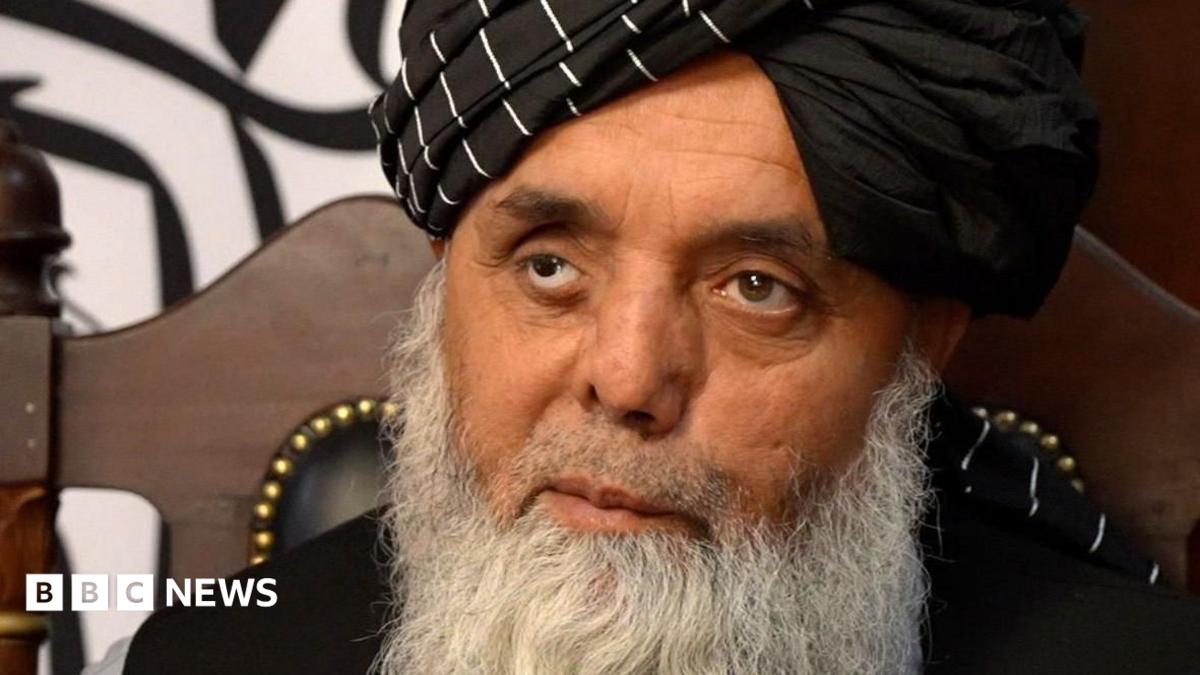
Five years after the Taliban seized power, the BBC uncovers intimate moments of women demanding divorce, officials grappling with a smartphone ban, and former commanders trying to rebrand their image. The report follows Governor Abdullah Sarhadi and former suicide‑attack planner Habibullah Badr to illustrate the contradictions of the regime.
- A 18‑year‑old woman confronts Governor Abdullah Sarhadi demanding a divorce.
- Sarhadi dismisses women as "mindless" sparking laughter among male officials.
- Under Sharia, the husband demands four times the dowry, while the family refuses.
Divorce Request in a Taliban Office
In the governor’s office in Sheberghan, Jawzjan province, a veiled 18‑year‑old woman calmly argued for a divorce from an abusive husband. Her face hidden behind a full‑face veil and sunglasses, she declared, "If there was any chance to live together, I wouldn't be here… I have taken my decision."
Governor Abdullah Sarhadi responded with contempt, labeling women "mindless" and "intellectually deficient," which drew laughter from surrounding male officials and bodyguards. The interaction offers a rare window into the daily power dynamics under Taliban rule.
Sharia‑Based Financial Dispute
According to Sharia, a woman seeking divorce may have to return the mahr (dowry) given by her husband. In this case, the husband demanded four times the original amount, a request the woman's family rejected. Sarhadi suggested she be given a separate room and warned the husband against beating her, noting that such abuse could land him in jail.
Smartphone Ban Slows Governance
Sarhadi admitted that a recent ban on smartphones for officials has hampered communication. "Before, you could send a quick message… sending documents and getting an answer fast," he said, adding that further discussion of the ban would "cause trouble." The restriction impacts not only bureaucracy but also ordinary citizens who rely on mobile connectivity.
Historical Background
Abdullah Sarhadi fought for the Taliban in the 1990s, served as a military commander during their first rule, and was involved in the destruction of the ancient Bamiyan Buddhas. He spent several years detained at Guantanamo Bay after the 2001 U.S. invasion before being released. When the Taliban returned to power, he became governor of Bamiyan, later Jawzjan, and now serves as deputy commander of a military corps in Kunduz.
Habibullah Badr in Kabul
In Kabul, the BBC met Habibullah Badr, a former senior operative responsible for suicide‑attack operations. Now driving an armored vehicle for the government, Badr cautiously avoided detailed questions about past attacks, stating that revisiting them would "make people upset" and could "reopen wounds."
Why This Matters
BozokMedia analysis shows that these personal anecdotes expose the contradictions within the Taliban’s proclaimed “moderate” stance and highlight the persistent gender oppression and communication restrictions that affect Afghanistan’s future stability.
"Taliban’s public statements of reform often mask entrenched patriarchal practices that hinder genuine progress," says Dr. Aisha Rahman, Afghan sociopolitical analyst.
Frequently Asked Questions
Q1: Can a woman obtain a divorce under Taliban courts without her husband’s consent?
A: It is extremely difficult; Sharia‑based courts usually require the husband’s agreement and a financial settlement.
Q2: Why did the Taliban impose a smartphone ban on officials?
A: Officially it is framed as a security measure, but it significantly slows administrative communication and limits public access to information.