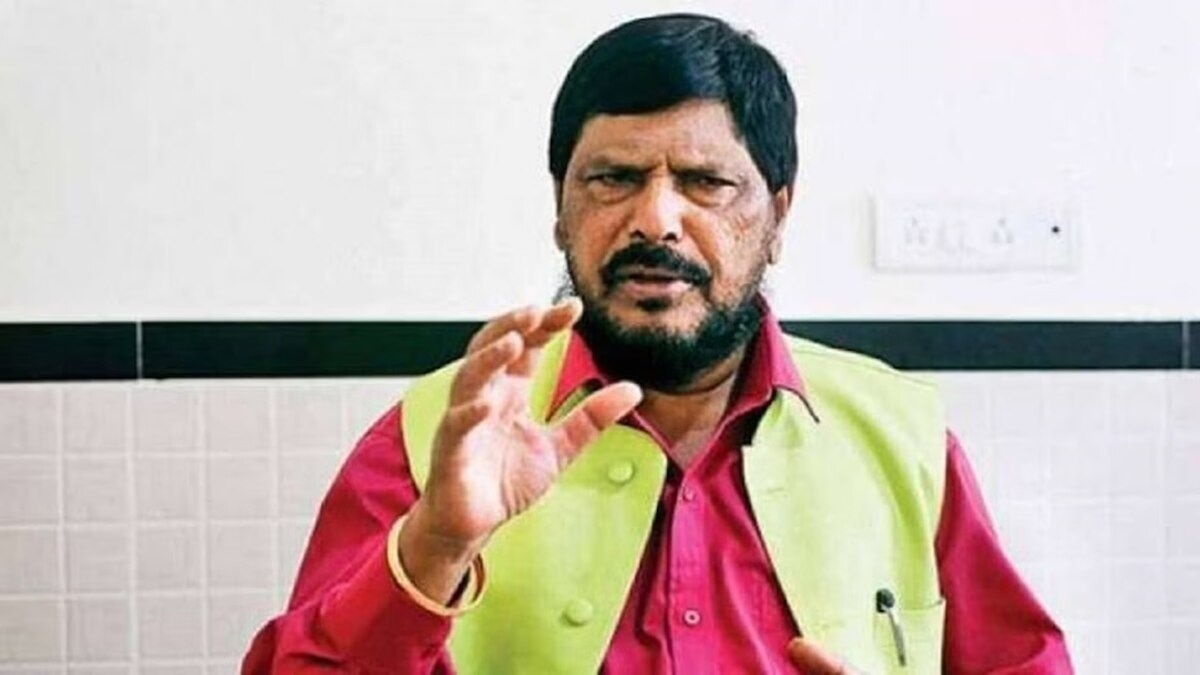
Union Minister Ramdas Athawale labeled anti‑reservation protests as unconstitutional and urged sedition charges against those seeking to end the quota system. The statement came as large crowds gathered at Jantar Mantar demanding economic criteria over caste‑based reservations.
- Athawale demands sedition charges for anti‑reservation activists
- Police deny permission for Jantar Mantar protests
- Call for increased Buddhist representation in Bodh Gaya Temple board
Union Minister Ramdas Athawale declared on Sunday that any opposition to reservation is "anti‑constitutional" and should be prosecuted under the sedition law. His remarks arrived amid massive demonstrations at Delhi’s Jantar Mantar, where protesters are urging economic criteria to replace caste‑based quotas.
Athawale emphasized that reservation cannot be abolished while caste discrimination persists, stating, "Reservation is a constitutional right and can only be removed when the caste system itself is eradicated." He warned that those advocating its abolition are effectively challenging the Constitution.
Delhi Police confirmed that no permission was granted to any individual or organization to hold a rally at Jantar Mantar, and warned the public against assembling based on misleading social‑media posts. Despite the ban, hundreds of demonstrators unfurled banners, saffron flags, and chanted slogans demanding the end of caste‑based quotas.
In addition to the reservation issue, Athawale raised a demand regarding the Bodh Gaya Temple Management Committee, insisting that the board should consist of eight Buddhist trustees instead of the current equal split of four Hindus and four Buddhists. He argued that a Buddhist place of worship should be managed primarily by Buddhists.
Historical Background
The reservation policy was enshrined in the Indian Constitution in the 1950s to provide historically marginalized communities with access to education and public employment. Over the decades, the scheme expanded to include Scheduled Castes, Scheduled Tribes, and the Economically Weaker Sections (EWS).
Why This Matters
BozokMedia analysis shows that the reservation debate strikes at the heart of India’s social contract. Weakening or abolishing the system could spark nationwide unrest and reshape the electoral calculus for the ruling NDA coalition.
"Reservation remains a constitutional safeguard; targeting its opponents with sedition charges could set a dangerous precedent for free speech," says constitutional law expert Dr. Meera Sharma.
Frequently Asked Questions
Q1: Can India completely scrap reservation?
A: Abolishing reservation would require a constitutional amendment and broad political consensus, making it a highly complex undertaking.
Q2: What impact would increasing Buddhist trustees have on the Bodh Gaya Temple board?
A: It would acknowledge Buddhist stewardship of the site and could alleviate long‑standing community grievances.