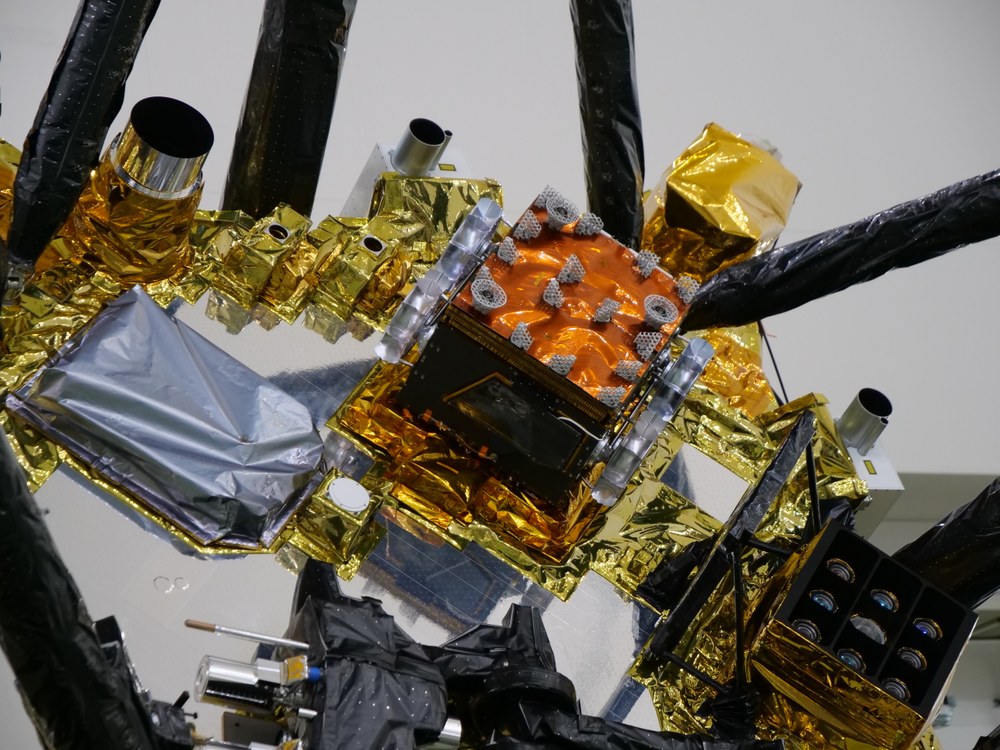
Japan’s JAXA confirmed that the MMX (Martian Moons eXploration) spacecraft will launch on 19 October 2026, carrying the German‑French Idefix® rover. The rover will touch down on Phobos in 2029, conduct a 100‑day surface campaign, and help return the first samples from a Martian moon to Earth by 2031.
- MMX launch scheduled for 19 Oct 2026 on JAXA’s H3 rocket
- Idefix® rover weighs only 25 kg yet carries a full science suite
- Mission aims to return Phobos samples to Earth by 2031
Overview of the MMX Mission
The Japan Aerospace Exploration Agency (JAXA) announced that the Martian Moons eXploration (MMX) probe will lift off on 19 October 2026 at 21:41 CEST aboard the powerful H3 launch vehicle. This will be Japan’s largest solar‑system mission to date and the first ever to land on the Martian moon Phobos, with a planned sample‑return in 2031.
Key Features of the Idefix® Rover
Developed jointly by Germany’s DLR and France’s CNES, the Idefix® rover is a compact 25‑kilogram platform roughly the size of a beverage crate. Despite its small mass, it houses a complete scientific payload—cameras, spectrometers, a drill, and navigation instruments—making it a fully fledged science rover capable of autonomous operation on Phobos’ ultra‑low gravity (≈0.001 g).
Historical Background
Phobos and Deimos have long puzzled planetary scientists. Competing theories suggest they are either captured asteroids or debris from a massive impact on Mars. Past missions such as Mariner, Viking, and Phobos‑2 flew past the moons, but none have landed. MMX seeks to finally answer this mystery by delivering the first surface samples.
Rover Integration and Qualification
By 2022 DLR had partially assembled Idefix® and two instruments, after which CNES completed integration in Toulouse. The rover passed rigorous space‑qualification tests in July 2023, demonstrating resilience to launch vibrations and Phobos’ extreme temperature swings (‑170 °C to +70 °C). In August 2026 JAXA displayed the fully integrated probe at the Tanegashima Space Center, showing Idefix® perched between the landing legs.
Why This Matters
BozokMedia analysis shows that the MMX mission marks a pivotal shift from orbital exploration to surface science on small bodies, opening commercial and scientific pathways for asteroid mining and deep‑space logistics.
"Idefix®’s successful touchdown will usher in a new era of robotic exploration on sub‑kilometer worlds," says planetary scientist Dr. Elena Fernández.
Frequently Asked Questions
- What is the primary goal of the MMX mission? To determine the origin of Phobos and Deimos and return pristine samples to Earth for analysis.
- How long will Idefix® operate on Phobos? Approximately 100 days, during which it will conduct surface surveys and assist the mothership’s sample‑collection landing.