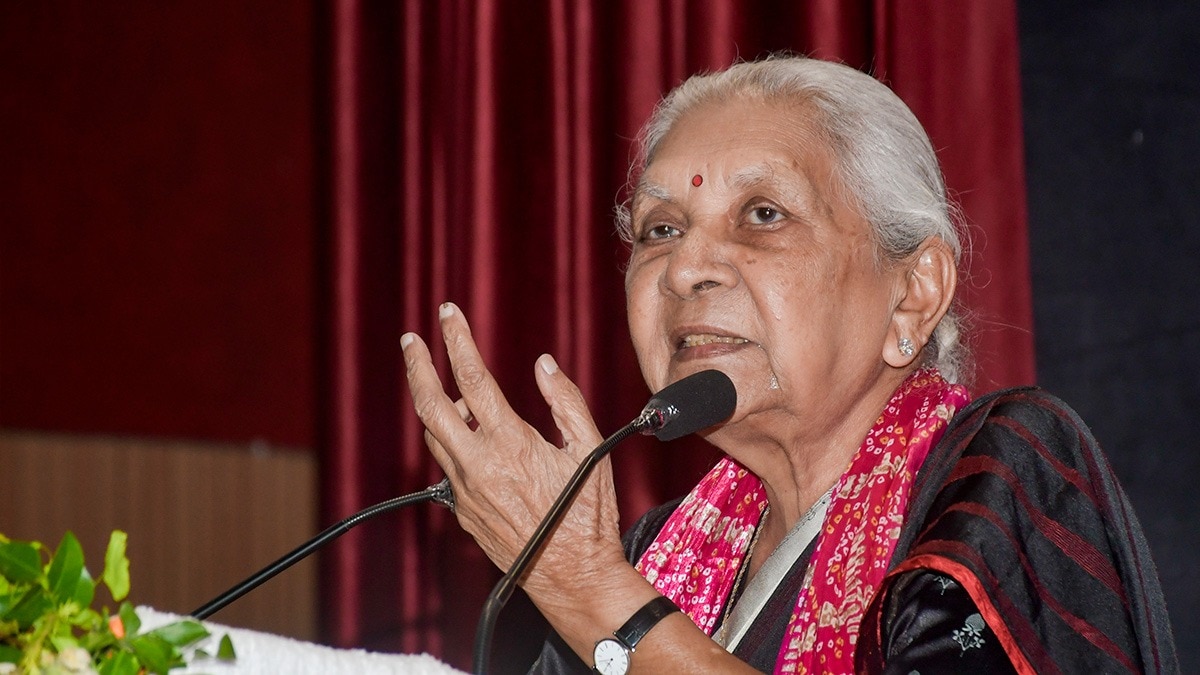
Uttar Pradesh Governor Anandiben Patel told participants at AI Manthan 2.0 to stop fearing artificial intelligence and start understanding it. She called for time‑bound AI roadmaps across education, research, health and agriculture, backed by new policy and implementation groups.
- All state universities must draft clear, time‑bound AI roadmaps.
- Emphasis on safe, trusted AI across education, healthcare, agriculture, and governance.
- Creation of AI Policy Advisory Group and AI Implementation Group to drive execution.
Lucknow – On September 14, 2026, at the closing ceremony of the two‑day AI Manthan 2.0 held at Chhatrapati Shahu Ji Maharaj University, Kanpur, Uttar Pradesh Governor Anandiben Patel urged students and faculty to “not fear AI; understand it.” She emphasized responsible, confident engagement with the technology.
Core Objectives of AI Manthan 2.0
The summit aimed to embed artificial intelligence across curricula rather than treating it as a stand‑alone subject. Patel asked universities to produce concrete, time‑bound roadmaps covering education, research, administration, healthcare, agriculture, and student skill development.
Principles of Safe and Trusted AI
Patel highlighted “Safe and Trusted AI” as the foundation of India’s AI journey, stressing data privacy, cyber‑security, fairness, transparency, and human judgment as non‑negotiable pillars.
Industry‑Academic Collaboration
She encouraged students to move from users to innovators, leveraging AI for mathematics problem‑solving, scientific data analysis, smart farming, weather forecasting, early disease detection, environmental monitoring, robotics, and natural language processing.
Why This Matters
BozokMedia analysis shows that Uttar Pradesh, housing over 7 lakh undergraduate students, could become India’s largest AI‑enabled education hub if the governor’s roadmap is executed swiftly. The dual‑group structure ensures policy guidance and on‑ground implementation, bridging the gap that has long hampered AI adoption in Indian academia.
“AI’s future will be secure only when it is woven into education with strong ethical safeguards,” said Prof. P.P. Chakrabarti, IIT Kharagpur.
Historical Background
The first edition, AI Manthan 1.0, held at AKTU in Lucknow, saw more than 7 lakh undergraduates complete foundational AI courses and over 3 lakh students receive Hindi‑medium cybersecurity training. Building on that success, AI Manthan 2.0 presented a detailed policy framework and implementation mechanism.
Frequently Asked Questions
Question 1: Who chairs the AI Policy Advisory Group?
Answer: The group is chaired by Prof. P.P. Chakrabarti (IIT Kharagpur) and includes Prof. V. Ramgopal Rao (BITS Pilani), Dr. Preetika Rangarajan (AIIMS New Delhi), and Prof. Vinay Kumar Pathak (CSJMU).
Question 2: Which sectors are earmarked for pilot AI projects?
Answer: Pilot projects are encouraged in smart agriculture, early disease detection, water‑conservation, traffic management, and language preservation.