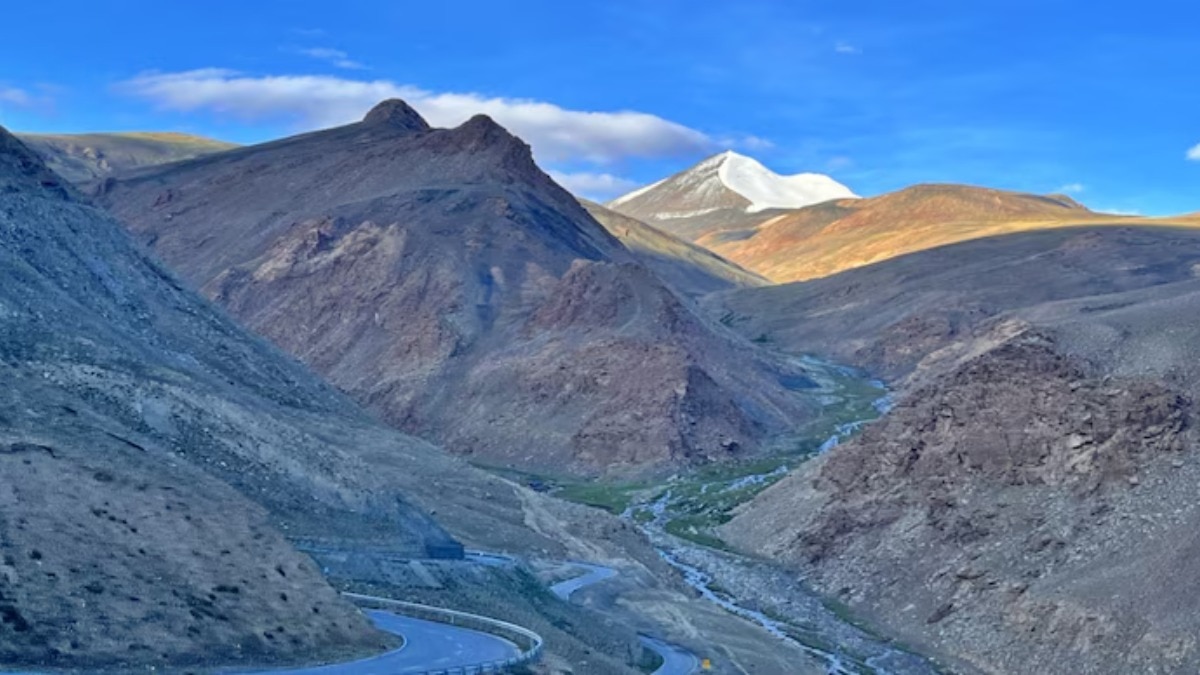
The Indian Space Research Organisation’s research shows Himalayan glaciers have receded more than 30% in just two years, with smaller glaciers losing 38% of their area since 1962. Global warming is accelerating this melt, threatening water security and agriculture in India.
- Himalayan glaciers have receded more than 30% in just two years.
- Smaller glaciers have lost 38% of their area since 1962.
- Global warming is accelerating melt, threatening water security.
The Indian Space Research Organisation’s Space Application Centre (SAC) conducted a comprehensive mapping of the largest Himalayan glaciers in 2006.
\nThe Samudra Tapu glacier, the second largest in the Lahaul‑Spiti region, sits at 13,600 feet and is the main source of the Chandra River.
\nAfter a grueling climb, the team measured the glacier’s terminus using ground‑penetrating radar and satellite data, revealing a retreat of over 30 m in two years and almost 800 m since 1960.
\nAccording to the study, 466 glaciers have seen a 21% reduction in total area, while the number of glaciers has increased as large ones fragment into smaller units.
\nIPCC projections suggest global temperatures could rise 1.4 – 5.8 °C by century’s end, severely impacting India’s water resources and agriculture.
\nEvidence shows that melting Himalayan glaciers can alter river flows, disrupting irrigation and power generation.
\nWhy This Matters
\nBozokMedia analysis indicates that glacier melt will exacerbate water scarcity and destabilize economic and social structures.
\nThe rapid retreat of Himalayan glaciers signals an imminent threat to water security; urgent investment in water management and renewable energy is essential.\n
Frequently Asked Questions
\n1. Is glacier melt occurring only in the Himalayas?
\nNo, glacier melt is happening worldwide, including in Antarctica, the Andes, and the Alps.
\n2. What steps is the Indian government taking to address glacier melt?
\nThe government has increased funding for water‑conservation and renewable‑energy projects, and strengthened glacier‑monitoring programs.