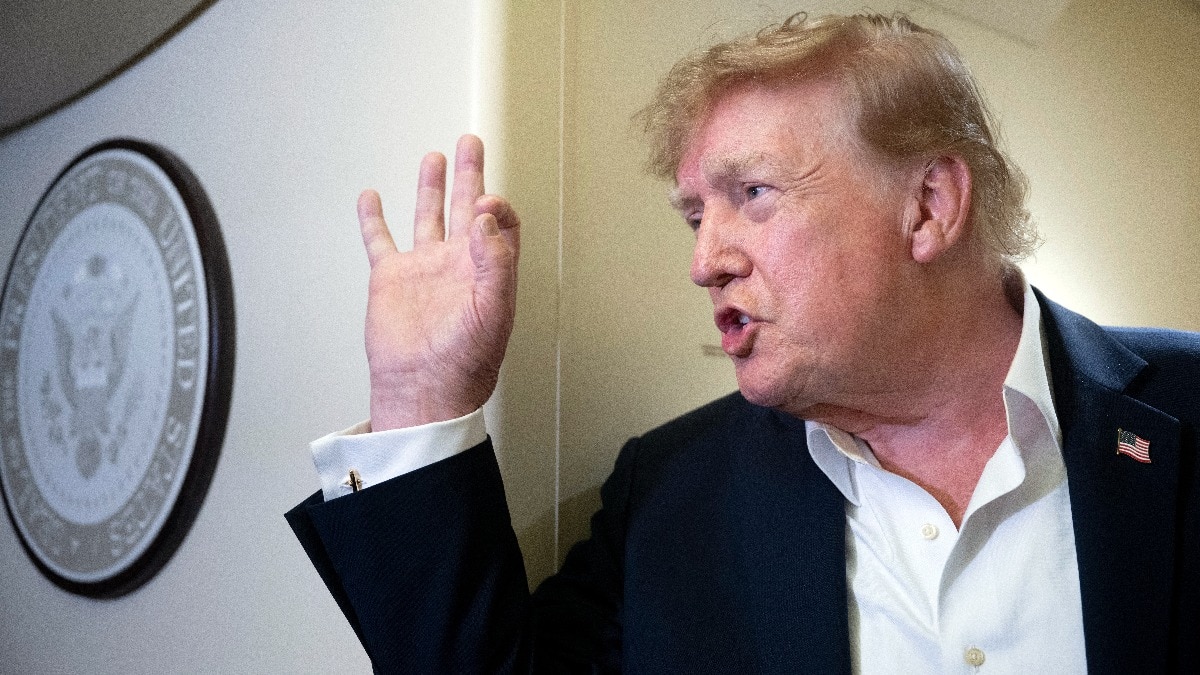
Former U.S. President Donald Trump has publicly dismissed calls to slow AI development, stating "whoever wins AI wins," and criticized Anthropic CEO Dario Amodei for his stance on safety.
- Trump argues AI should not be slowed down.
- He targets Anthropic’s CEO, linking the debate to China’s potential gains.
- The U.S.-China tech rivalry is intensifying over AI policy.
On September 14, 2026, former President Donald Trump made a bold statement against the growing call within the AI industry to slow down development. He declared that "whoever wins AI wins," underscoring his belief that rapid progress is essential for maintaining U.S. dominance.
Trump also attacked Anthropic’s CEO Dario Amodei, calling him a "perfect little angel," while criticizing the company’s push for tighter safety protocols. This clash highlights the tension between the leading U.S. AI firms—OpenAI and Anthropic—over the pace of innovation.
The backdrop to this debate is China’s rapidly advancing AI models. Trump warned that if the U.S. lags, China could gain a decisive advantage, shifting global power dynamics.
He emphasized that existing regulatory frameworks are sufficient and that the presidency already wields enough power to control AI companies without additional guardrails.
Anthropic’s Amodei argued that AI’s speed is outpacing safety mechanisms, advocating for a slowdown to allow better testing and independent evaluation.
In a broader geopolitical context, Trump framed the AI race as a determinant of future influence, suggesting that the country leading in AI will shape the world’s future.
Why This Matters
BozokMedia analysis shows that Trump’s stance could intensify the tech rivalry between the United States and China, potentially reshaping global AI governance and market dynamics. By opposing a slowdown, the former president is signaling a preference for rapid innovation, which may accelerate breakthroughs but also heighten concerns over safety and ethical oversight.
"The risk is that unchecked speed could lead to unforeseen societal impacts, but a slowdown might stifle beneficial advancements," says Dr. Maya Patel, AI Ethics Scholar.
Trump’s remarks may also influence how other nations approach AI regulation, as countries reassess their own frameworks. Moreover, the statement could deepen divisions within the U.S. tech community, where some prioritize safety while others champion rapid progress.
Frequently Asked Questions
Q1: Will Trump’s comments lead to changes in AI regulation?
A1: Trump emphasizes the sufficiency of current laws, so significant changes appear unlikely.
Q2: What advantages could China gain from leading in AI?
A2: China’s rapid AI development could shape global tech standards and boost its economic and geopolitical influence.
| Party | Position |
|---|---|
| Trump | Opposes slowing AI; existing laws are adequate. |
| OpenAI (Sam Altman) | Advocates for controlled speed; emphasizes safety. |
| Anthropic (Dario Amodei) | Calls for a slowdown to improve safety and testing. |
| China | Investing heavily in AI to potentially redefine global norms. |


