The Rajasthan government has reasserted its ownership claim over Agra's Jaipur House Colony, citing a 1952 merger agreement. Authorities are now combing through seven‑decade‑old land and building records to verify the claim.
- Rajasthan bases its claim on Article 6(2)(C) of the 1952 merger agreement.
- More than 100 acres across Agra, Varanasi, Prayagraj and Mathura are listed.
- Uttar Pradesh is reviewing historic records before any legal decision.
Background of the Dispute
The Rajasthan government formally notified Uttar Pradesh that it claims ownership of the Jaipur House Colony in Agra and several other parcels. The claim rests on the 1952 merger agreement between the former Jaipur princely state and Rajasthan, specifically Article 6(2)(C), which stipulated that assets lying outside Rajasthan’s present borders would remain under Rajasthan’s jurisdiction.
Chief Secretary V. Srinivas sent a letter to the Uttar Pradesh administration requesting detailed information on the present status of these properties. He also attached the Gazette of 16 February 1952, which enumerates Jaipur State holdings across multiple cities.
Properties Listed in Agra
According to the documents, the Jaipur House area comprises two historic mansions, roughly 100 bighas of land, a tract linked to the Sadashiv Manahkameshwar Temple, and a major roadway segment. The key question now is how much of this land and structures remain recorded as Jaipur‑State assets after more than seven decades of changes.
Similar Claims in Other Cities
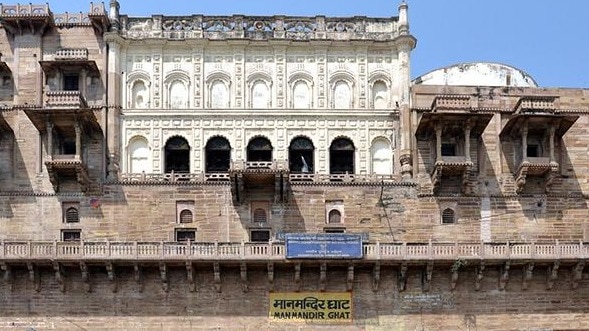
Rajasthan has also filed claims for properties in Mathura (2.16 acres and six mansions at Jaswantganj Dharmshala), Prayagraj (approximately 35.25 acres in Katra Sawai Jaisingh), and Varanasi (44 houses and the Man Temple ghats). Consolidated reports from these districts will be examined by Uttar Pradesh before a legal opinion is issued.
Administrative Actions
The Uttar Pradesh Revenue Council, treating the matter as serious, has asked the Agra District Magistrate for a comprehensive report. The DM has directed the Municipal Commissioner, the Secretary of the Agra Development Authority, and the SDM to scour British‑era and post‑independence revenue records at the municipal, ADA and tehsil levels.
Why This Matters
BozokMedia analysis shows that this dispute not only revives historic property rights between two states but could also set a legal precedent for future multi‑state land‑ownership conflicts.
"Uncovering such old records often triggers unexpected shifts in land‑use policy and revenue administration," says land‑development expert Dr. Ajay Verma.
Frequently Asked Questions
Question 1: Has Rajasthan initiated any legal proceedings yet?
Answer: No, both state administrations are still gathering historic records and awaiting a legal opinion.
Question 2: What impact could this have on local residents?
Answer: If Rajasthan’s claim is upheld, it could affect land‑use plans, tax liabilities, and development projects in the affected neighborhoods.