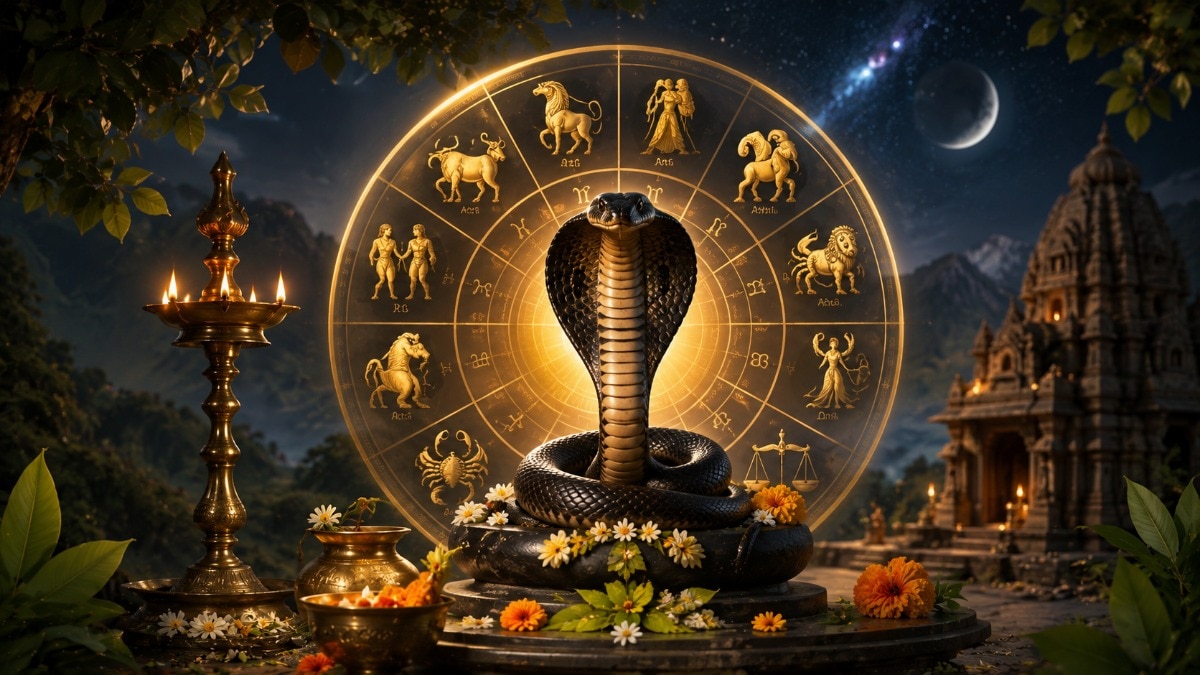
In Indian culture, serpents are not merely reptiles but deities and symbols of cosmic energy. From the astrological mysteries of Kalsarp Dosh to the epics of Ramayana and Mahabharata, their influence is profound.
Key Takeaways
- The significance of serpent worship in astrology as the counter-deity to Rahu.
- Prominent roles of Nagas in the lives of Lakshmana, Balarama, and Arjuna in ancient epics.
- The Ashlesha Nakshatra is governed by the serpent, influencing rainfall and astrological predictions.
- Serpents are viewed as a civilization and divine entities rather than just venomous creatures.
Celebrated on the fifth day of the bright fortnight of the Shravan month, Nag Panchami serves as a reminder that serpents are not just creatures to be feared. They hold a deeply intertwined relationship with human social life, environmental purity, and agricultural prosperity.
Astrological Perspective: Rahu and Kalsarp Dosh
In Vedic astrology, the role of the serpent is unique. Those suffering from the affliction of Rahu are often advised to worship serpents. According to astrological tenets, 'Kaal' is the primary deity of Rahu, while the 'Serpent' is the counter-deity. This is the fundamental basis for the Kalsarp Dosh puja, aimed at mitigating the negative effects of Rahu in one's horoscope.
Furthermore, among the 27 Nakshatras, the Ashlesha Nakshatra is ruled by the serpent. Astrologers also use the movement of the sun between Rohini and Hasta Nakshatras—where the serpent is a vehicle for one of these—to predict rainfall patterns.
Why This Matters
BozokMedia analysis shows that this reverence for serpents is not mere superstition but a sophisticated ancient method of fostering coexistence with nature. By integrating feared creatures into their spiritual framework, ancient Indians ensured a balanced ecosystem and a psychological approach to fear.
"The Naga is not just a biological entity but a symbol of a divine civilization, acting as a bridge between human karma and destiny."
The Naga Influence in Epics
The Ramayana and Mahabharata feature serpents as pivotal characters. Lakshmana (brother of Lord Rama) and Balarama (brother of Lord Krishna) are considered avatars of Sheshanaga. Additionally, Sulochana, the wife of Meghnad, was a Naga princess and the daughter of Sheshanaga.
In the Mahabharata, Arjuna marries the Naga princess Ulupi. The story of the 'Naga Yajna' performed by Janamejaya, which sought to incinerate all serpents, is a testament to the power and vulnerability of these beings, eventually stopped by Astika to save the serpent race. From Krishna subduing Kaliya to Bhima gaining the strength of 100 elephants in the Naga realm, serpents represent hidden power and wisdom.
| Character/Avatar | Naga Connection | Significance |
|---|---|---|
| Lakshmana/Balarama | Sheshanaga Avatar | Divine Protection & Power |
| Arjuna | Ulupi (Spouse) | Alliance with Naga Realm |
| Bhima | Visit to Naga Loka | Acquisition of Immense Strength |
Frequently Asked Questions
1. What is Kalsarp Dosh?
It occurs when all planets in a horoscope are situated between Rahu and Ketu, which is believed to create obstacles in life, remediated by serpent worship.
2. Why is Nag Panchami celebrated?
It is a festival of gratitude toward serpents for protecting crops from rodents and acknowledging their role in the natural and spiritual order.