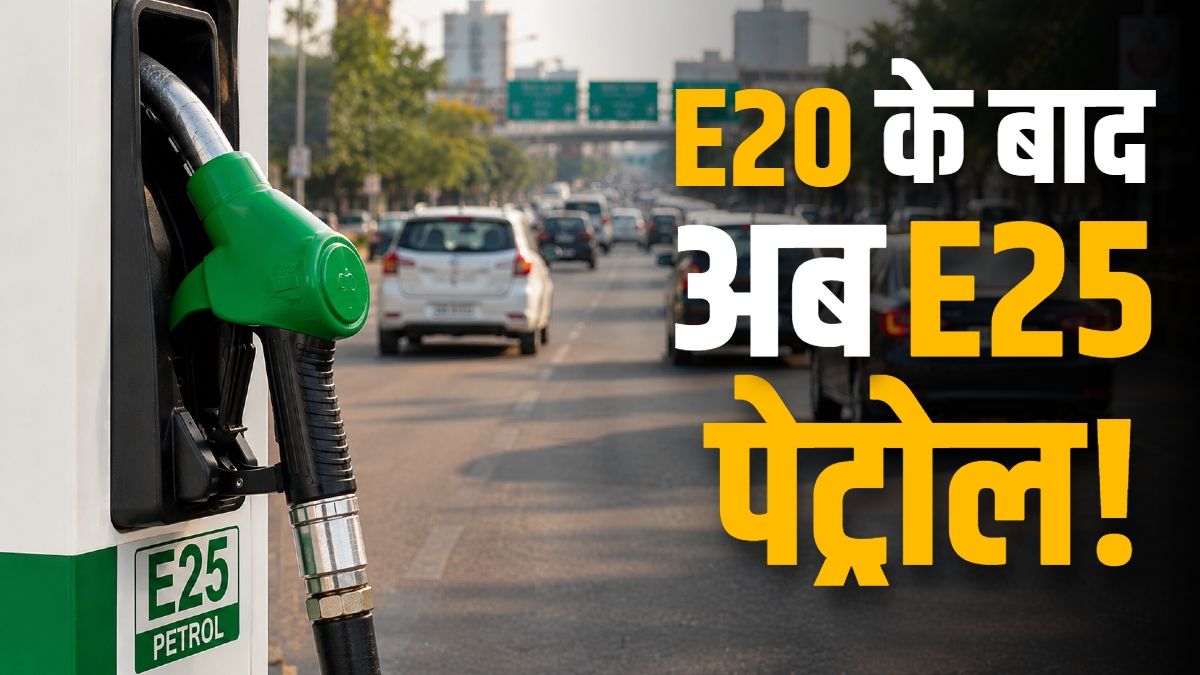
Amid rising concerns and complaints from vehicle owners regarding E20 petrol, the Indian government has clarified its stance on the upcoming E25 fuel transition. The Ministry of Information and Broadcasting confirmed that E25 is currently undergoing rigorous scientific testing and will not be rushed into the market.
Key Takeaways
- The government is currently testing E25 fuel (25% ethanol, 75% petrol) but promises no rushed rollout.
- Vehicle owners have raised concerns over E20 fuel causing lower mileage and engine component damage.
- Scientific testing for E25 includes engine calibration, corrosion analysis, and material compatibility.
The debate surrounding ethanol-blended petrol in India has intensified as vehicle owners voice persistent complaints over E20 fuel. Amidst this friction, the Union Government has broken its silence on the transition to E25 petrol (a blend of 25% ethanol and 75% gasoline). Through an official video released by the Ministry of Information and Broadcasting (MIB), the government clarified that while E25 is the next logical step in India's green energy roadmap, it will not be implemented prematurely.
Currently, E25 fuel is strictly in its testing phase. The government emphasized that no policy decisions will be finalized until comprehensive scientific validation is complete. The ongoing testing protocols are rigorous, focusing on critical parameters such as engine calibration, fuel system durability, corrosion risks, and overall safety standards. This cautious approach aims to prevent the technical setbacks currently being reported by users of E20 fuel.
Why This Matters
A specialized BozokMedia analysis shows that India's aggressive push toward ethanol blending is a double-edged sword. While it significantly reduces the nation's massive crude oil import bill and lowers carbon emissions, the immediate toll on existing vehicular infrastructure cannot be ignored. Transitioning to E25 without addressing the compatibility issues of older engines could lead to widespread consumer backlash and high maintenance costs for vehicle owners.
"Rushing into higher ethanol blends without robust material compatibility testing can severely damage fuel injectors and corrode aluminum components in older engines. The government's decision to wait for complete scientific clearance is a highly mature step." - Auto Engineering Expert
To ensure a seamless transition, a collaborative consortium consisting of leading automobile manufacturers, oil marketing companies (OMCs), ethanol producers, and premium research institutions has been formed. They are collectively analyzing how various engine materials react to higher ethanol concentrations. This scientific rigor is a response to the growing wave of complaints from motorists using E20 petrol, who have reported a noticeable drop in fuel efficiency (mileage) and accelerated wear and tear of engine components.
| Feature / Parameter | E20 Fuel | E25 Fuel (Under Testing) |
|---|---|---|
| Ethanol Blend Ratio | 20% Ethanol, 80% Petrol | 25% Ethanol, 75% Petrol |
| Current Status | Rolled out at select stations | Strictly in testing phase |
| Key Consumer Concerns | Lower mileage, component wear | Compatibility, engine corrosion risks |
Frequently Asked Questions
Q1: Why are vehicle owners complaining about E20 petrol?
A1: Many motorists have reported reduced fuel efficiency (mileage) and potential corrosion or damage to non-compatible engine parts, especially in older vehicle models.
Q2: When will E25 petrol be launched in India?
A2: The government has stated there is no fixed launch date yet. E25 will only be rolled out after exhaustive scientific studies and technical clearances are completed.