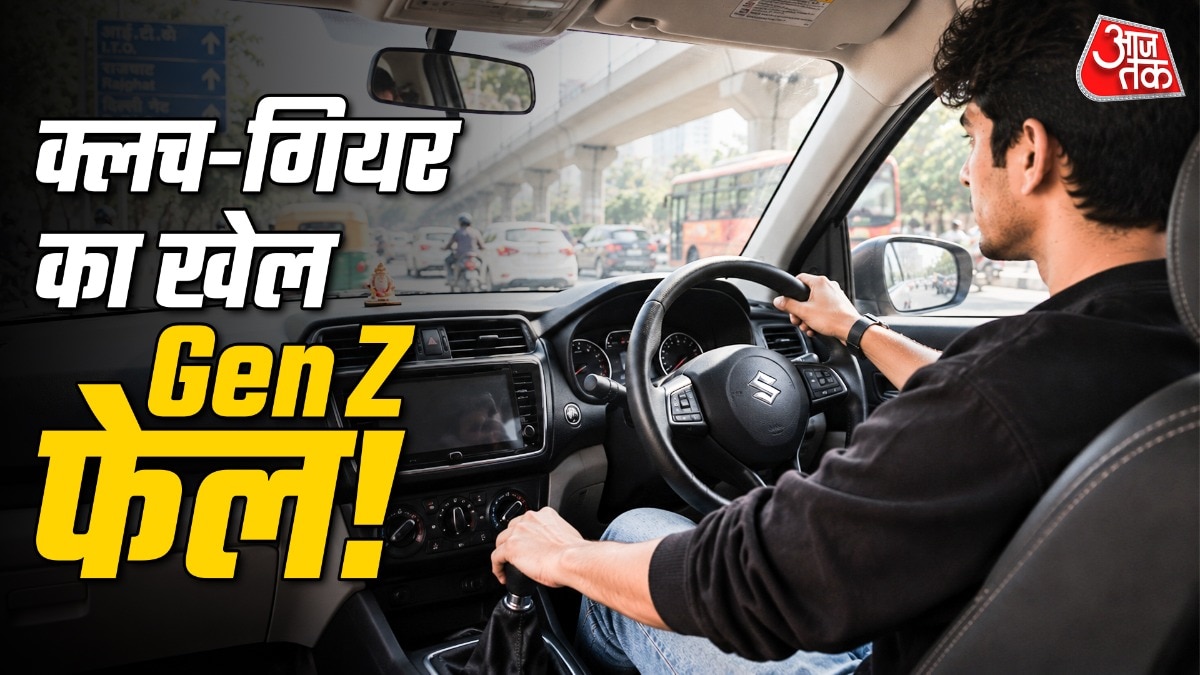
As automatic transmissions become the global standard, the younger generation (Gen Z) is increasingly losing the fundamental ability to operate manual clutches and gear shifts. This shift marks a significant change in automotive culture and driver competence.
- Surge in automatic car popularity leading to a decline in manual driving proficiency.
- Gen Z drivers showing a lack of understanding regarding clutch-gear synchronization.
- A fundamental shift from active driving to passive vehicle operation.
The automotive landscape is undergoing a seismic shift. Once considered the hallmark of a true enthusiast, manual transmission is rapidly becoming a relic of the past. As Gen Z enters the driving population, there is a noticeable trend: the ability to master the clutch and gear stick is vanishing, replaced by the seamless, effortless experience of automatic driving.
In modern metropolitan areas, the constant stop-and-go traffic has made automatic cars a necessity rather than a luxury. While this significantly reduces driver fatigue, it comes at a cost. The nuanced skill of balancing engine RPMs with clutch engagement—a skill that took years to perfect in previous generations—is being lost to software and sensors.
Why This Matters
BozokMedia analysis shows that this trend is more than just a matter of convenience; it represents a shift in how humans interact with complex machinery. Manual driving offers a level of mechanical empathy and control that automatic systems, despite their sophistication, cannot fully replicate, especially in critical or high-performance scenarios.
Convenience is the ultimate driver of modern consumer behavior, even when it results in the erosion of fundamental human skills.
Historically, driving was an active engagement. From the early days of motoring through the mid-20th century, understanding the mechanical link between the engine and the wheels was essential. Today, that link is increasingly mediated by computers, turning drivers into mere operators of a digital interface.
Manual vs Automatic Comparison
| Feature | Manual Transmission | Automatic Transmission |
|---|---|---|
| Driver Control | High (Direct engagement) | Low (System controlled) |
| Skill Requirement | High (Clutch coordination) | Minimal (Pedal only) |
| Traffic Comfort | Low (Physically demanding) | High (Effortless) |
As we move toward an era of autonomous and semi-autonomous vehicles, the gap between 'driving' and 'being transported' continues to widen. The question remains whether we are gaining efficiency at the expense of human agency.
Frequently Asked Questions
1. Why are automatic cars more popular among Gen Z?
Due to urban congestion and the desire for a stress-free driving experience, automatic cars are seen as much more practical.
2. Is manual driving still relevant?
Yes, for enthusiasts, performance driving, and certain off-road or emergency situations where direct control is paramount.