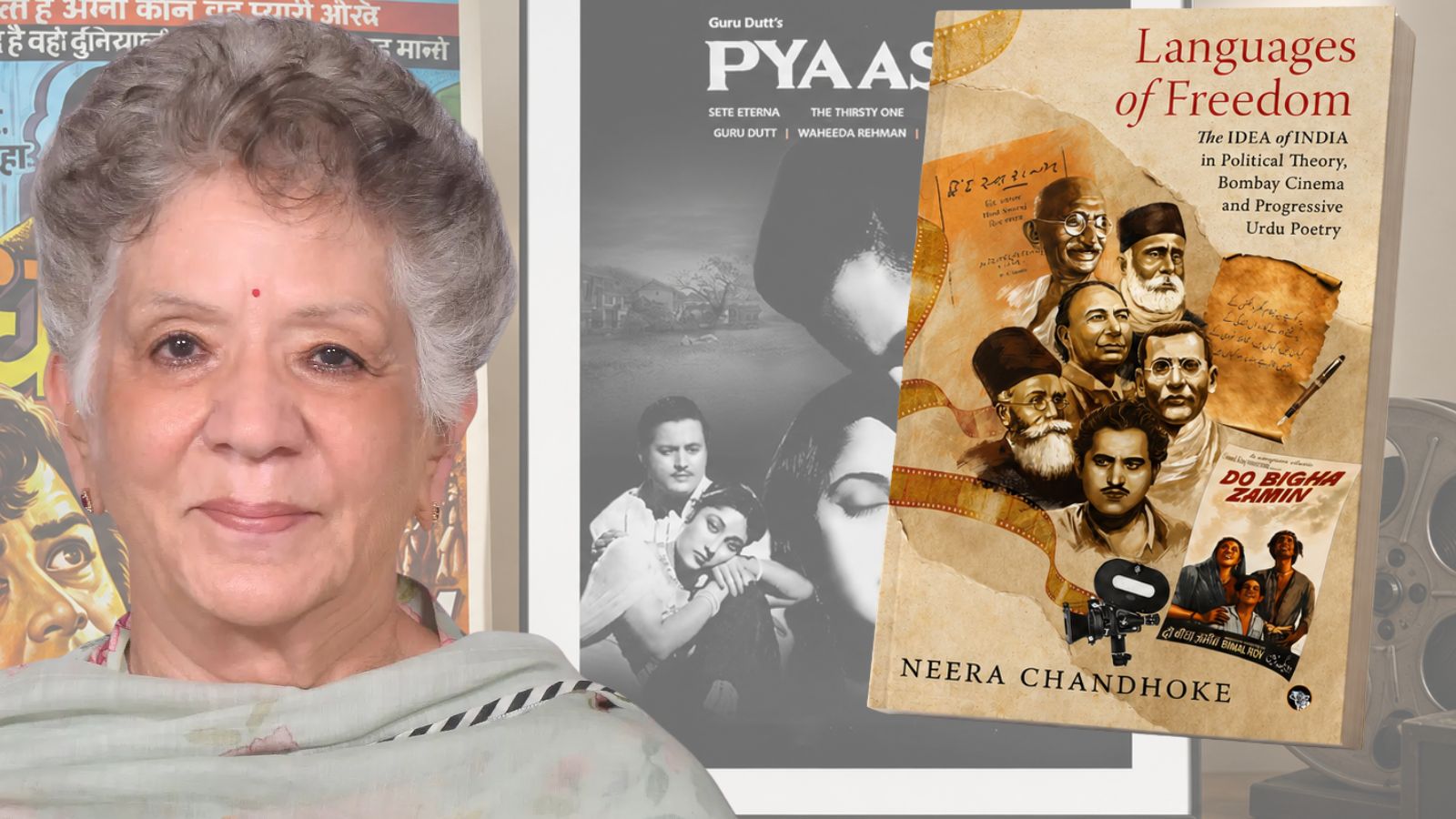
Political theorist Neera Chandhoke discusses how Bombay cinema and progressive Urdu poetry serve as vital tools for challenging power and defining the essence of Indian freedom.
Key Takeaways
- Neera Chandhoke's new book explores freedom through the lens of cinema and poetry.
- Cinema like 'Pyaasa' has historically acted as a critique of state power.
- A distinction is made between the Gandhian concept of 'Swaraj' and the secular 'Azadi'.
- The erosion of 'Sanjhi Virasat' (shared heritage) threatens democratic plurality.
In her profound new anthology, 'Languages of Freedom: The Idea of India in Political Theory, Bombay Cinema and Progressive Urdu Poetry', political theorist Neera Chandhoke argues that freedom is not merely a legal status but a continuous, performative struggle. By analyzing iconic works of art, she demonstrates how culture provides the vocabulary for political dissent.
The Cinematic Critique of Power
Chandhoke highlights the 1957 masterpiece 'Pyaasa' as a quintessential example of how popular cinema engaged with the failures of post-independence India. Through the melancholic songs of Guru Dutt's protagonist, the film questions the very dignity of a nation that claims to be free. Similarly, films like 'Dharamputra' addressed the traumatic scars of Partition, forcing the nation to confront questions of identity and fraternity.
Why This Matters
BozokMedia analysis shows that cultural artifacts—songs, films, and poems—often lead political movements by articulating grievances that formal political theory might overlook. The recent Gen Z protests in India, which utilized the slogan 'Azadi', prove that the legacy of the Progressive Writers' Movement remains a potent force in modern activism.
"Freedom is a performative exercise where one has to constantly struggle for it."
A critical distinction in Chandhoke's work is the difference between Swaraj and Azadi. While Swaraj is often linked to Gandhian philosophical virtues, Azadi is presented as a secular, radical concept championed by Bhagat Singh, encompassing liberation from patriarchy, economic hardship, and social hierarchy.
The Threat to Plurality
Chandhoke warns against the narrowing of India's cultural landscape. She argues that the erasure of 'Sanjhi Virasat'—the shared traditions that bind diverse communities—diminishes the very resources required for democratic thought. Without plurality, the capacity to imagine a just society is severely compromised.
Frequently Asked Questions
1. What is the core argument of Chandhoke's new book?
The book argues that the concept of freedom in India is deeply embedded in its cultural expressions, specifically cinema and progressive poetry.
2. How does Chandhoke define 'Azadi'?
She defines it as a secular concept involving agency, liberation from economic and patriarchal structures, and the right to protest.