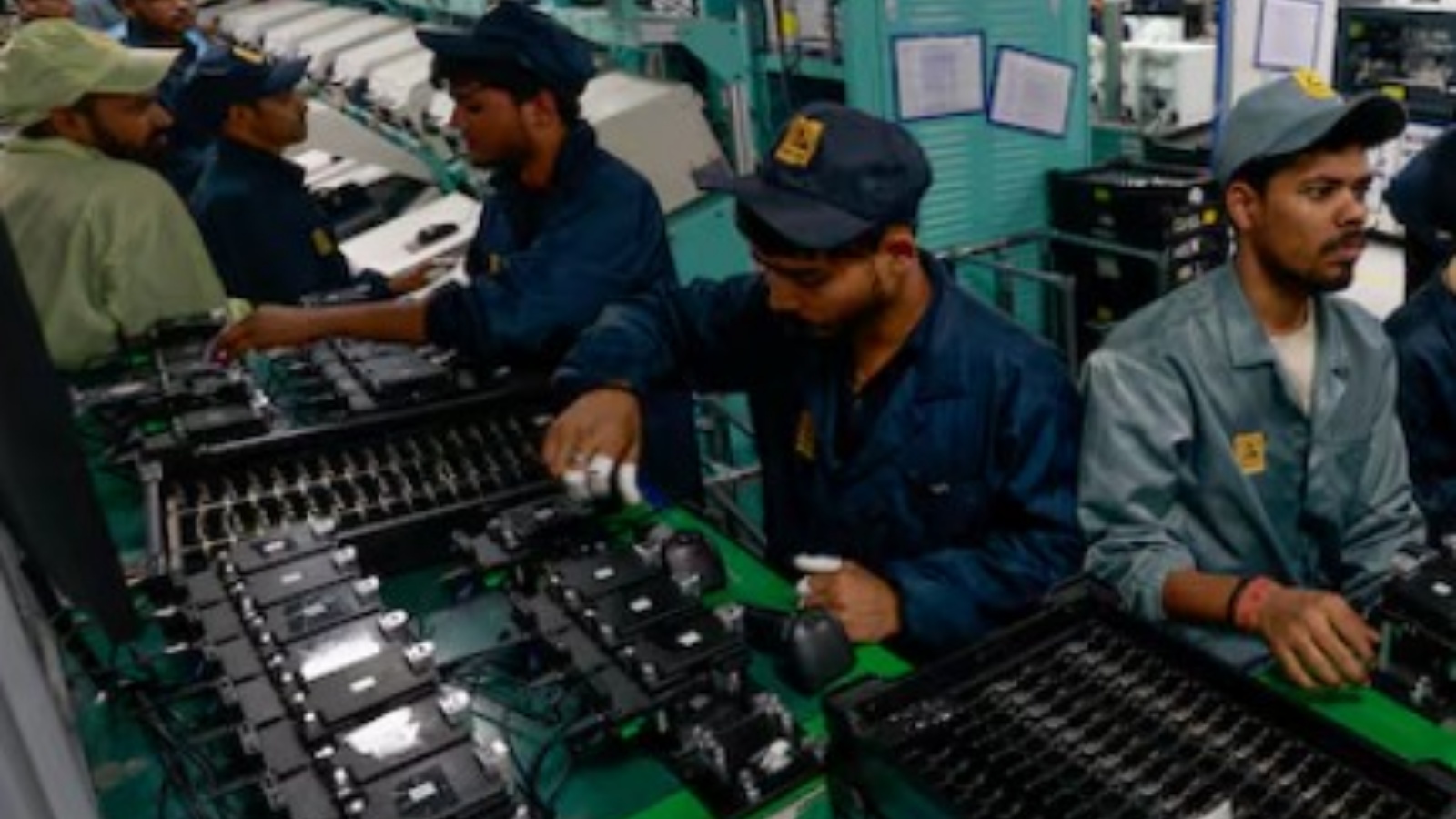
The finance ministry has exempted customs duty on 85 capital goods used in lithium‑ion cell production and display assembly manufacturing. The move aims to accelerate local manufacturing in electronics, electric vehicles and mobile phone sectors.
New Delhi (Ravi Dutta Mishra) – The Union finance ministry announced a complete customs duty waiver on inputs for lithium‑ion cell manufacturing, display assemblies and inductor‑coil modules until March 2029. A total of 85 capital goods, including backlight units, frames, anisotropic conductive film, cathode and anode extrusion coating machines, powder dryers and slurry transfer systems, are now duty‑free.
Targeted Industry Segments
A senior ministry official explained that the exemption is designed to give a decisive push to domestic production of display assemblies deployed in automotive, medical and industrial applications. The waiver for inductor‑coil modules, essential for wireless charging in smartphones, will also deepen value‑addition within India’s mobile‑phone manufacturing ecosystem.
Broadening Battery Incentives
Earlier duty relief for lithium‑ion cells was tied to specific battery types such as those for mobile phones, electric vehicles and energy‑storage systems. The new notification merges those entries, removing downstream restrictions and supporting cell production for a wider range of applications, from consumer electronics to grid‑scale storage.
Expert Perspectives
Manoj Mishra, Partner and Tax Controversy Management Leader at Grant Thornton Bharat, said, “Reducing import costs of critical components and capital equipment will enhance India’s cost competitiveness, spur greater domestic value addition, and foster localisation of high‑value manufacturing in smartphones and other electronic products.” He added that the expanded list of 85 exempted goods is likely to accelerate investments in domestic battery manufacturing, a strategically vital segment for smartphones, consumer electronics and electric mobility.
Financial Flows and Future Outlook
KS Chalapati Rao, Senior Research Fellow at the Academy of Business Studies, noted that foreign direct investment (FDI) into India’s electronics sector fell to $1.15 billion in FY26 from $2.04 billion in FY25. While this dip may reflect the maturation of the Production‑Linked Incentive (PLI) cycle, policy measures such as duty waivers can reignite long‑term capital inflows.
Policy Impact in Context
In a Lok Sabha reply last July, Minister of State for Electronics and Information Technology Jitin Prasada highlighted that mobile‑manufacturing units rose from just two in 2014‑15 to 300 in 2024‑25. Mobile production grew 28‑fold to Rs 5.45 lakh crore, and exports surged 127‑fold to Rs 2 lakh crore. The current duty exemption builds on this momentum, promising to cement India’s role as a global electronics hub.
