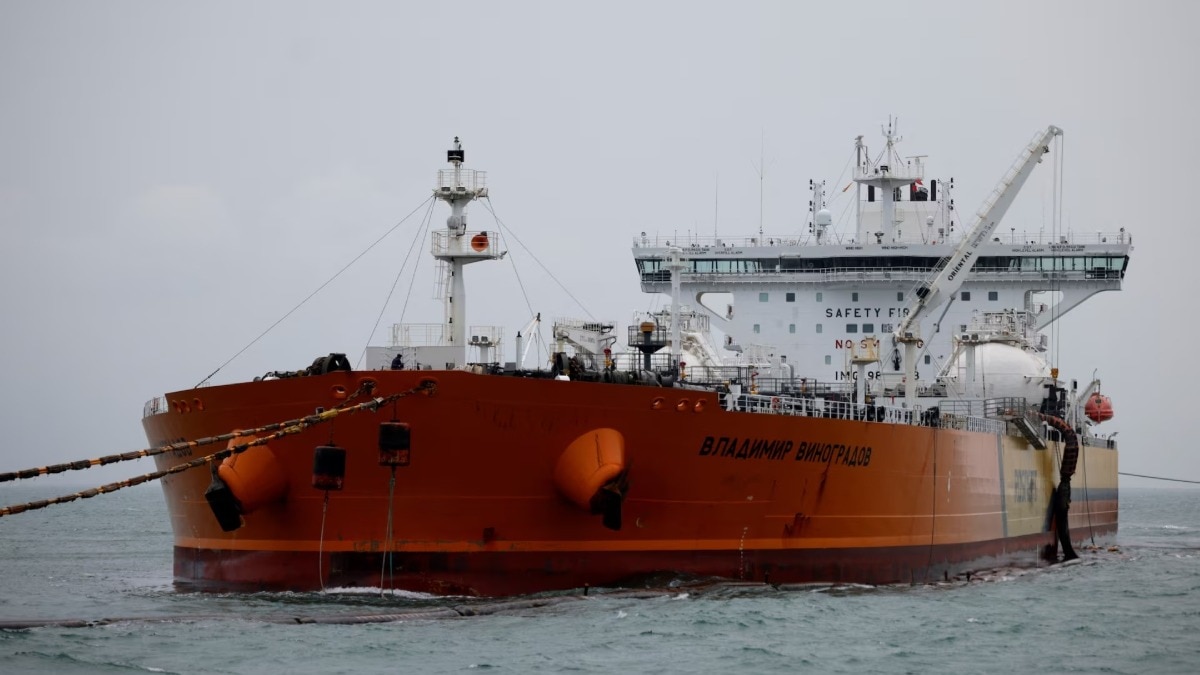
In June 2026, India pushed its Russian crude oil imports to a record level, marking a 34% jump from the previous month. The move underscores a strategic shift toward energy diversification amid escalating geopolitical tensions in the Middle East.
Key Takeaways (मुख्य बिंदु)
- June saw a 34% increase in India's Russian crude oil imports
- Import value reached €4.5 billion, accounting for 83% of total Russian fuel imports
- Refineries reported supply jumps ranging from 45% to 150%
The renewed US‑Iran confrontation and the closure of the Hormuz Strait have intensified global oil‑gas supply anxieties. Against this backdrop, India has amplified its purchase of Russian crude as part of a broader “Plan‑B” to diversify energy sources. According to the Centre for Research on Energy and Clean Air (CREA), India imported Russian crude worth €4.5 billion in June, representing 83% of its total €5.5 billion Russian fossil‑fuel imports.
Historical Context and Comparative Data
While Russia’s overall oil export revenue has slipped, India’s imports surged 34% compared with May 2026. This growth not only positions India as the world’s second‑largest buyer of Russian fuel after China but also reinforces a decades‑long energy partnership that began in the early 1990s.
Impact on Domestic Refineries
Higher Russian crude supplies have directly benefitted India’s major refineries. Reliance Industries’ Jamnagar refinery reported a 150% increase in crude intake for June, and Indian Oil Corp’s Paradip refinery saw a 126% rise. BPCL’s Kochi refinery recorded an 82% jump, while Nayara Energy’s Vadinar unit grew by 45%. These supply spikes help stabilize domestic gasoline, diesel, and aviation‑turbo‑fuel (ATF) prices and mitigate the cost pressure from higher‑priced imports.
Export of Refined Products
Beyond domestic consumption, India is now exporting refined petroleum products derived from Russian crude. In June, the country shipped €814 million worth of oil products to the European Union, Australia, and the United States. Key exporters include Jamnagar refinery, Turkey‑owned STAR refinery, and Turkey’s Tuzla‑Izmit refinery. Over the past three months, 60% of Tuzla‑Izmit’s crude and 27% of Jamnagar’s feedstock originated from Russia, highlighting India’s emerging role as a refined‑product supplier to Western markets.
Future Outlook and Challenges
As Middle‑East tensions linger, India must continue to fortify its energy security while navigating the volatility of Russian oil pricing and potential sanctions. The current surge signals a decisive shift toward diversification, positioning India as a pivotal player in the global energy landscape. Sustaining this trajectory could boost refinery throughput, generate export‑driven revenues, and underpin long‑term economic growth.