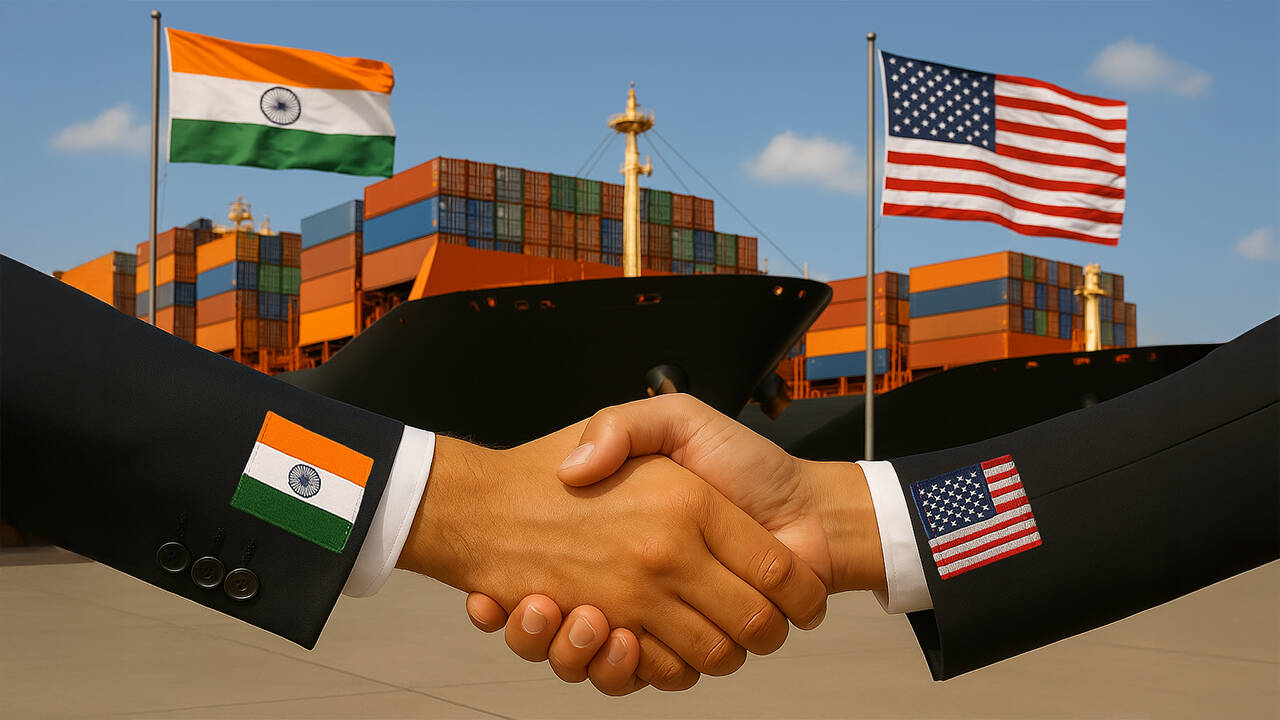
The framework for a bilateral trade agreement between India and the United States is complete, and officials say it will be signed when the timing is right. India is pushing for a tariff structure that gives it a comparative edge over rival economies.
मुख्य बिंदु (Key Takeaways)
- India‑US trade deal framework is finalized
- India seeks tariff advantage over competing nations
- No major obstacles reported in negotiations
The United States and India are on the cusp of sealing a bilateral trade agreement (BTA) after a senior official confirmed that the framework is ready and will be signed at “the right time.” The announcement underscores a renewed push to deepen economic ties while ensuring that India gains a competitive edge through tailored tariff provisions.
Background and Significance
Trade between the two nations has expanded steadily, especially in energy imports from the U.S. The forthcoming agreement aims to lock in preferential market access and create a comparative advantage for India against rivals such as China and Indonesia. By doing so, the deal promises tangible benefits for Indian manufacturers, farmers, workers, and consumers.
Negotiation Progress
Last month, Commerce Minister Piyush Goyal and U.S. Trade Representative Jamieson Greer held bilateral talks in New Delhi, focusing on the first phase of the proposed BTA. The unnamed official told PTI, “There was a very good discussion with the US team. The framework deal is ready…whenever there is the right time, it will be signed.” Both sides reportedly have a clear understanding of the framework and the ongoing BTA negotiations, with no major disagreements.
Section 301 Developments
On June 2, the U.S. Trade Representative (USTR) released preliminary findings from investigations into forced labour and excess industrial capacity across 60 economies. The proposal suggests a 10% tariff on imports from Canada, Ecuador, the EU, Indonesia, Mexico, and Pakistan, while 54 other economies—including India and China—face a 12.5% tariff. Commerce Secretary Rajesh Agarwal noted that the final report is still pending and could take four to six months, affecting the broader trade dialogue.
Future Outlook
The official emphasized that there is “no negativity or any sort of differences” between the two partners; both are aware of each other's expectations and the contents of the framework. Once signed, the agreement is expected to stabilize supply chains, enhance market access, and drive growth for both economies.

