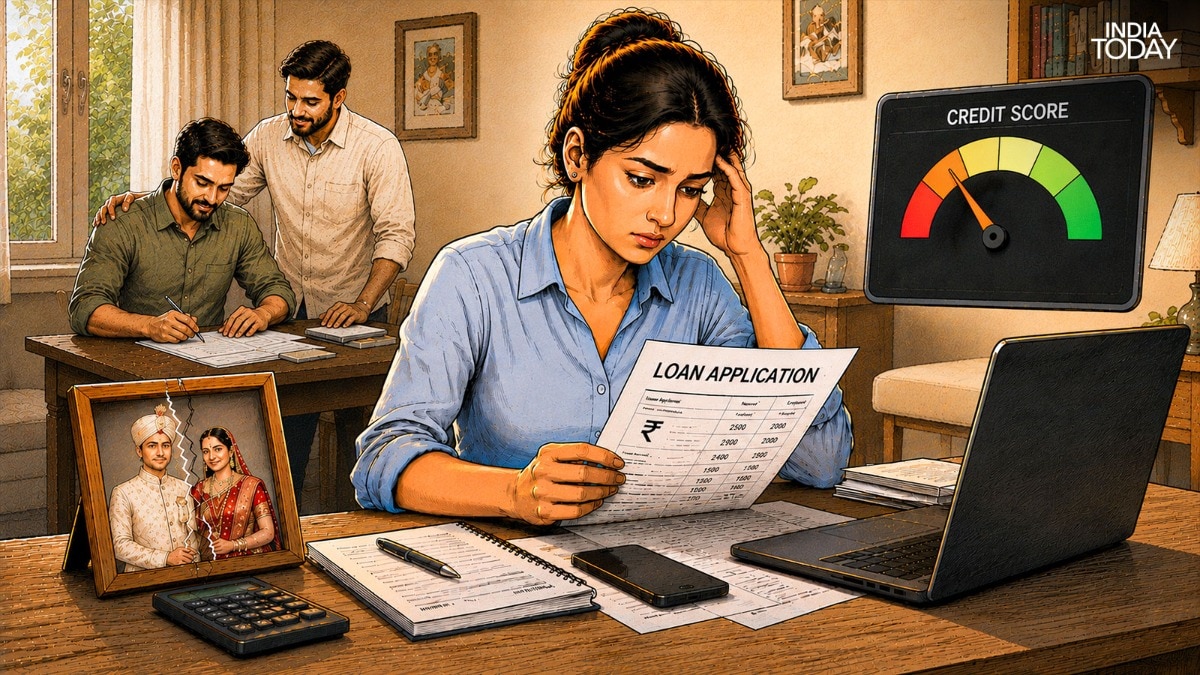
A university professor’s experience shows how a former spouse’s home‑loan defaults can sabotage a fresh personal‑loan application. The article unpacks the hidden legal risks of being a co‑borrower or guarantor.
मुख्य बिंदु (Key Takeaways)
- Joint loans expose all co‑borrowers to shared credit risk.
- Divorce does not erase a former partner’s defaults from your credit file.
- Understand the legal distinctions between co‑borrower, joint borrower and guarantor.
A university professor had never missed an EMI or delayed a credit‑card payment. Yet after her divorce, banks either rejected her personal‑loan request or offered a fraction of the amount she qualified for.
The Shock
She discovered that her ex‑husband, with whom she had taken a home loan, had defaulted on multiple installments. Those missed payments silently dragged down her credit score, even though she herself had a pristine repayment record.
Legal Perspective
According to Jyoti Prakash Gadia, Managing Director of Resurgent India Ltd., becoming a co‑borrower or guarantor legally ties your credit reputation to another person’s repayment behaviour. “If the principal borrower defaults, every party listed on the loan can see their borrowing capacity curtailed,” she explains.
Co‑borrower vs Joint Borrower vs Guarantor
A co‑borrower shares both the loan application and repayment responsibility. A joint borrower typically shares ownership of the underlying asset as well as liability. A guarantor does not usually make EMI payments initially, but becomes fully liable if the primary borrower defaults. Ignoring these nuances can lead to years of financial hardship.
Why Families Fall Into This Trap
Founder of Zavo, Kundan Shahi, notes that trust often replaces due‑diligence within families—parents co‑apply for education loans, spouses jointly secure home loans, siblings guarantee business financing. Lenders, however, care only about legal liability, not familial bonds.
Precautionary Steps
Before signing any joint‑loan document, consider: (1) Review the credit histories of all parties involved, (2) Quantify the potential impact of a future default, and (3) Explore alternative financing options. A measured approach can prevent emotional goodwill from turning into a long‑term financial liability.