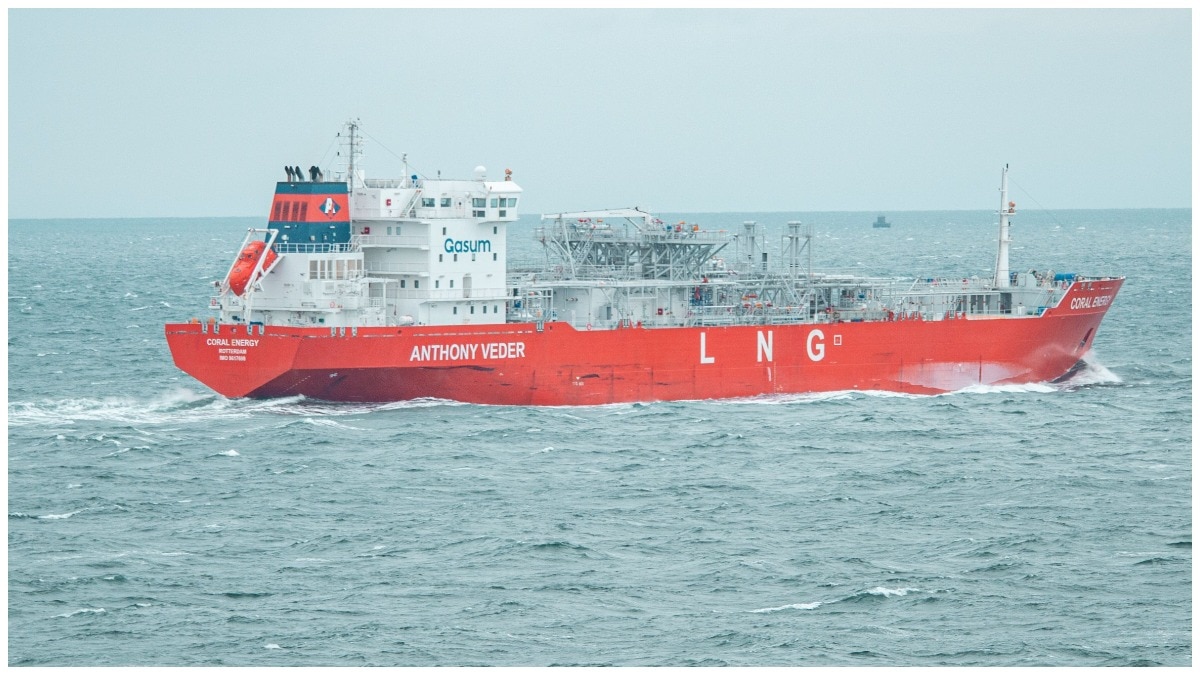
Amid rising tensions in West Asia and uncertainty in the Strait of Hormuz, India has successfully secured its energy future by diversifying LNG imports. Despite a massive 91% decline in supplies from Qatar, imports from the US, Oman, and Africa have surged to stabilize the market.
Key Takeaways
- LNG imports from Qatar plummeted by 91.3% due to geopolitical tensions in the Strait of Hormuz.
- India mitigated the risk by boosting imports from the US, Oman, Nigeria, and Angola.
- Total LNG imports rose by 15.4% to 7.08 million tonnes between May and July.
- The US has emerged as India's top LNG supplier with a 252.8% increase in shipments.
As geopolitical volatility intensifies in West Asia and uncertainty looms over the Strait of Hormuz, India has executed a strategic pivot to safeguard its energy security. Between May and July, India aggressively shifted its Liquefied Natural Gas (LNG) sourcing strategy to compensate for a massive supply vacuum left by traditional partners. This proactive measure prevented a potential domestic energy crisis during a period of high regional tension.
Diversification: The New Energy Shield
According to shipping tracking data from Kpler, India's reliance on the volatile Middle Eastern corridors has been offset by record-breaking purchases from non-traditional sources. While imports from Qatar witnessed a staggering 91.3% decline, shipments from the United States surged by 252.8%, making the US India's largest LNG supplier at 2.19 million tonnes. Other significant contributors included Oman, which saw a 340.9% jump, and Nigeria, which rose by 123.8%.
Why This Matters
BozokMedia analysis shows that India's ability to pivot its supply chain mid-crisis is a testament to its maturing energy diplomacy. By diversifying away from the Strait of Hormuz—a critical chokepoint prone to US-Iran conflicts—India has insulated its vital sectors like fertilizers, electricity, and city gas distribution from regional warfare and maritime blockades.
India's energy security strategy has evolved from mere procurement to strategic route and source diversification.
Historically, nearly 60% of India's LNG imports passed through the Strait of Hormuz, heavily involving Qatar and the UAE. The recent shift ensures that critical industries, including ceramics and power generation, remain operational even when maritime routes are compromised.
| Country | Import Change (%) | Role in India's Mix |
|---|---|---|
| USA | +252.8% | Primary Supplier |
| Oman | +340.9% | Rapidly Growing Source |
| Qatar | -91.3% | Significant Decline |
| UAE | -34.4% | Moderate Decline |
Frequently Asked Questions
1. Why did LNG supplies from Qatar drop so significantly?
Geopolitical tensions in West Asia and security risks in the Strait of Hormuz led to a major reduction in shipments from Qatar.
2. How did India manage to avoid a gas shortage?
India successfully diverted its procurement to the US, Oman, Nigeria, and Angola, increasing total imports by 15.4%.