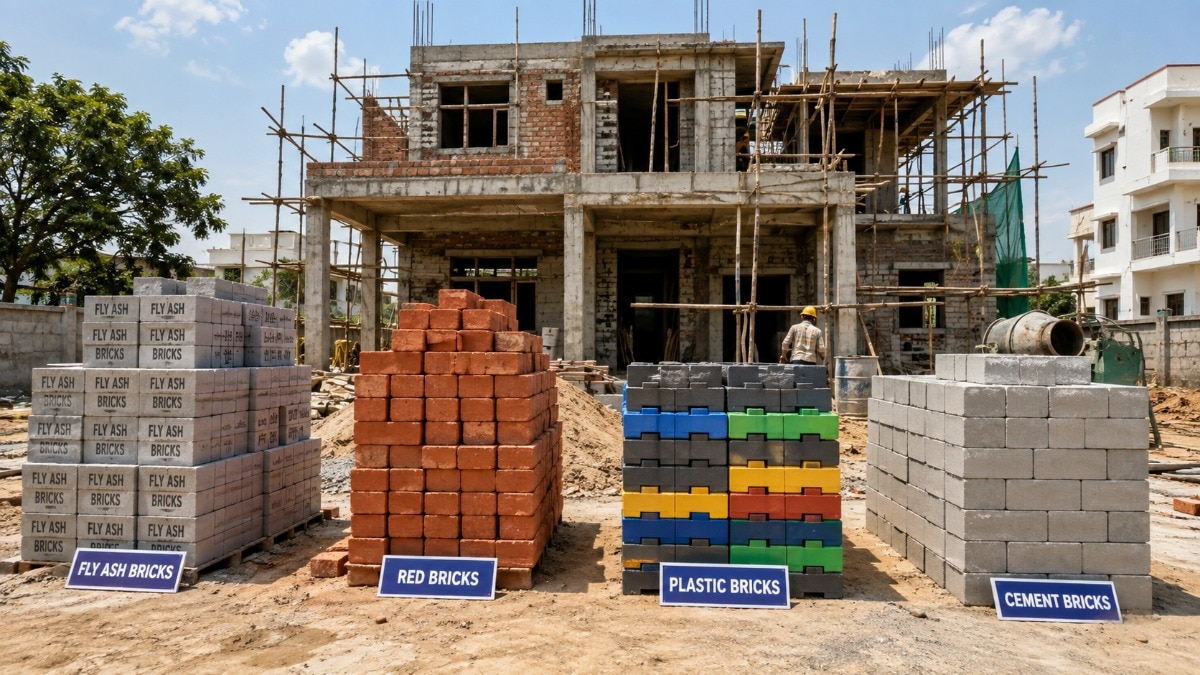
Traditional red bricks are losing their dominance in the construction industry. New alternatives like cement, fly ash, and plastic bricks are emerging as more cost-effective and durable options for modern homes.
Key Takeaways
- Cement and fly ash bricks are more economical than traditional red bricks.
- Plastic bricks offer superior waterproofing and durability.
- Modern alternatives significantly reduce the cost of mortar and plaster.
Building a dream home requires meticulous research, focusing on both structural integrity and budget optimization. For decades, the red clay brick has been the backbone of construction. However, as material science evolves, the industry is witnessing a massive shift toward advanced alternatives that promise better performance at a fraction of the cost.
Modern Brick Alternatives and Their Benefits
The market is no longer limited to traditional clay. Several innovative options are now available that cater to the needs of modern architecture and sustainability.
1. Cement Bricks (Concrete Blocks)
Made from a mixture of stone dust and cement, these blocks are larger than standard red bricks. This larger size allows for faster wall construction and requires fewer units to cover the same area. BozokMedia analysis shows that using cement bricks can significantly reduce the consumption of mortar (cement-sand mix) due to their uniform shape and size, leading to overall cost savings.
2. Fly Ash Bricks
Produced using the residue from thermal power plants, fly ash bricks are an eco-friendly revolution. They have low water absorption rates, which helps in preventing dampness in walls. Their precision-engineered shape ensures a smoother finish, requiring less plastering material during the final stages of construction.
3. Plastic Bricks
Perhaps the most disruptive innovation is the plastic brick. Created by melting recycled plastic waste, these bricks are incredibly strong and completely waterproof. They offer a solution to both plastic waste management and the long-standing problem of seepage in traditional masonry.
Why This Matters
As urbanization accelerates and the cost of raw materials fluctuates, choosing the right building component is critical for long-term financial planning. Transitioning from traditional to modern bricks is not just a trend; it is a strategic move to ensure structural longevity while managing construction overheads.
The shift toward alternative masonry is driven by the dual need for economic efficiency and environmental sustainability in modern urban development.
| Feature | Red Brick | Cement Brick | Fly Ash Brick |
|---|---|---|---|
| Cost | Standard | Lower | Lowest |
| Strength | Medium | High | High |
| Moisture Resistance | Low | Medium | High |
Frequently Asked Questions
Q1: Are plastic bricks safe for residential use?
Yes, they are engineered for high durability and are much more resistant to environmental wear and tear than clay bricks.
Q2: Do these new bricks require special labor?
While they may require slight adjustments in handling due to size, they generally simplify the masonry process due to their uniformity.