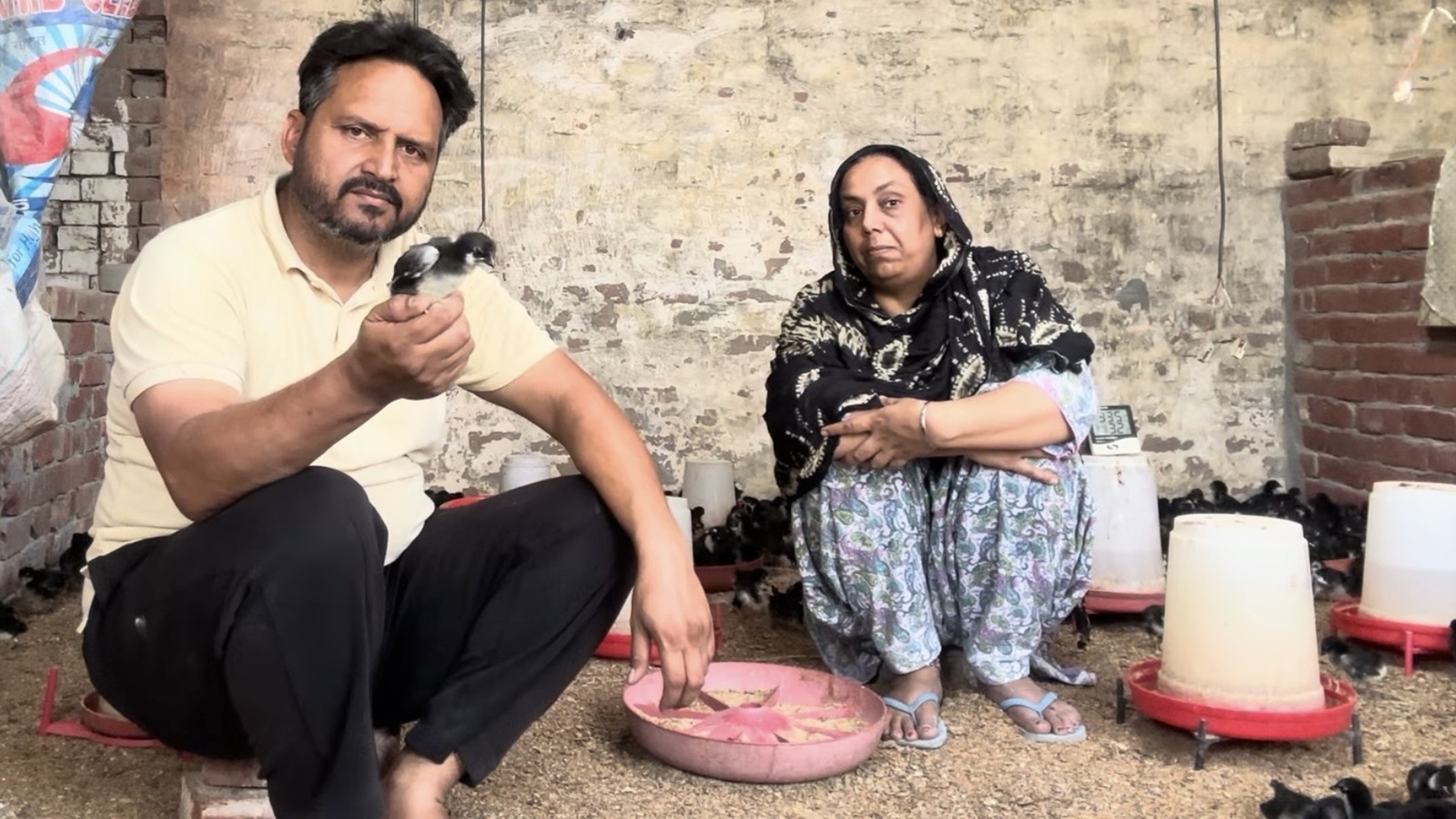
After losing their daughter and their livelihood, Sarabjeet Kaur and Sandeep Singh rebuilt their lives starting with only 100 chicks. Today, they manage a massive poultry network supporting 500 farmers.
Key Takeaways
- A devastating personal loss left the couple with only ₹10,000 and no income.
- They started a small poultry unit with 100 desi chicks.
- The business has scaled to 5,000-10,000 birds and a network of 500 farmers.
- They provide technical training and buy-back support to local farmers.
In the heart of Punjab, Sarabjeet Kaur and Sandeep Singh have scripted a story of resilience that defies all odds. Six years ago, the couple faced a crushing blow when their two-month-old daughter passed away after a prolonged illness. To fund her medical treatment at PGIMER, Chandigarh, they were forced to sell their three buffaloes—their only source of income—leaving them financially destitute and emotionally broken.
With nothing left but ₹10,000 in savings, Sarabjeet, a postgraduate in Political Science and former teacher, refused to succumb to depression. She suggested using the remaining funds to buy 100 desi (country) chicks. What began as a desperate attempt to survive has now blossomed into the Grewal Desi Poultry Farm, a thriving enterprise that supplies birds across multiple Indian states.
Why This Matters
BozokMedia analysis shows that this transition from traditional dairy to specialized poultry farming represents a significant shift in rural economic models. By integrating technical training with a supply-chain network, the couple has created a sustainable ecosystem that mitigates the risks typically associated with small-scale farming.
"True entrepreneurship is not just about profit; it is about building a community that rises together during times of crisis."
The scale of their operation is staggering. They currently manage between 5,000 to 10,000 birds and supply an average of 500-700 chicks daily to farmers in Punjab, Haryana, Rajasthan, Himachal Pradesh, and Jammu & Kashmir. Beyond selling birds, they have diversified into organic eggs and even chicken pickles, tapping into the growing demand for ethnic, chemical-free food products.
Historical Background
Historically, poultry farming in India was seen as a secondary occupation. However, with the rise of organized retail and the increasing awareness of organic diets, it has transformed into a high-growth sector capable of generating six-figure monthly incomes for disciplined entrepreneurs.
Frequently Asked Questions
1. How do they support other farmers?
They provide technical guidance on feed, disease prevention, and offer buy-back arrangements to reduce the farmer's market risk.
2. Can someone start this with a small budget?
Yes, Sandeep advises that one can start with as little as ₹5,000 and scale up through hard work and dedication.