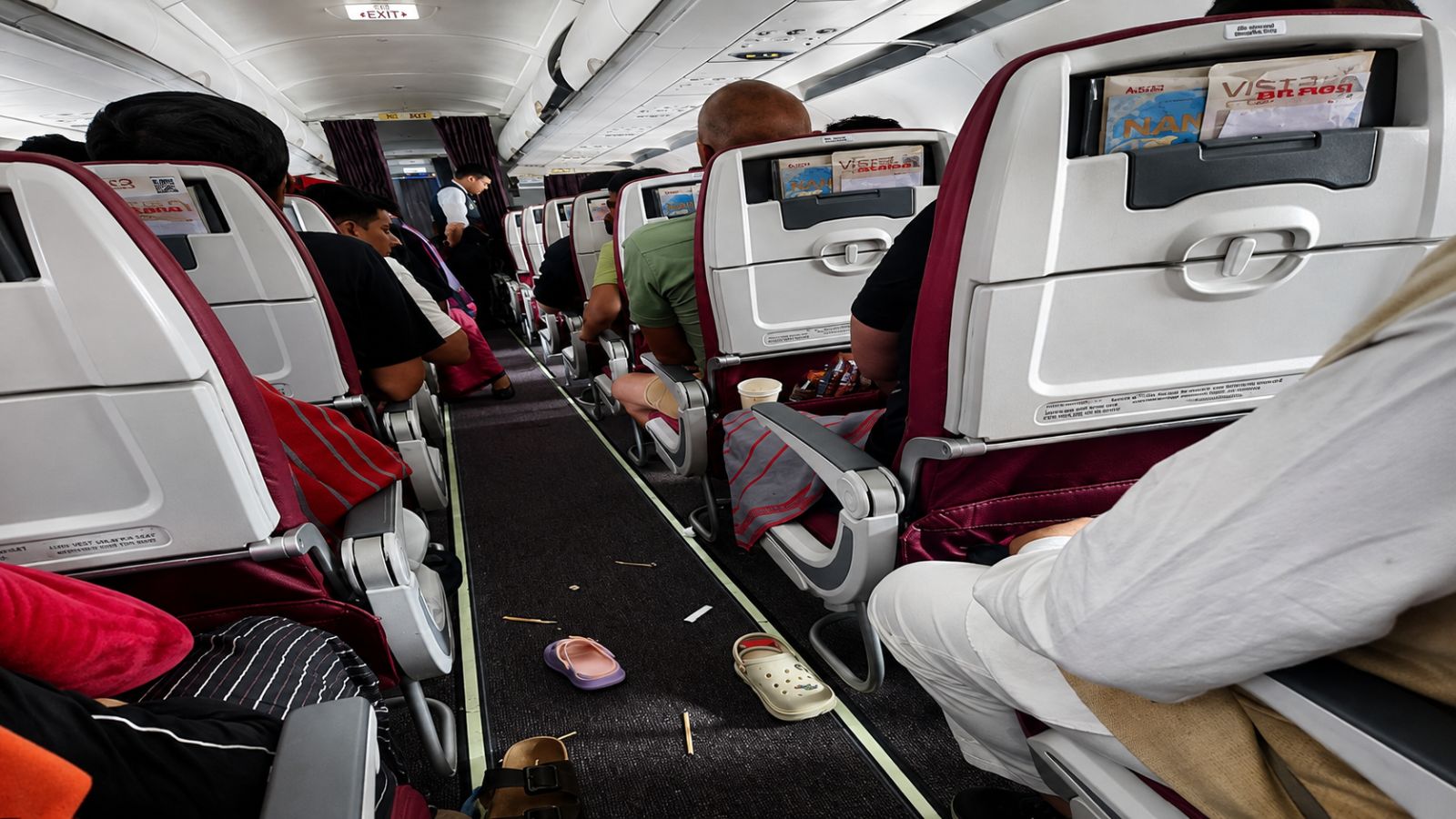
An Air India A320 flight from Phuket to Delhi experienced a sudden 300-foot altitude loss, injuring 17 people. The AAIB is now investigating reports of cascading hydraulic and control system snags.
Key Takeaways
- Air India flight AI2379 (A320) suffered a sudden 300-foot altitude drop over Odisha.
- 17 individuals, including 13 passengers and 4 crew members, were injured and hospitalized.
- Initial reports cited turbulence, but current evidence suggests cascading hydraulic and control system failures.
- The incident has been officially classified as a 'serious incident' by the AAIB.
An Air India Airbus A320 (VT-EXO) operating from Phuket to Delhi encountered a terrifying ordeal last Tuesday. While cruising at approximately 36,000 feet over Odisha, the aircraft suffered a sudden altitude loss of about 300 feet, leading to injuries among 17 people on board. The aircraft was carrying a total of 137 passengers and 8 crew members.
Turbulence or Technical Failure?
While the government and the airline initially attributed the mid-air scare to severe turbulence, sources indicate that the aircraft faced a series of technical snags involving the hydraulic and control systems. It is believed that pilots had to take manual control of the aircraft following cockpit warnings, which likely resulted in the altitude drop. Aviation experts note that simultaneous hydraulic failures in an A320 are exceptionally rare, adding a layer of complexity to the probe.
Why This Matters
BozokMedia analysis shows that if this incident was indeed caused by cascading technical failures rather than weather, it points to a potential systemic maintenance issue. The involvement of Airbus specialists from Europe underscores the gravity of the situation, as the industry seeks to understand how multiple critical systems could fail simultaneously.
"In aviation, a 'cascading failure' is the most critical scenario where one malfunction triggers another, potentially compromising the aircraft's structural integrity."
Pilot Screening and Investigation Status
Adding to the controversy, the preliminary drug screening of the pilot-in-command returned a 'non-negative' result. While confirmatory tests are pending—as certain medications can cause false positives—the result has put the flight crew's conduct under scrutiny. The aircraft's Flight Data Recorder (FDR) and Cockpit Voice Recorder (CVR) have been secured for detailed forensic analysis.
| Detail | Information |
|---|---|
| Aircraft Model | Airbus A320 (VT-EXO) |
| Total Injured | 17 (13 Passengers, 4 Crew) |
| Location of Incident | Over Odisha (36,000 ft) |
| Investigating Body | AAIB (Aircraft Accident Investigation Bureau) |
Frequently Asked Questions
Q1: What is the AAIB and why is it involved?
A: The Aircraft Accident Investigation Bureau (AAIB) is the statutory body responsible for investigating aircraft accidents and serious incidents to prevent future occurrences.
Q2: Was the incident caused by bad weather?
A: While initially blamed on turbulence, the investigation is now focusing on hydraulic and control system malfunctions.


