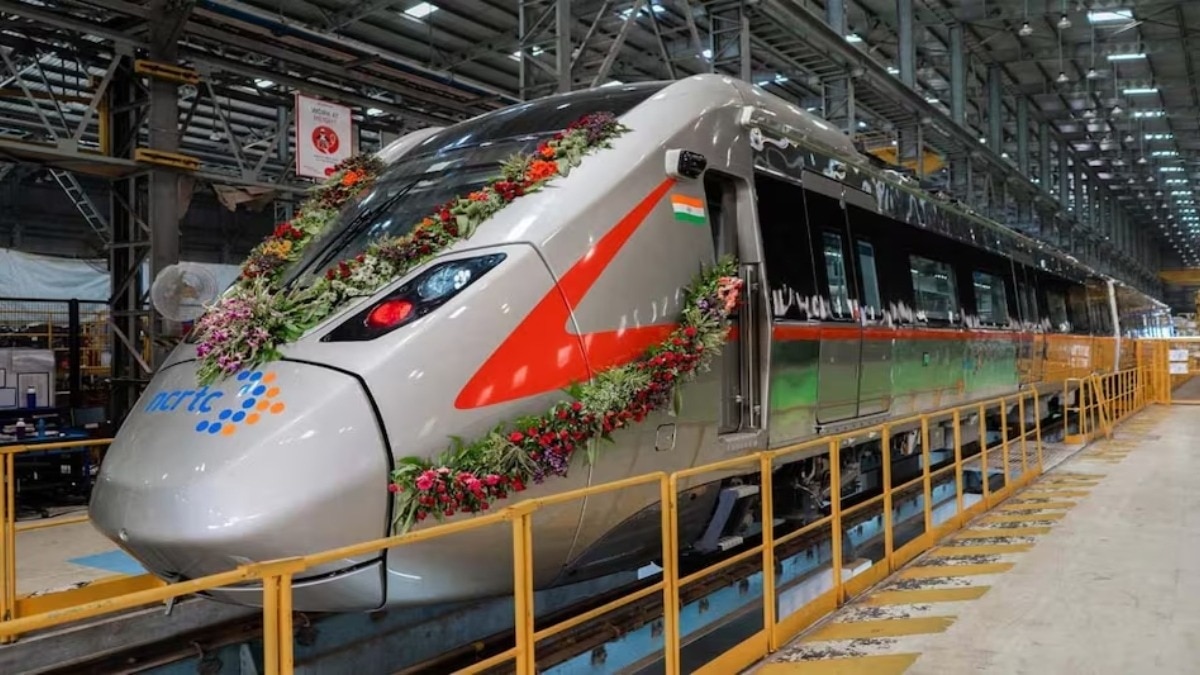
NCRTC has announced the station names for the 72.44 km Ghaziabad-Jewar RRTS corridor. The high-speed link will connect Ghaziabad to Noida International Airport in just 40-50 minutes.
Key Takeaways
- The 72.44 km Ghaziabad-Jewar corridor is currently in the DPR stage.
- The route will feature 11 Namo Bharat (RRTS) stations and 18 Metro stations.
- Trains are designed to run at speeds up to 180 kmph.
- The estimated project cost is approximately ₹20,640 crore.
The National Capital Region Transport Corporation (NCRTC) has made a monumental announcement regarding the connectivity of the National Capital Region (NCR). The station names for the proposed Ghaziabad-Jewar RRTS corridor have been officially unveiled, promising a seamless link between Ghaziabad, Greater Noida, and the upcoming Noida International Airport.
Proposed Station Details
The corridor is designed as a multi-modal transit system where both high-speed Namo Bharat trains and local metro services will share the infrastructure. This dual-layer connectivity ensures both rapid regional transit and efficient local commuting.
| Feature | Namo Bharat (RRTS) | Local Metro |
|---|---|---|
| Number of Stations | 11 | 18 |
| Max Speed | 180 kmph | Standard Metro Speed |
| Primary Function | Regional Rapid Transit | Local Urban Commute |
The 11 Namo Bharat Stations: Ghaziabad South, Greater Noida Sector 2, Sector 3, Sector 12, Surajpur, Alpha-I, Ecotech-VI, Dankaur, YEIDA North (Sector 18), YEIDA Central (Sector 21), and Noida International Airport.
The 18 Metro Stations: Siddharth Vihar, Greater Noida Sector 16C, Ecotech 12, Greater Noida West (Sector 4), Knowledge Park V, Police Lines Surajpur, and YEIDA Sectors 15, 17, 33, among others.
Why This Matters
BozokMedia analysis shows that this corridor is a strategic game-changer for Uttar Pradesh's infrastructure. By connecting the industrial hubs of Greater Noida with the massive Noida International Airport, the project will trigger a surge in real estate, logistics, and commercial development along the entire 72.5 km stretch.
This corridor will redefine regional mobility in the NCR, effectively shrinking the distance between major economic hubs.
Historical Background
The Regional Rapid Transit System (RRTS) is India's answer to high-speed commuter needs. Following the successful implementation of the Delhi-Meerut corridor, the NCRTC is now expanding its footprint to integrate the Yamuna Expressway region into the mainstream transport network, ensuring that the new airport is globally accessible.
Frequently Asked Questions
Q1: How long will it take to travel from Ghaziabad to Jewar Airport?
Ans: Once operational, the journey is expected to take only 40 to 50 minutes.
Q2: What is the total investment for this corridor?
Ans: The project has an estimated cost of roughly ₹20,640 crore.