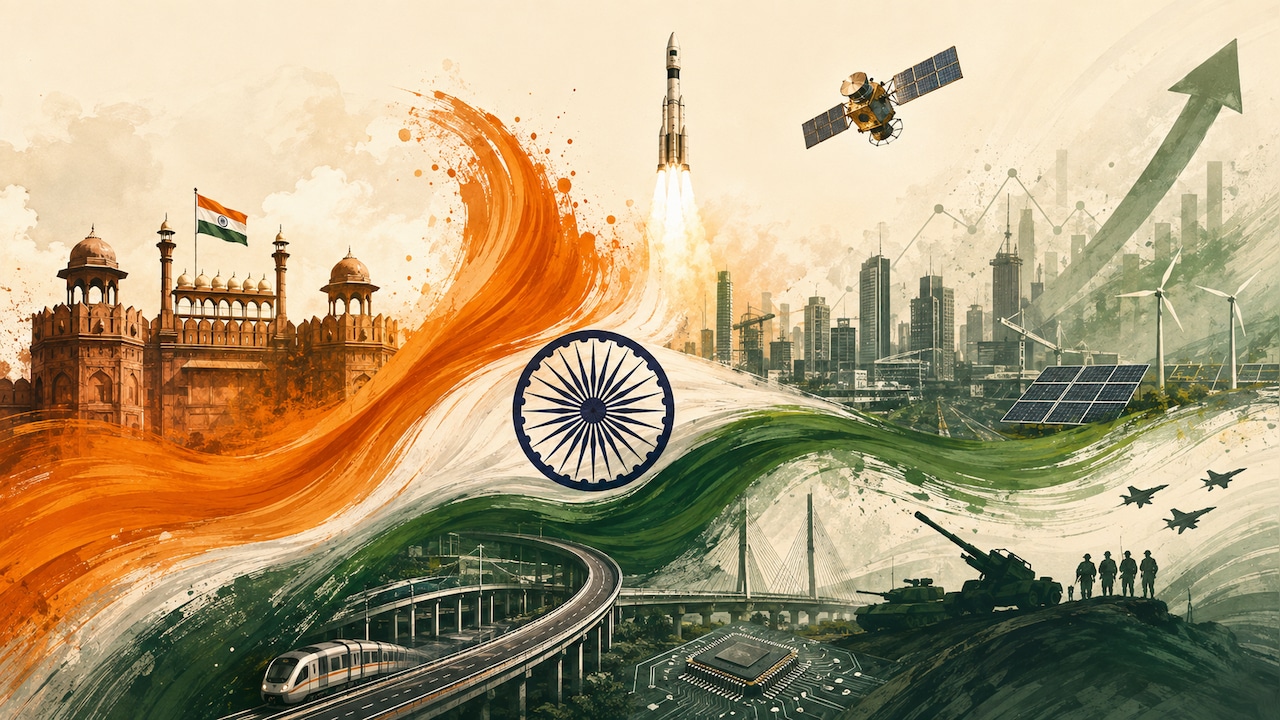
Delivering his 80th Independence Day speech, PM Narendra Modi introduced the 'Sapt Dhara' framework, focusing on energy security, semiconductor sovereignty, and manufacturing to achieve a developed India by 2047.
Key Takeaways
- PM Modi introduced the 'Sapt Dhara' seven-point growth framework.
- Focus on self-reliance in semiconductors, AI, and critical minerals to prevent 'resource weaponization'.
- Target of 100 GW nuclear power by 2047 and 5 new reactors within this decade.
- ₹85,000 crore allocated for 'Samudra Manthan' to boost offshore oil and gas exploration.
From the ramparts of the Red Fort, Prime Minister Narendra Modi laid out a transformative vision for India's journey toward becoming a developed nation by 2047. Centered on the theme of self-reliance, the Prime Minister emphasized that India must secure its position in critical sectors such as energy, semiconductors, and advanced technology to insulate itself from the increasing 'weaponization' of global resources and territories.
The 'Sapt Dhara' Framework
To guide the nation over the next five to seven years, the Prime Minister unveiled the 'Sapt Dhara' growth framework. This seven-point strategy focuses on: manufacturing, agriculture and food production, technology and innovation, infrastructure and connectivity, defense, the green and blue economy, and India’s soft power. This framework is designed to navigate the complexities of a post-globalization world where supply chains are increasingly volatile.
Why This Matters
BozokMedia analysis shows that this roadmap is a direct response to shifting geopolitical realities. With maritime chokepoints like the Strait of Hormuz facing risks due to regional conflicts, India's heavy reliance on energy imports (40% of oil and 90% of LPG) makes energy security a matter of national survival. Transitioning from an import-dependent economy to a manufacturing powerhouse is no longer an option but a strategic necessity.
'Relying on imports does not build India’s capabilities; we must strengthen our own capacities to protect our interests.'
Energy and Semiconductor Sovereignty
Recognizing that the future of AI and data centers depends on massive electricity supplies, PM Modi highlighted the importance of nuclear energy. Through the SHANTI Act, India aims to reach 100 gigawatts of nuclear power by 2047. Furthermore, the Prime Minister addressed the semiconductor crisis, noting that chips are indispensable to every modern system, from medical equipment to transportation. To reduce crude oil dependence, the government has allocated ₹85,000 crore for the 'Samudra Manthan' initiative to explore offshore reserves.
Frequently Asked Questions
1. What is the 'Sapt Dhara' framework?
It is a seven-point development roadmap focusing on key sectors like manufacturing, tech, and defense to drive growth.
2. How does India plan to achieve energy security?
India is focusing on expanding nuclear energy to 100GW by 2047 and increasing offshore oil and gas exploration.