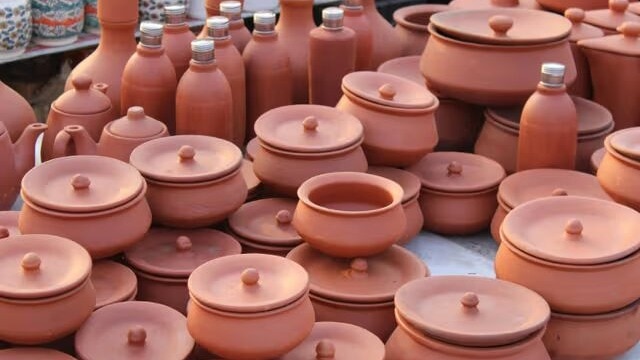
The Uttar Pradesh government's One District, One Product (ODOP) scheme has transformed Gorakhpur's traditional terracotta craft from a household occupation into a thriving commercial industry.
Key Takeaways
- The ODOP scheme and GI Tag have provided global recognition to Gorakhpur terracotta.
- Traditional household crafts are evolving into multi-crore enterprises.
- Government-provided toolkits and training have significantly boosted production capacity.
- Artisans now enjoy direct bank transfers and access to major urban markets.
In the rural belts surrounding Gorakhpur, generations of artisans have meticulously shaped local pond clay into intricate toys, utensils, and decor. However, the scale has shifted dramatically. Today, their iconic terracotta elephants, horses, and idols are traveling far beyond Uttar Pradesh, reaching major Indian metropolises, e-commerce platforms, and international markets.
This massive expansion is primarily driven by the Uttar Pradesh government’s One District, One Product (ODOP) initiative. By integrating this craft into the ODOP framework and securing a Geographical Indication (GI) tag, the government has provided artisans with a distinct identity, turning a subsistence-level occupation into a robust commercial enterprise.
Why This Matters
BozokMedia analysis shows that the impact of ODOP extends far beyond mere financial subsidies. It has created a specialized industrial ecosystem. Villages like Khutahan Khas, Langdi Gulriya, Padri Bazar, and Aurangabad have transformed into thriving terracotta clusters, providing sustainable livelihoods to hundreds of families, including a significant number of women.
The ODOP scheme has successfully bridged the gap between ancient craftsmanship and modern market demands.
The success stories are profound. Rajjan Prajapati, a President’s Award recipient, epitomizes this transformation. Rising from a humble mud house, he now operates a manufacturing unit with an annual turnover estimated at ₹1.5 crore. Similarly, Pannelal Prajapati from Aurangabad has scaled his business to ₹60-70 lakh annually, thanks to the free toolkits provided under the government program.
Historical Background
For centuries, Gorakhpur's terracotta was a localized craft, heavily dependent on seasonal fairs and local traders. Artisans worked with limited tools and had little to no access to organized markets or modern production techniques. The inclusion in the ODOP scheme has modernized the entire supply chain.
| Feature | Pre-ODOP Era | Post-ODOP Era |
|---|---|---|
| Market Reach | Local fairs and nearby villages | Mumbai, Varanasi, and Global Online Markets |
| Equipment | Traditional/Manual | Modern Toolkits & Technical Training |
| Economic Scale | Subsistence/Household | Large-scale Commercial Enterprises |
| Payment Method | Cash via local traders | Direct Digital Bank Transfers |
Frequently Asked Questions
1. How does the ODOP scheme support local artisans?
It provides specialized training, free toolkits, financial assistance, and direct links to larger commercial markets.
2. Where is Gorakhpur terracotta sold now?
Beyond local markets, products are now being shipped to major cities like Mumbai and Varanasi, as well as through online retail channels.
