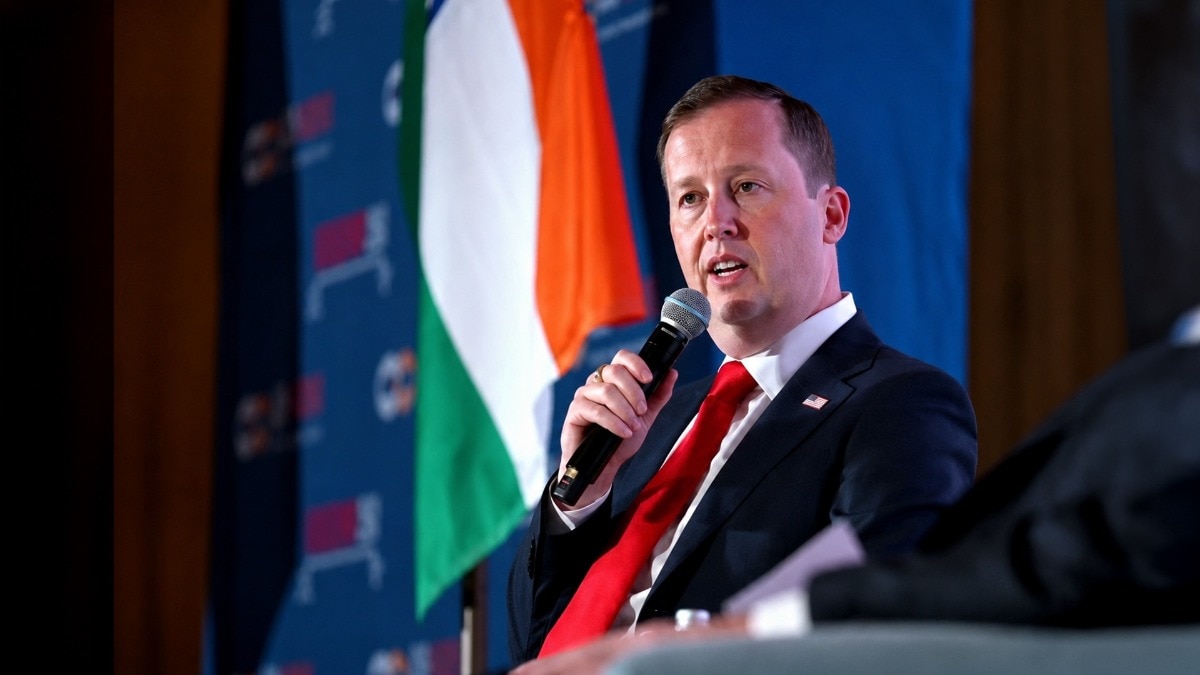
US Ambassador Sergio Gor has called for the resolution of trade frictions and the establishment of predictable tax frameworks to unlock the full potential of India-US economic ties, emphasizing the critical need for intellectual property protection.
- US Ambassador Sergio Gor emphasized the need for predictable taxation and regulatory frameworks.
- Called for 'rock-solid' Intellectual Property (IP) protections to boost investor confidence.
- Targeting a bilateral trade volume of USD 500 billion by 2030.
- Bilateral trade has surged from USD 20 billion to USD 240 billion over two decades.
Speaking at the national convention of the Indo-American Chamber of Commerce in Mumbai, US Ambassador Sergio Gor highlighted the immense potential of the economic relationship between India and the United States. He stressed that to truly unleash the power of this economic engine, both nations must address existing friction points as genuine partners.
A central theme of Ambassador Gor's address was the necessity of predictable taxation and regulatory frameworks. He argued that businesses require stability and clarity in tax laws to scale their operations and invest heavily. Without such predictability, the risk profile for global innovators remains higher than necessary.
Why This Matters
BozokMedia analysis suggests that the US is pivoting toward a more transactional yet strategic economic alignment with India. By demanding stronger IP protections and tax predictability, the US is signaling that while the political will exists, the operational environment in India must evolve to match global standards to facilitate the shift of high-tech manufacturing away from other Asian hubs.
"The transition from a strategic partnership to a comprehensive economic alliance requires the removal of regulatory ambiguity and the absolute safeguarding of innovation."
Addressing the sensitive issue of Intellectual Property (IP), Gor revealed that companies worldwide have reported thefts of their IP rights. Despite this, he reaffirmed that the US trusts India, noting that President Donald Trump has demonstrated significant trust and investment in the relationship since the onset of his administration.
The Ambassador provided a historical perspective on the growth of trade, noting a 12-fold increase from USD 20 billion to USD 240 billion over the last twenty years. He asserted that this growth was not accidental but a result of integrating value chains and strengthening supply chain resilience.
| Metric | 20 Years Ago | Current Status | 2030 Goal |
|---|---|---|---|
| Bilateral Trade | $20 Billion | $240 Billion | $500 Billion |
Furthermore, Gor called for candid, trust-based engagement regarding export controls, ensuring that innovators can expand their footprint in India without the fear of regulatory instability or theft of proprietary technology.
Frequently Asked Questions
1. What are the primary demands made by the US Ambassador?
The primary demands include predictable taxation, stronger intellectual property protections, and clearer regulatory frameworks for businesses.
2. What is the long-term trade goal for India and the US?
Both nations aim to increase their bilateral trade in goods and services to USD 500 billion by the year 2030.