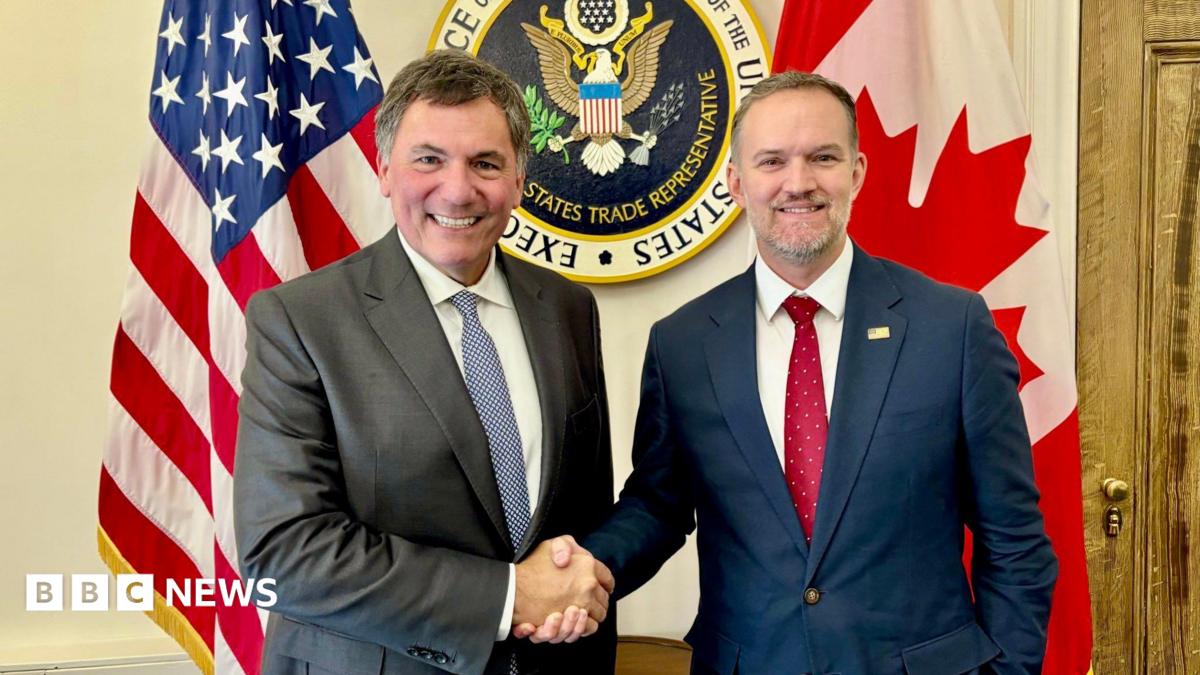
President Donald Trump and Prime Minister Mark Carney are touting significant progress in US-Canada trade negotiations, potentially averting a massive wave of new tariffs.
- Canada and the US are in the final stages of a major trade agreement.
- President Trump has paused a scheduled wave of 50% tariffs on Canadian goods.
- Key sticking points include dairy quotas and retaliatory tariffs on automobiles.
Canada and the United States are in the final stages of negotiating a highly anticipated trade deal. Both President Donald Trump and Prime Minister Mark Carney have hailed the recent discussions as a major success. Trump emphasized that the deal will benefit American farmers and manufacturers, while Carney asserted that the agreement would secure "the best terms" for Canada's strategic sectors and provide much-needed economic certainty.
Negotiators met for the third consecutive day on Wednesday, leading to a critical decision by the Trump administration to pause a wave of new tariffs that were set to be imposed on various Canadian goods. While the atmosphere remains optimistic, the specific details regarding concessions and the exact scope of the agreement remain murky. US Trade Representative Jamieson Greer stated that the Americans are "very happy" with the progress and aim to protect American jobs and supply chains.
Why This Matters
BozokMedia analysis shows that the stability of the North American trade corridor is vital for global markets. Any prolonged tariff war between these two giants could disrupt the automotive, steel, and lumber industries, leading to inflationary pressures across both nations.
The resolution of this trade tension is essential for maintaining the integrity of the North American economic bloc.
A major point of contention remains Canada's dairy sector. The US has been pushing for greater access for its cheese producers through adjusted quotas. However, Canadian Trade Minister Dominic LeBlanc has been firm, stating that Canada's dairy supply management program will remain "entirely intact." This reflects the intense domestic political pressure on the Carney government, as recent polls indicate 56% of Canadians favor a hardline approach against US demands.
Historically, trade relations between the US and Canada have been subject to sudden shifts in protectionist policies. The current tension stems from retaliatory tariffs imposed by Canada on American goods and the US's aggressive tariff stance. The upcoming weekend deadline remains a critical juncture for both administrations.
| Key Issue | US Position | Canada Position |
|---|---|---|
| Dairy Access | Demand for increased quotas | Supply management to remain intact |
| Automotive | Removal of retaliatory tariffs | Protecting domestic industry |
| Tariff Status | Paused pending final deal | Seeking reduction in steel/lumber tariffs |
Frequently Asked Questions
Question 1: What was the immediate impact of the meeting?
President Trump paused the implementation of new 50% tariffs on Canadian goods until the weekend.
Question 2: Is Canada conceding on its dairy industry?
No, Minister LeBlanc has explicitly stated that the dairy supply management program will remain unchanged.