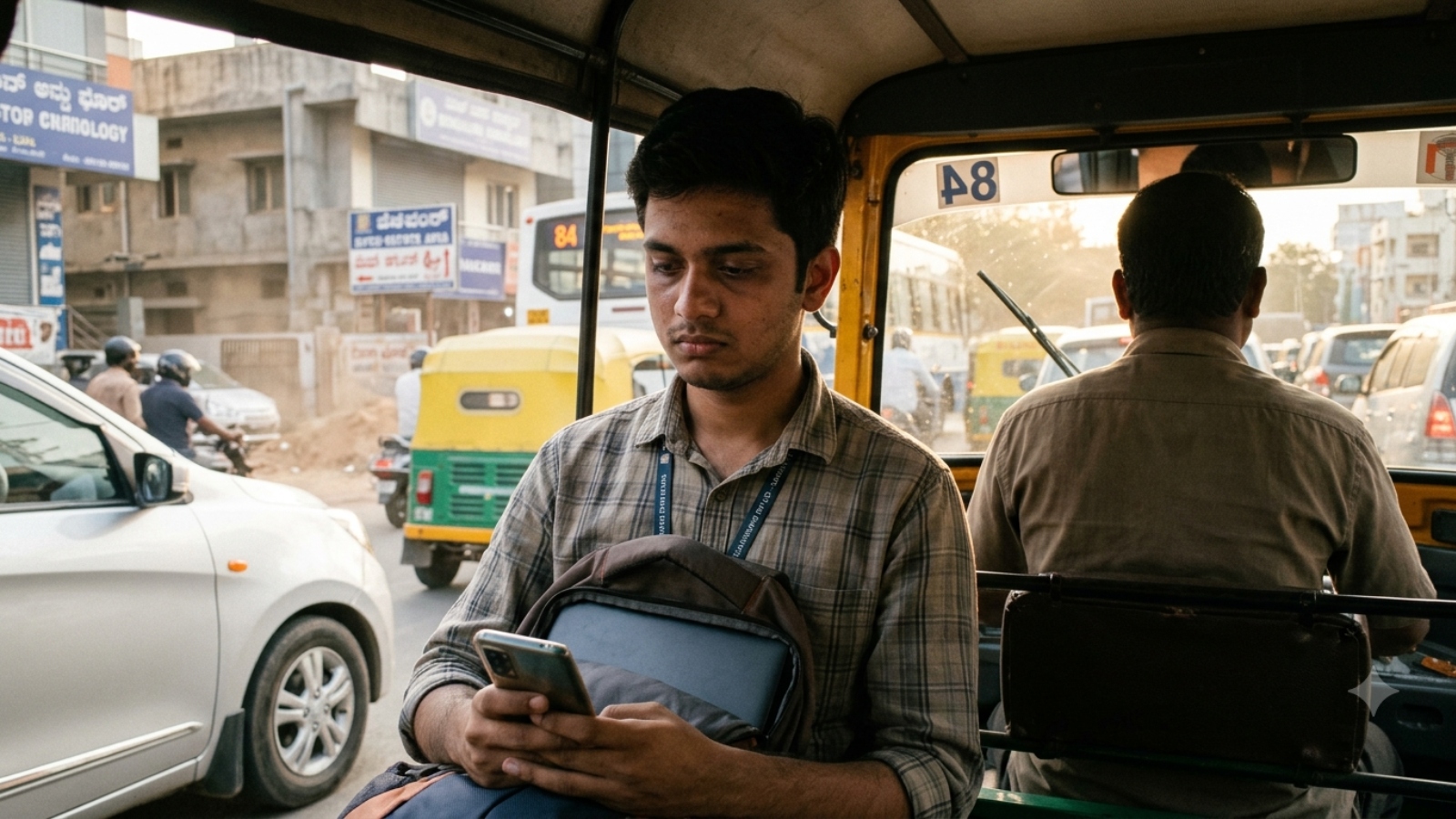
A Bengaluru CEO's viral post reveals the harsh reality of young professionals spending a massive chunk of their entry-level salaries just on daily commutes.
- A fresher reported spending ₹350 daily on commuting to an HSR office.
- Monthly commuting costs can reach up to ₹8,000 for entry-level employees.
- There is a growing risk of talent migration to more affordable cities.
A recent LinkedIn post by Bengaluru-based CEO Sanket Sheth has ignited a fierce debate regarding urban affordability and the economic struggles of the Gen-Z workforce. Sheth shared a sobering account of a young employee whose first professional paycheck is being significantly eroded by the sheer cost of getting to work.
The employee in question resided near Lalbagh and worked in HSR Layout. To avoid the city's notorious traffic and safety concerns associated with two-wheelers, the employee relied on public transport and auto-rickshaws. This resulted in a grueling two-hour commute each way and a daily expenditure of approximately ₹350. For a fresher, this translates to a monthly drain of ₹7,000 to ₹8,000—a staggering amount for someone just starting their career.
Why This Matters
BozokMedia analysis shows that this is not merely an individual struggle but a systemic issue that threatens the long-term stability of India's tech capital. When the cost of 'opportunity' becomes too high, the very talent that fuels the city's innovation begins to look elsewhere. This economic friction can lead to a brain drain toward Tier-2 cities or a widespread demand for permanent remote work models.
"If Bangalore wants to remain India’s city of opportunity, getting to that opportunity must remain affordable." — Sanket Sheth
Sheth argued that a 22-year-old's first salary should provide a sense of liberation and the ability to save, rather than being a tool to simply pay for transportation. He warned that while the city might maintain its high valuations and corporate offices, it risks losing its 'soul'—the ambitious young people who provide its energy and ideas.
Historical Background
Over the last two decades, Bengaluru has transitioned from a quiet pensioner's paradise to a global technology powerhouse. However, this rapid metamorphosis has outpaced the development of its infrastructure, leading to the current crisis of congestion, high real estate costs, and inadequate last-mile connectivity.
| Expense Category | Daily Estimate | Monthly Estimate (22 Days) |
|---|---|---|
| Commute (Public + Auto) | ₹350 | ₹7,700 |
| Avg. Entry Level Salary | - | ₹25,000 - ₹35,000 |
Frequently Asked Questions
1. How does this affect the local economy?
High commuting costs reduce the disposable income of the youth, which in turn affects local consumption and can lead to talent leaving the city.
2. What can companies do to help?
Companies can implement hybrid work models, provide transport allowances, or offer shuttle services to mitigate these costs.