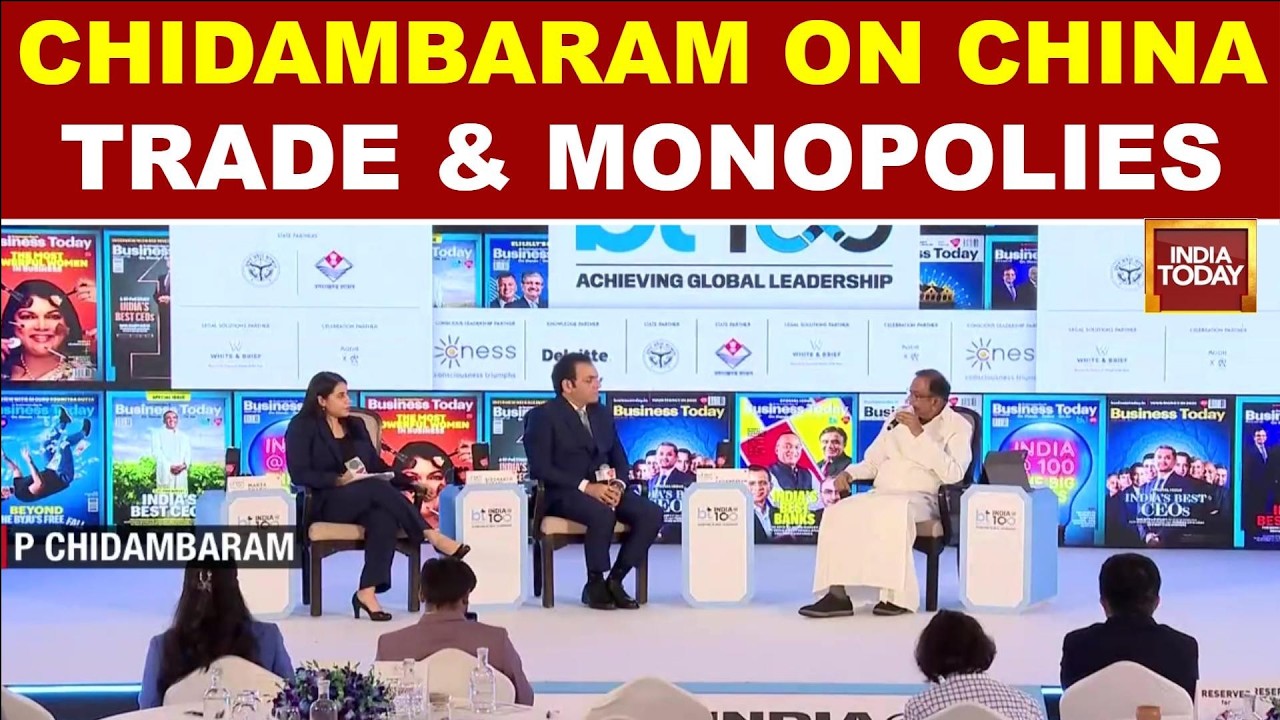
Former Finance Minister P. Chidambaram has slammed the current economic trajectory, labeling it a 'default model' and questioning the effectiveness of major manufacturing schemes.
- P. Chidambaram labeled the current economic approach as a 'default model'.
- Manufacturing contribution to GDP remains stagnant at 13.5% to 14%.
- Claimed a lack of economic expertise in the current government compared to Dr. Manmohan Singh.
- Questioned the success of 'Make in India' and 'Atmanirbharta' initiatives.
In a scathing assessment of India's fiscal landscape, former Union Finance Minister and Rajya Sabha MP P. Chidambaram has raised serious concerns regarding the nation's economic direction. Speaking in an exclusive interview with Business Today, Chidambaram argued that the current economic model is essentially a 'default model' that fails to address the critical needs of growth and large-scale employment generation.
A central theme of his critique was the shrinking landscape of competition within the Indian market. He suggested that the rise of monopolies and a restrictive regulatory environment—which he termed as a "rule and regulation raj"—is stifling the entrepreneurial spirit essential for a dynamic economy.
Why This Matters
BozokMedia analysis shows that for India to transition into a global manufacturing powerhouse, it must overcome the structural stagnation in its industrial sector. If the manufacturing component of the GDP remains stuck in the 13-14% range, the country may struggle to absorb its massive labor force, potentially leading to social and economic instability.
"The current economic model is a default model that falls short on providing sustainable growth and jobs."
Chidambaram also took aim at the government's core industrial policies. He expressed skepticism regarding the impact of 'Make in India', 'Atmanirbharta' (Self-reliance), and the Production Linked Incentive (PLI) schemes. Despite significant fanfare, he noted that manufacturing as a percentage of GDP has not seen the breakthrough required to transform the economy.
Furthermore, the veteran leader highlighted a perceived deficit in economic leadership. He underscored that the current administration lacks the specialized economic expertise found in previous eras, specifically comparing the current state of affairs to the tenure of Dr. Manmohan Singh.
His critique extended to international trade, where he questioned the strategic value of foreign trade agreements signed with minor trading partners, suggesting they may not be serving India's long-term strategic and economic interests in the global arena.
Historical Background
Historically, India's economic journey has been defined by the transition from a closed economy to a liberalized one in 1991. While the services sector has exploded in growth, the manufacturing sector has faced persistent challenges in scaling up to match the industrial output of East Asian economies.
Frequently Asked Questions
1. What is Chidambaram's main criticism of the manufacturing sector?
He argues that despite schemes like PLI and Make in India, manufacturing remains stagnant at 13.5-14% of the GDP.
2. How does he view the current government's economic expertise?
He claims there is no one in the current government who possesses the economic expertise comparable to Dr. Manmohan Singh.

