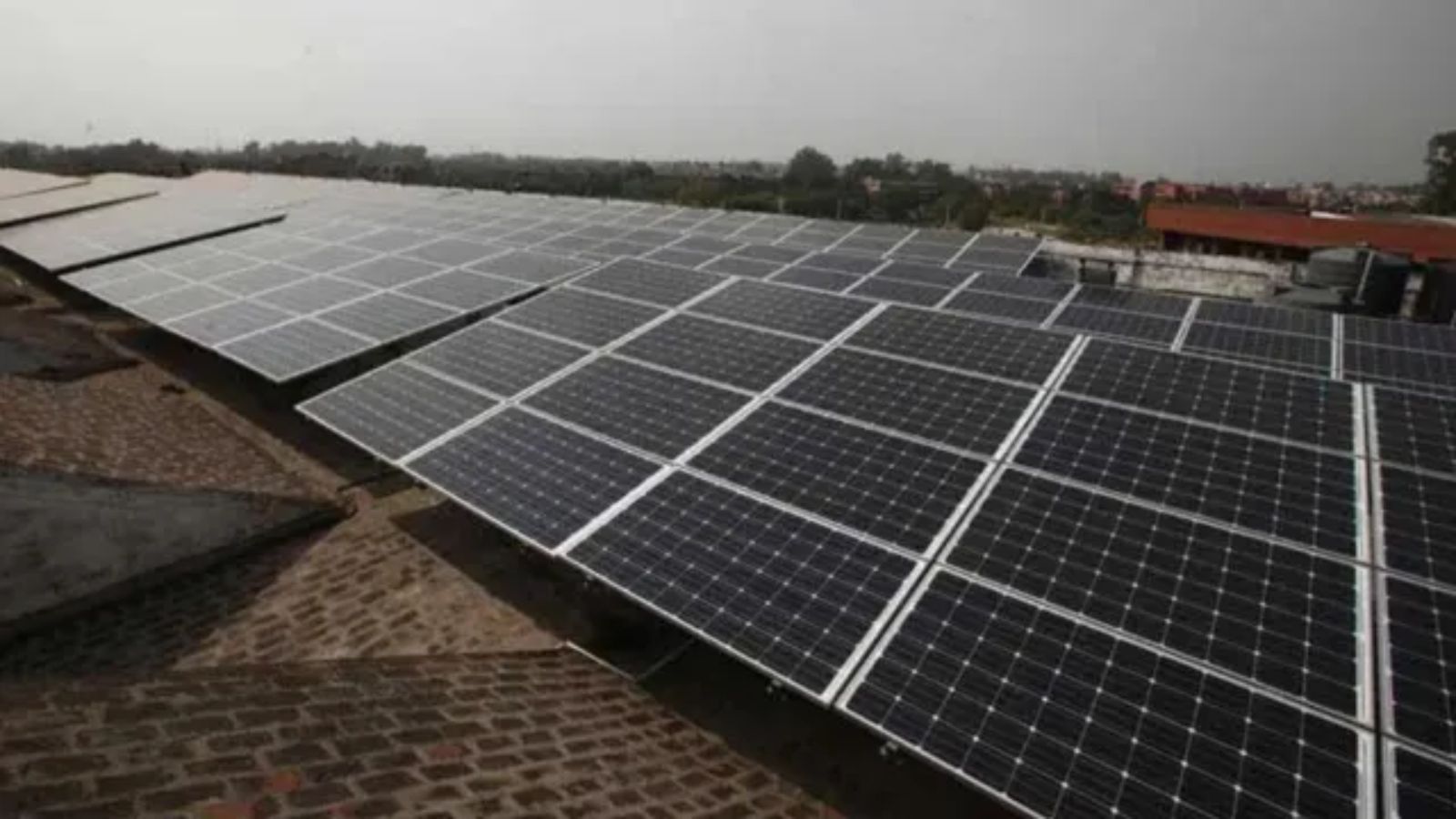
MNRE Secretary Santosh Kumar Sarangi revealed that high-tariff hybrid and standard 'vanilla' solar projects are facing difficulties in securing buyers among DISCOMs. Approximately 42 GW of renewable capacity currently lacks Power Purchase Agreements (PPAs).
- High-tariff hybrid and 'vanilla' solar projects are struggling to find buyers among distribution companies (DISCOMs).
- Around 42 GW of renewable energy capacity is currently awaiting Power Purchase Agreements (PPAs).
- The government aims to add 30 GW of polysilicon manufacturing capacity by 2030.
- The sector is shifting focus toward sodium-ion and vanadium flow batteries as alternatives to lithium-ion.
Speaking at the BloombergNEF Summit in New Delhi, Santosh Kumar Sarangi, Secretary of the Ministry of New and Renewable Energy (MNRE), highlighted a significant bottleneck in India's renewable energy expansion. He noted that hybrid renewable energy projects with high tariffs and 'vanilla' solar projects—standard photovoltaic projects without integrated storage—are finding it increasingly difficult to secure buyers from power distribution companies (DISCOMs).
A critical concern raised was the massive quantum of renewable capacity currently sitting without Power Purchase Agreements (PPAs). Sarangi estimated that approximately 42 gigawatts (GW) of capacity is currently in limbo. To address this, Renewable Energy Implementing Agencies (REIAs) have been tasked with exploring procurement facilitation methods to ensure this capacity is integrated into the grid.
Why This Matters
BozokMedia analysis shows that the mismatch between high-tariff renewable projects and the budget-conscious procurement needs of DISCOMs could lead to a significant slowdown in capacity realization. Without stable PPAs, the financial viability of renewable developers remains under constant threat.
Developers are increasingly adding Battery Energy Storage Systems (BESS) to vanilla solar projects to make them more palatable to DISCOMs.
To mitigate risks for developers, the Central Electricity Regulatory Commission (CERC) introduced a regulation in July 2026. This regulation provides an 'exit option,' allowing developers to exit projects without forfeiting their bank guarantees used for connectivity. Sarangi suggested that if procurement issues persist, developers might exercise this exit option, or REIAs may eventually be forced to cancel certain tenders.
On the manufacturing front, the government is pushing for self-reliance. India currently relies entirely on imports for polysilicon, a vital raw material for solar PV modules. To counter this, the ministry plans to establish 30 GW of polysilicon manufacturing capacity by 2030.
The energy storage landscape is also evolving. Moving beyond traditional lithium-ion (LFP) batteries, the sector is placing heavy bets on sodium-ion and vanadium flow batteries. Notably, NTPC Green Energy Limited has placed a 100 MW order for vanadium flow batteries. Sarangi anticipates that these technologies will become cost-competitive within the next two to three years, enabling more reliable and firm power supply.
Frequently Asked Questions
1. What is the problem with vanilla solar projects?
Answer: Their standard structure without storage makes them less flexible for DISCOMs, and high discovered tariffs make them less attractive compared to other energy sources.
2. How is India planning to reduce solar component imports?
Answer: The government aims to build 30 GW of domestic polysilicon manufacturing capacity by 2030 to reduce dependence on foreign supply chains.

