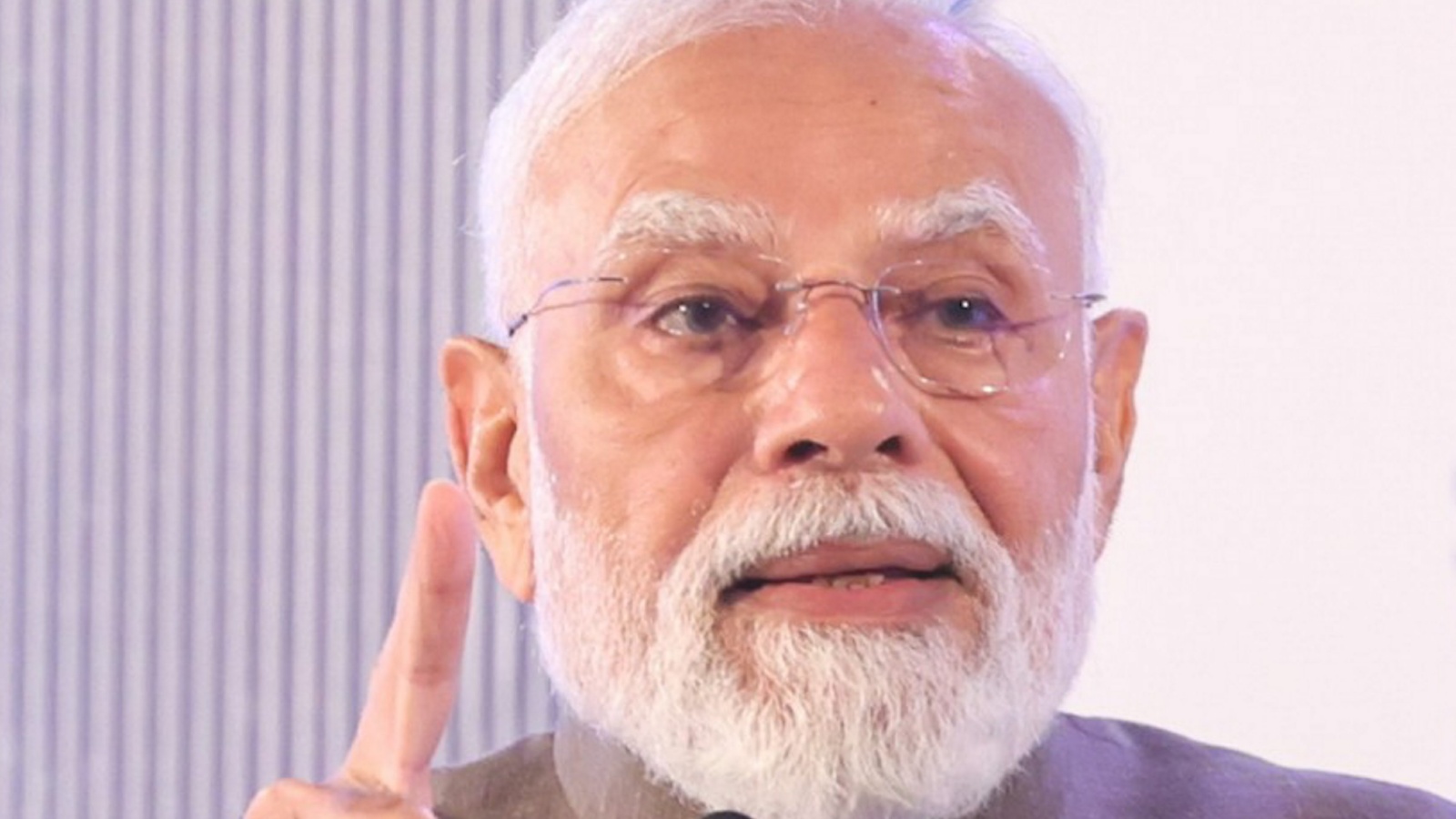
At the Economic Times World Leaders Forum 2026, PM Narendra Modi highlighted India's political stability and reform-driven mindset as key drivers for global economic hope.
- India is viewed as a global 'bright spot' of growth and hope.
- Governance is shifting from 'prohibited unless permitted' to 'permitted unless prohibited'.
- The 'Sapta Dhara' framework outlines the roadmap for a developed India.
Speaking at the prestigious Economic Times World Leaders Forum 2026 in New Delhi, Prime Minister Narendra Modi emphasized that India’s political stability and policy continuity make it a beacon of hope for the global economy. In an era marked by the weaponization of resources and rising geopolitical mistrust, the PM asserted that India stands out as a reliable partner for global growth.
The Prime Minister detailed a fundamental shift in India's regulatory philosophy. He noted that the government is moving away from the restrictive 'prohibited unless permitted' mindset toward a more liberal 'permitted unless prohibited' approach. Through initiatives like the Jan Vishwas Act and the decriminalization of obsolete laws, the administration aims to reduce the compliance burden on both citizens and enterprises.
Why This Matters
BozokMedia analysis shows that this paradigm shift is designed to dismantle the remnants of the 'License Raj.' By transitioning from controlling enterprises to enabling them, India is positioning itself to attract massive capital inflows and foster a culture of high-speed entrepreneurial ambition.
India is moving from a philosophy of suspicion to a philosophy of trust in its relationship with enterprises.
Highlighting the vision for a 'Viksit Bharat' (Developed India), PM Modi reiterated his 'Sapta Dhara' framework. This strategic roadmap focuses on seven critical pillars: manufacturing, agro-food production, technology and innovation, logistics, defense, green and blue economies, and soft power. These sectors are intended to provide the structural momentum required for long-term economic dominance.
The Prime Minister also took a sharp swipe at the past, contrasting today's growth-oriented environment with the old 'Production Linked Punishment' (PLP) model, where exceeding production limits could lead to penalties. He emphasized that the current administration's focus is on 'Ease of Living' and 'Ease of Doing Business,' ensuring that the 'Reform Express' continues to move with speed and determination.
Frequently Asked Questions
1. What is the 'Sapta Dhara' framework?
It is a seven-pillar strategy including manufacturing, tech, defense, and green economy to achieve a developed India.
2. How has the regulatory approach changed in India?
It has shifted from a restrictive, control-based model to an enabling, trust-based model focused on ease of doing business.


