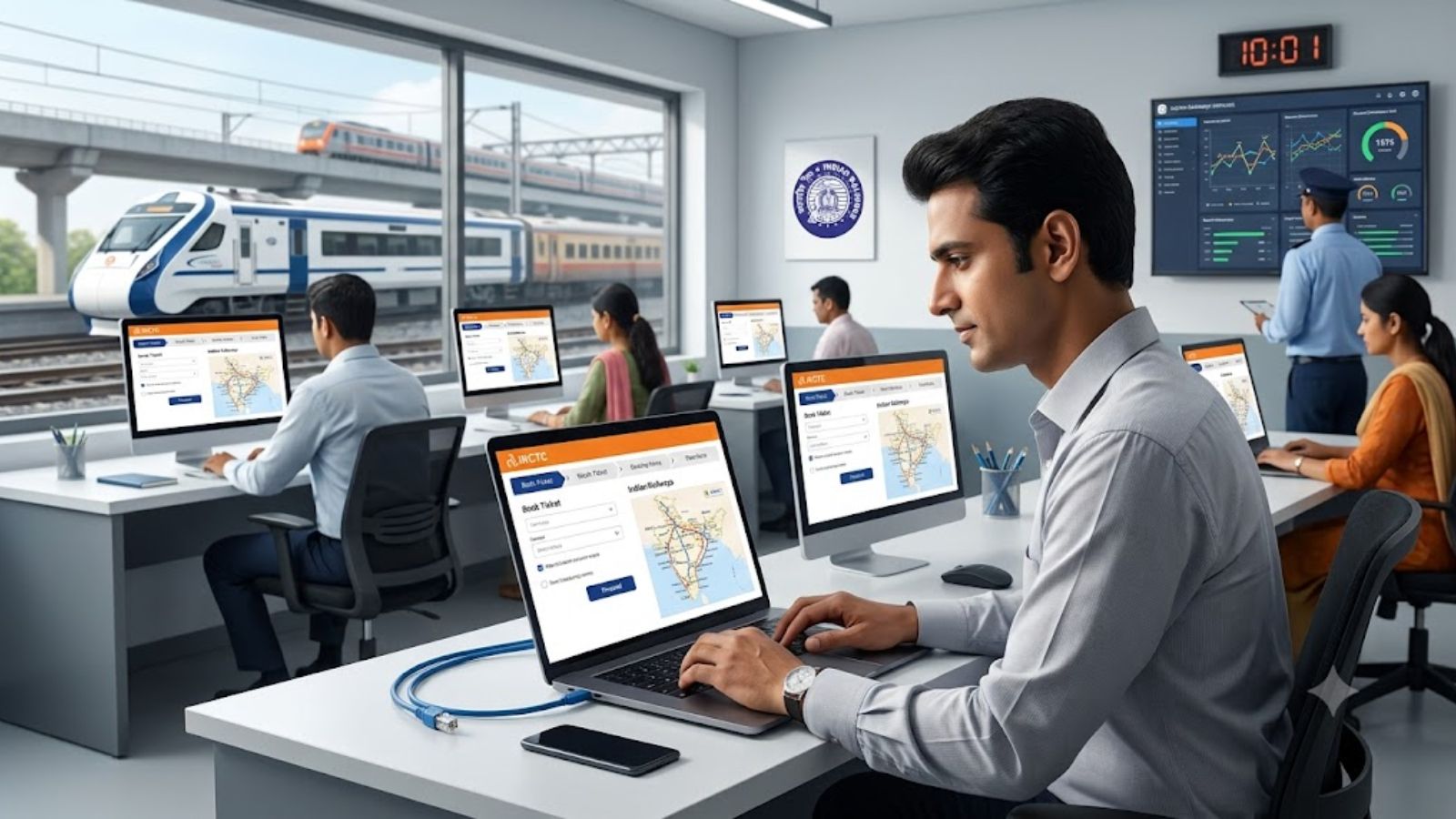
IRCTC is set to undergo a massive technological overhaul of its NGET system to handle massive traffic during Tatkal and ARP hours. With a ₹150 crore investment, the system aims to process over 1 lakh tickets per minute.
- IRCTC is upgrading its Next Generation e-Ticketing (NGET) infrastructure.
- The system capacity is expected to jump from 37,000 to over 1,00,000 tickets per minute.
- An investment of approximately ₹150 crores has been allocated for this modernization.
- An 'active-active' disaster recovery system will ensure near-zero downtime.
In a significant move to enhance passenger experience, the Indian Railway Catering and Tourism Corporation (IRCTC) has announced a comprehensive upgrade of its online ticket booking system. The primary objective is to mitigate website disruptions during high-traffic periods, such as the 8 AM Advance Reservation Period (ARP) and the critical Tatkal booking windows at 10 AM and 11 AM.
The scale of online transactions in India is staggering. Approximately 89% of all reserved train tickets are now booked via digital platforms. Between June 2025 and June 2026, passengers booked a massive 65.08 crore reserved tickets through the PRS, with 57.90 crore of those being online transactions. Managing this surge requires a robust and scalable digital infrastructure.
Modernizing the NGET Platform
IRCTC is focusing on two major pillars of improvement. The first is the NGET (Next Generation e-Ticketing) infrastructure refresh. This involves a massive overhaul of hardware, including servers, storage, and networking, alongside software enhancements. Currently, the system handles around 37,000 tickets per minute; the upgrade aims to push this capacity beyond 1,00,000 tickets per minute. This modernization drive involves a capital infusion of roughly INR 150 crores.
Upgrading the capacity to 1 lakh tickets per minute is a decisive step toward stabilizing India's massive railway digital ecosystem.
Why This Matters
BozokMedia analysis shows that even a two-minute outage during the 'golden hour' of Tatkal booking can lead to massive passenger frustration and potential revenue loss. To combat this, IRCTC is implementing an 'active-active' disaster recovery system. This ensures that if one system faces an outage, a secondary system immediately takes over, maintaining seamless service continuity.
Furthermore, the recently launched beta website has already introduced a cleaner User Interface (UI). By removing unnecessary CAPTCHAs, pop-ups, and advertisements, IRCTC is streamlining the checkout process and allowing users to save passenger details for faster repeat bookings.
Combating Unauthorised Agents and Bots
To ensure fair access for genuine passengers, IRCTC is tightening its grip on unauthorized agents and automated bots. By employing Akamai for bot mitigation and Content Delivery Network (CDN) services, the platform can better manage traffic spikes. Additionally, the time limit for non-usage on the website by agents has been increased from 15 to 30 minutes to prevent system clogging.
Frequently Asked Questions
1. What is the NGET system?
NGET stands for Next Generation e-Ticketing, which is the core digital platform used by IRCTC for online bookings.
2. How will the new system help Tatkal travelers?
By increasing server capacity and implementing disaster recovery, the website will be less likely to crash during the intense 10 AM and 11 AM booking windows.

