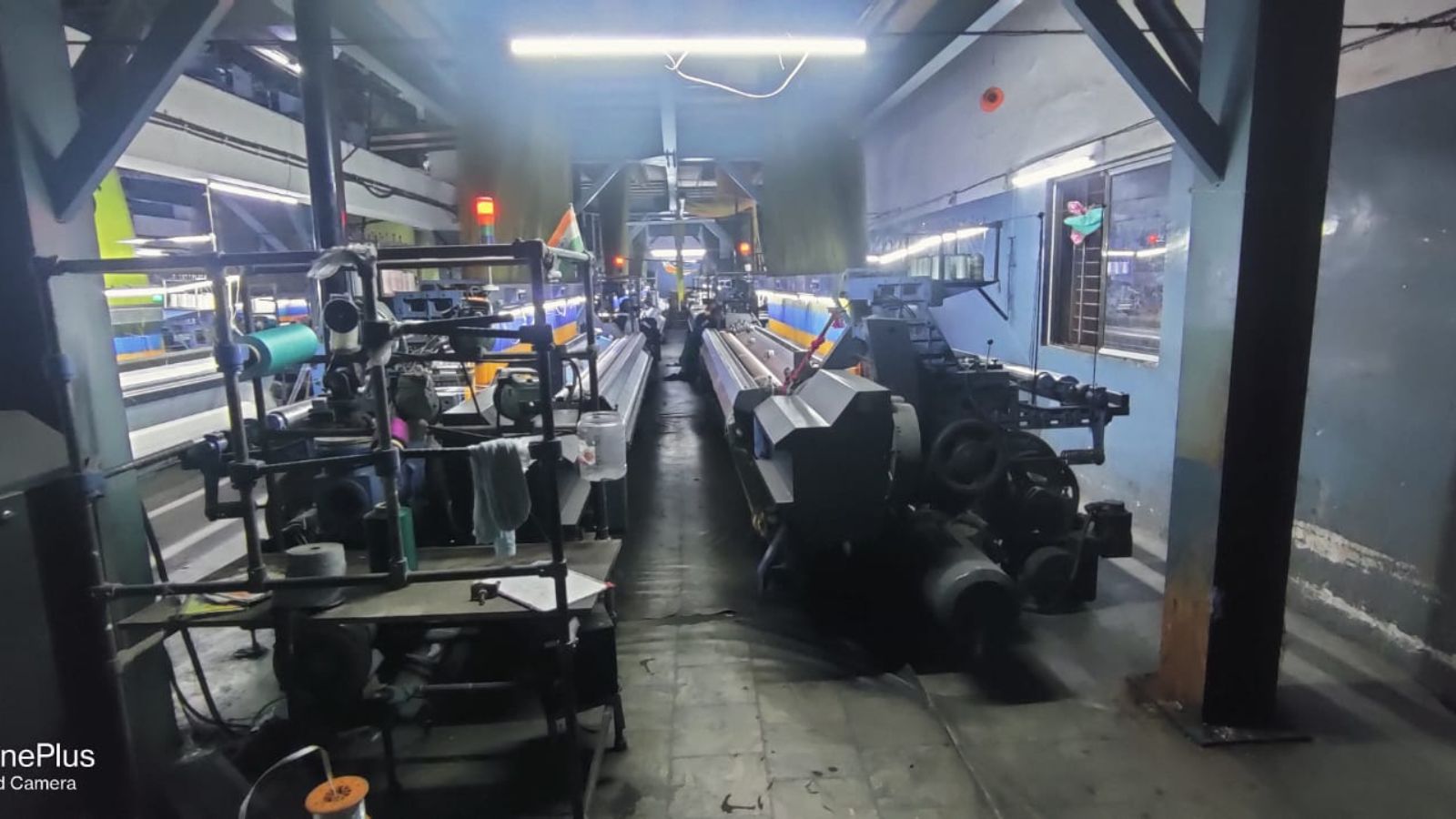
Driven by skyrocketing polyester yarn prices caused by the Iran-US-Israel conflict, over 800 weaving factories in Surat's Unn area will now operate only five days a week.
- Global geopolitical tensions have spiked crude oil and raw material prices.
- Over 800 weaving factories and 30,000 powerlooms in Surat's Unn area are affected.
- Factories will remain closed every Tuesday and Wednesday to mitigate losses.
- The price of polyester yarn has surged from ₹112/kg to ₹140/kg due to oil volatility.
Surat, Gujarat: The ripple effects of international warfare are hitting the heart of India's textile manufacturing. The ongoing conflict involving Iran, the US, and Israel has severely disrupted crude oil supply chains, leading to a massive spike in the cost of petroleum-based derivatives. Consequently, the weaving hub in Surat's Unn Industrial Estate has announced a drastic measure: factories will now remain shut for two days every week.
Stakeholders from the Unn area, which houses over 800 weaving factories and approximately 30,000 powerloom machines, decided to implement a weekly shutdown on Tuesday and Wednesday. This decision comes as weavers struggle to absorb the rising costs of production while buyers refuse to pay higher rates for grey cloth. Zahid Kapadia, a leader of the Unn Powerloom Association, noted that the financial strain has become unsustainable for local manufacturers.
Why This Matters
BozokMedia analysis shows that the textile industry in South Gujarat is hyper-sensitive to global energy markets. The manufacturing of polyester yarn relies heavily on Purified Terephthalic Acid (PTA) and Monoethylene Glycol (MEG), both of which are by-products of crude oil. When crude oil prices jumped from $70 per barrel in February 2026 to approximately $95 per barrel due to international instability, the cost of polyester yarn jumped from ₹112 per kg to ₹140 per kg.
The direct correlation between Middle Eastern geopolitical stability and Surat's textile output highlights the vulnerability of local industries to global shocks.
The Unn area is comprised of eight major industrial estates, including Shalimar Estate, Tasleem Nagar, Raj Industrial Estate, Dhamanwala Industrial Estate, Unn Old Industrial Estate, Meet and Mir Industries, Gujarat Industrial Estate, and Navab Industrial Estate. All these sectors are feeling the pinch of the widening gap between production costs and market selling prices.
Historical Background
Surat has long been the backbone of India's synthetic textile industry. For decades, the city has leveraged its proximity to petrochemical hubs to dominate the polyester market. However, this reliance on oil-derived products makes the entire regional economy a hostage to global oil price fluctuations and geopolitical tensions in oil-producing regions.
The Southern Gujarat Chamber of Commerce and Industry (SGCCI) has been actively lobbying the central government for relief. While the Union Textile Minister previously granted a temporary exemption on customs duties for PTA and MEG, the industry is now calling for an extension as the crisis intensifies.
Frequently Asked Questions
1. Which days will the Surat factories be closed?
Factories in the Unn industrial area will be closed every Tuesday and Wednesday.
2. What is the primary cause of the price hike?
The Iran-US-Israel conflict has disrupted crude oil supplies, driving up the cost of polyester yarn components like PTA and MEG.

