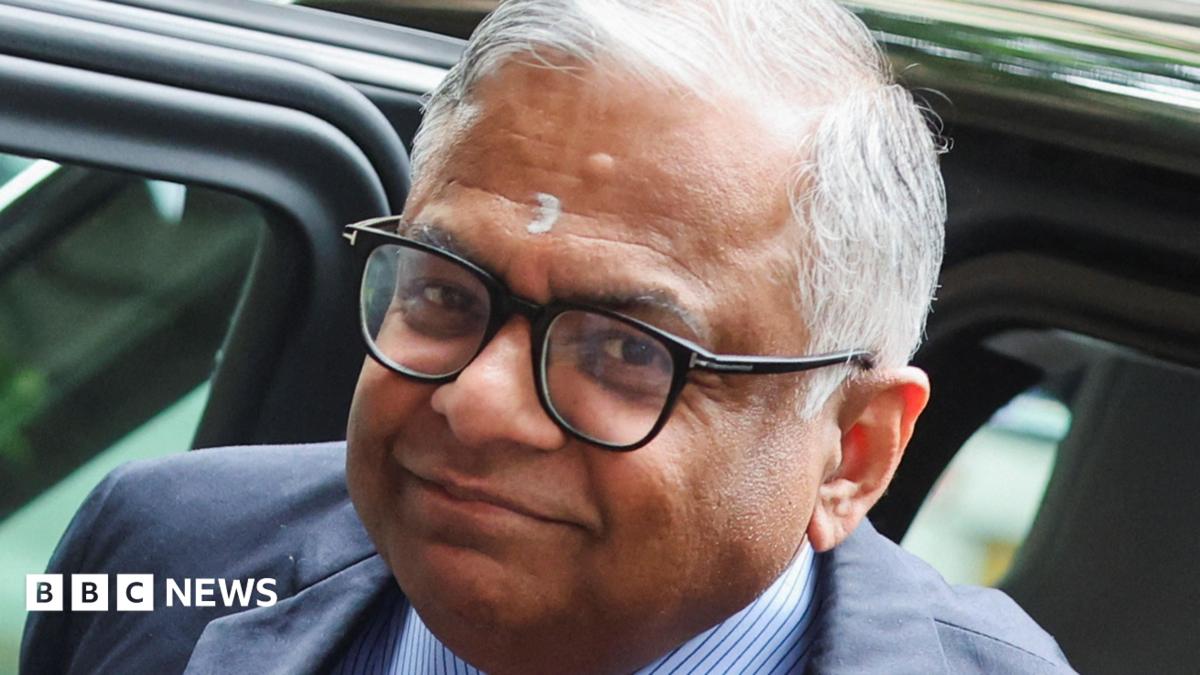
Following N Chandrasekaran's resignation, the search for a new leader for the $300bn Tata empire begins. The successor must navigate deep rifts with Tata Trusts and massive capital risks.
- N Chandrasekaran has resigned amidst friction with Tata Trusts.
- The vacancy poses a significant leadership crisis for the $300bn Tata conglomerate.
- New ventures like semiconductors and aviation are currently bleeding cash.
- The role requires balancing aggressive expansion with fiscal stability.
The sudden resignation of N Chandrasekaran, Chairman of Tata Sons, has sent shockwaves through corporate India. As the head of one of the world's most respected conglomerates—spanning from Jaguar Land Rover to Air India—his departure leaves a massive leadership vacuum at a critical juncture. The search for his successor is not merely a recruitment exercise; it is a high-stakes strategic mission.
Reports indicate that the resignation stemmed from a deadlock with Tata Trusts, the philanthropic entity that holds controlling stakes in the holding company. The friction reportedly centered on two pivotal issues: the potential public listing of Tata Sons and the massive capital allocation required for the group's new, loss-making ventures in semiconductors, e-commerce, and aviation.
Why This Matters
BozokMedia analysis shows that the Tata Group is currently in the midst of its most aggressive capital investment cycle in decades. With tens of billions of dollars being poured into semiconductor fabrication plants and EV battery manufacturing, the group's risk profile has shifted significantly. The new chairman will need to manage these high-burn businesses while ensuring they don't destabilize the group's core financial pillars.
The new leader must possess the rare ability to manage complex regulatory relationships while navigating the internal politics of the Trusts.
A significant concern for analysts is the changing role of TCS (Tata Consultancy Services). Historically the group's 'cash cow,' contributing nearly 85% of cash flows, TCS is facing headwinds due to the rapid evolution of Artificial Intelligence (AI). As the cash flow from legacy businesses becomes less predictable, the pressure on new, unlisted businesses to reach break-even points has intensified.
Historical Background
The relationship between the controlling shareholders (the Trusts) and the operating company (Tata Sons) has historically been the bedrock of the group's success. During the eras of JRD Tata and Ratan Tata, this relationship was largely frictionless. However, the friction observed during the Cyrus Mistry era and most recently with Chandrasekaran highlights a recurring structural challenge: ensuring alignment between the vision of the Trusts and the execution of the Sons.
| Feature | Legacy Businesses (e.g., TCS, Tata Steel) | New Ventures (e.g., Semi-conductors, EV) | |
|---|---|---|---|
| Cash Flow Status | Strong/Stable (though challenged by AI) | High Burn/Loss-making | |
| Strategic Focus | Optimization & Efficiency | Aggressive Expansion & Scale | |
| Risk Level | Low to Moderate | Very High |
Frequently Asked Questions
1. What caused the rift between Chandrasekaran and Tata Trusts?
The disagreement reportedly involved the strategic direction of capital allocation for new businesses and the potential public listing of Tata Sons.
2. Will this resignation affect Tata's listed companies?
While Tata Sons is unlisted, decisions made at the holding company level directly impact the strategic direction and governance perception of all listed Tata entities.