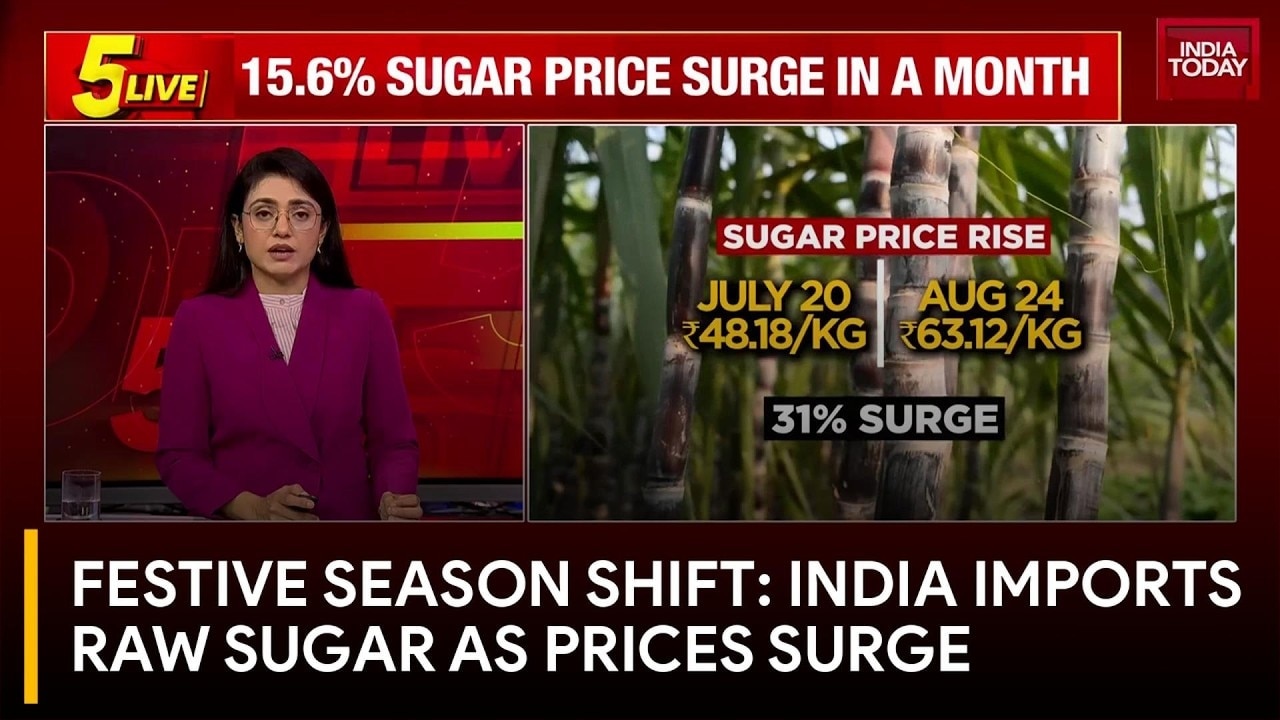
Sugar prices in India have jumped from ₹44/kg in May to nearly ₹65/kg, prompting the government to enforce a 15‑day stock limit and duty‑free imports, while opposition parties question the policy. The move aims to curb hoarding ahead of the festive season.
- Sugar prices surged from ₹44 to ₹65 per kg
- Government imposed a 15‑day stock cap for bulk buyers
- 10 lakh tonnes of raw sugar to be imported duty‑free, exports restricted
India’s sugar market has seen a steep climb, with prices soaring from ₹44 per kilogram in May to almost ₹65 per kilogram, igniting a political tussle just before the festive rush. Union Minister Pralhad Joshi attributed the surge to global weather damage, El Niño and the red‑rot disease, yet highlighted that sugarcane output is projected to exceed 5,000 lakh tonnes in FY 2025‑26, suggesting a domestic surplus.
Government Measures and Import Policy
To stem hoarding and speculative buying, the centre announced a 15‑day stock limit for bulk consumers who purchase more than 10 metric tonnes monthly, effective from September until 30 November. The restriction covers sweet shops, soft‑drink manufacturers, food processors and confectioneries. Simultaneously, 10 lakh tonnes of raw sugar will be imported duty‑free, while exports remain curtailed.
Political Backlash
Opposition parties, notably the Congress and Aam Aadmi Party, slammed the government for alleged mis‑management of sugar stocks and the diversion of sugarcane to ethanol production. They argue that these policies burden consumers and lack transparency.
Why This Matters
BozokMedia analysis shows that prolonged high sugar prices can erode disposable income of lower‑income households, trigger inflationary pressures on food items, and influence political narratives ahead of the upcoming elections.
"If stock caps are not strictly enforced, we could see further price spikes," said agricultural economist Dr. Ravi Kumar.
Frequently Asked Questions
Q1: Will the duty‑free imported raw sugar match domestic market prices?
A: The absence of import duty keeps the base cost lower, but logistics and processing expenses may narrow the price gap.
Q2: How will the stock limit affect small retailers?
A: Retailers purchasing under 10 tonnes are exempt, but large wholesalers must adjust procurement strategies to stay compliant.