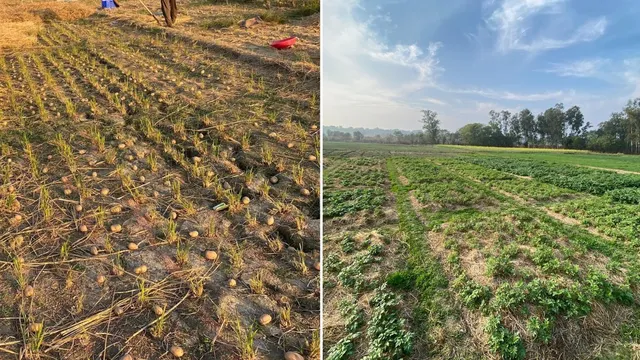
Scientists in Una, Himachal Pradesh, have successfully developed a method to grow organic potatoes directly within rice stubble, offering a solution to the massive stubble-burning crisis in North India.
- Rice stubble can be used to grow potatoes instead of being burned.
- The method requires zero plowing, minimal irrigation, and low labor costs.
- Stubble decomposes naturally, acting as organic manure for the soil.
- This technique holds immense potential for Punjab and Haryana farmers.
The choking smog that plagues North India every year due to stubble burning may soon find a profitable solution. Following three years of intensive research in the Una district of Himachal Pradesh, scientists have successfully demonstrated that potatoes can be grown directly within the rice stubble left after the paddy harvest.
In this innovative approach, potato seeds are placed on the moist ground immediately after the paddy harvest without any plowing. The seeds are then covered with approximately nine inches of rice stubble. As the season progresses, the stubble naturally decomposes, enriching the soil with organic carbon and serving as a continuous source of natural fertilizer.
Why This Matters
BozokMedia analysis shows that if this technique is scaled across the agrarian belts of Punjab and Haryana, it could drastically reduce air pollution levels while simultaneously boosting farmer income. By eliminating the need for heavy machinery and excessive water, the cost of production drops significantly.
Converting waste stubble into a protective mulch for high-value crops like potatoes is a game-changer for sustainable agriculture.
One of the most striking advantages of this method is the reduction in resource consumption. Unlike traditional potato farming which requires frequent irrigation and weeding, this method requires only three waterings throughout the cycle. The thick layer of stubble acts as a natural mulch, preventing weed growth and eliminating the need for chemical herbicides.
Historical Background
For decades, the post-harvest period in North India has been marked by the hazardous practice of burning crop residue to clear fields quickly. This has led to severe environmental degradation and health crises. The research conducted by agricultural scientists in Himachal Pradesh aims to transition farmers from a 'burn-and-clear' mindset to a 'mulch-and-grow' economic model.
Experts from Chaudhary Sarwan Kumar Himachal Pradesh Krishi Vishvavidyalaya (CSKHPKV), Palampur, are now preparing to conduct workshops to implement this technology on a larger scale. Local farmers in Una, including Suresh Kumari and Ranjit Singh, have already reported successful harvests of varieties like Neelkanth and Pukhraj using this method.
Frequently Asked Questions
1. Does this method require heavy machinery for plowing?
No, one of the primary benefits is that it eliminates the need for plowing the field.
2. How does this help in reducing pollution?
By providing an economic incentive to keep the stubble in the field, it removes the necessity for burning it.