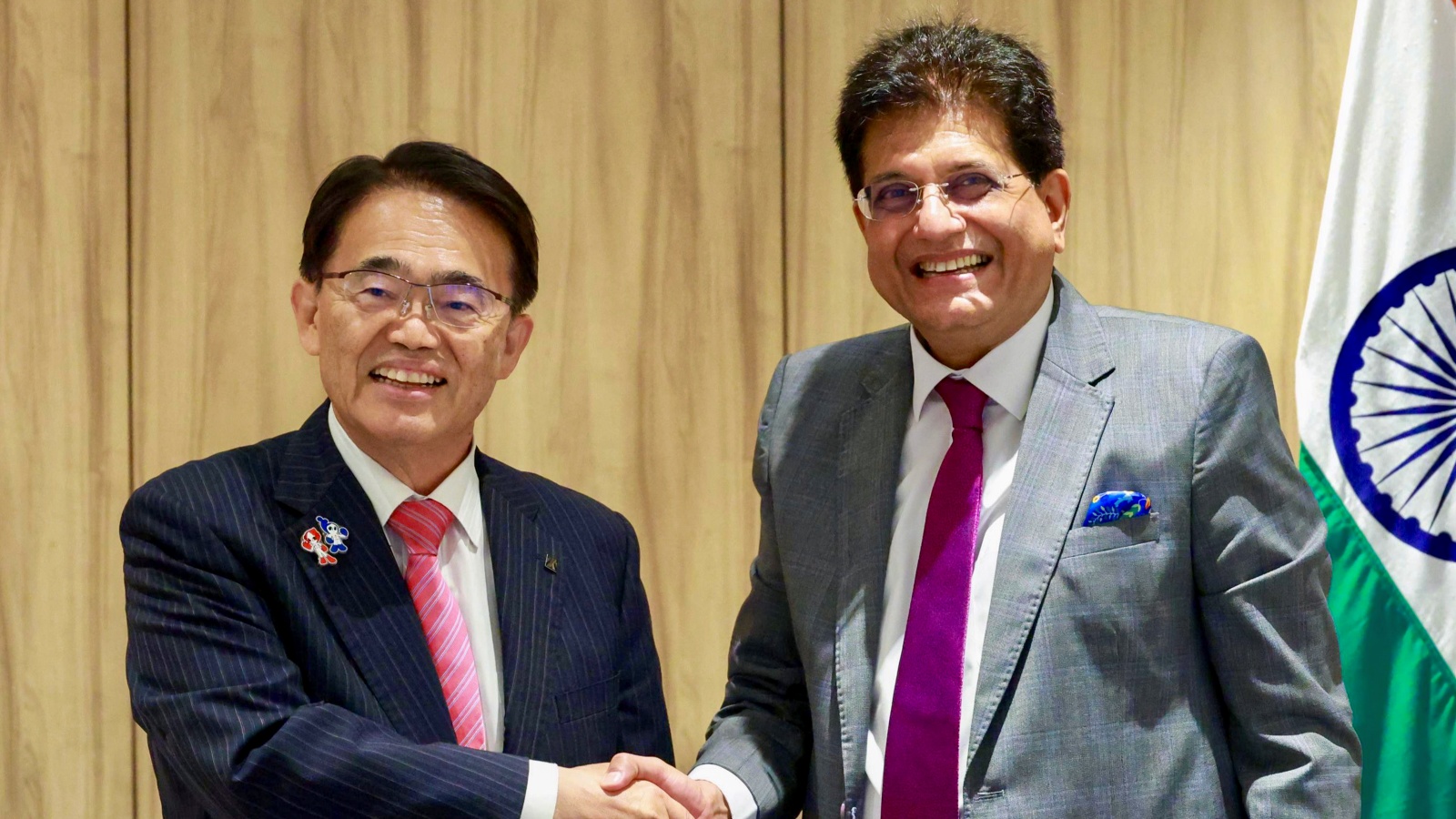
Union Minister Piyush Goyal emphasizes that India must attract investment on its own merit rather than just as a 'China Plus One' alternative. He highlighted the rapid progress of Japanese investments and the government's commitment to easing regulatory hurdles.
- $10 billion of the targeted $70 billion Japanese investment has been achieved in just 10 months.
- India aims to transition into a 'Global Sourcing Partner' for Japanese industries.
- The government is actively working to simplify BIS certification for high-tech sectors like semiconductors.
- Japanese companies plan to train approximately 300,000 Indian youths.
In a significant move to bolster bilateral economic ties, Union Commerce and Industry Minister Piyush Goyal has outlined a strategic vision to deepen the partnership between India and Japan. Following his extensive tour of Tokyo, Nagoya, and Osaka, Goyal expressed optimism that the pace of Japanese investment in India is set to accelerate significantly.
A key highlight of Goyal's vision is shifting the narrative from India being a mere alternative to China to becoming a premier global manufacturing hub. "We have to make India an attractive case on its own merit and not just because it’s China plus one," Goyal stated, emphasizing that India's strength must lie in its intrinsic industrial capabilities and quality.
Why This Matters
BozokMedia analysis shows that India is pivoting from a reactive trade strategy to a proactive industrial integration strategy. By aiming to become a 'global sourcing partner,' India is looking to integrate deeply into the value chains of Japanese giants, ensuring that even if they export globally, the production and job creation remain centered in India.
India must stand on its own feet and become an international player by leveraging its strengths in textiles, automobiles, and aerospace.
Regarding the massive $70 billion investment target announced by Japan, Goyal revealed that $10 billion has already flowed into the country within the last ten months. He noted that while sectors like textiles and automobiles are seeing traction, the government is now laser-focused on high-tech sectors, including semiconductors and aerospace.
Addressing the concerns raised by Japanese firms, Goyal admitted that regulatory hurdles at local and state levels exist. He specifically mentioned the case of Tokyo Electron, a semiconductor major, which faced challenges regarding BIS certification for thousands of components. In response, the Ministry is preparing a new framework to provide exemptions or simplified recognition for high-tech industries to ensure seamless operations.
Frequently Asked Questions
1. How is India addressing the concerns of Japanese investors?
The government is actively working on reforming regulatory frameworks, such as BIS certification, and addressing administrative bottlenecks at the local body level.
2. What are the key sectors identified for India-Japan collaboration?
Key sectors include semiconductors, automobiles, textiles, aerospace, defense, and precision engineering.


