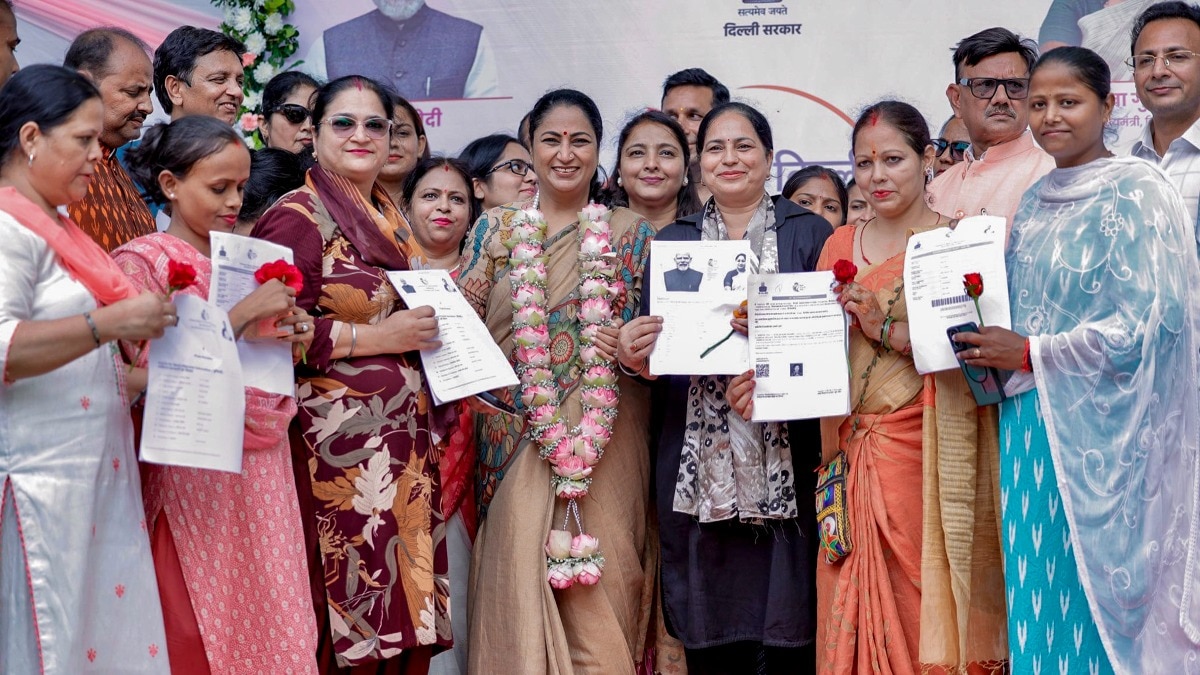
Under the Delhi Lakshmi Yojana, recurring deposits will be locked until July 2029, though the government reserves the right to review the maturity period after two years.
- Recurring deposits under the scheme will be locked until July 31, 2029.
- The Council of Ministers can review and change the maturity period after two years.
- Beneficiaries receive ₹2,500 monthly (₹1,500 in RD and ₹1,000 via CBDC wallet).
- Alternative registration methods are available for women without Aadhaar.
A significant update has emerged regarding the Delhi Lakshmi Yojana, a flagship welfare scheme launched by the Delhi government. According to official documents, the recurring deposits (RD) accumulated under this scheme will remain locked until July 31, 2029. However, providing a layer of flexibility, the Council of Ministers holds the authority to review and potentially alter the maturity period two years after the scheme's inception.
The timing of the current maturity date is noteworthy, as it coincides with the year of the next Lok Sabha elections. The scheme is designed to provide a monthly financial cushion of ₹2,500 to eligible women. The distribution is bifurcated: ₹1,500 is directed into a recurring deposit account, while ₹1,000 is transferred through a Central Bank Digital Currency (CBDC) wallet linked to the beneficiary's bank account.
Why This Matters
BozokMedia analysis shows that this dual-mode disbursement strategy is a sophisticated attempt to combine long-term savings with immediate digital liquidity. By utilizing CBDC, the government is not only promoting digital financial literacy but also creating a controlled environment for welfare spending.
The integration of CBDC into welfare schemes acts as a powerful tool to prevent the misuse of public funds.
Spending Restrictions on CBDC: To ensure the funds are used for essential purposes, the ₹1,000 transferred via the CBDC wallet comes with a 'negative list.' Beneficiaries are prohibited from using this specific amount to purchase alcoholic beverages, tobacco, narcotic substances, lottery tickets, or engaging in gambling and betting. Conversely, women have the option to opt for the entire ₹2,500 to be deposited into their RD account.
Eligibility and Inclusivity Measures
The Delhi government aims to reach approximately 17 lakh eligible women. To qualify, an applicant must be between 21 and 60 years old and be the eldest female member of her household. Additionally, the family's annual income must not exceed ₹2.5 lakh, and the applicant must be a registered voter in Delhi.
In a move to ensure no woman is left behind, the scheme offers alternative registration paths for those without an Aadhaar card. Applicants can use an Aadhaar enrolment slip alongside other identity proofs like a PAN card, ration card, or voter ID. Furthermore, if biometric authentication fails, the system allows for face authentication or Aadhaar-based OTPs to facilitate seamless access.
Frequently Asked Questions
1. Can I choose to save the full amount in my RD?
Yes, beneficiaries have the flexibility to choose to have the entire ₹2,500 deposited into their recurring deposit account every month.
2. Who is excluded from this scheme?
Income-tax payers, GST filers, government employees, and families owning a four-wheeler or consuming more than 2,400 units of electricity annually are ineligible.