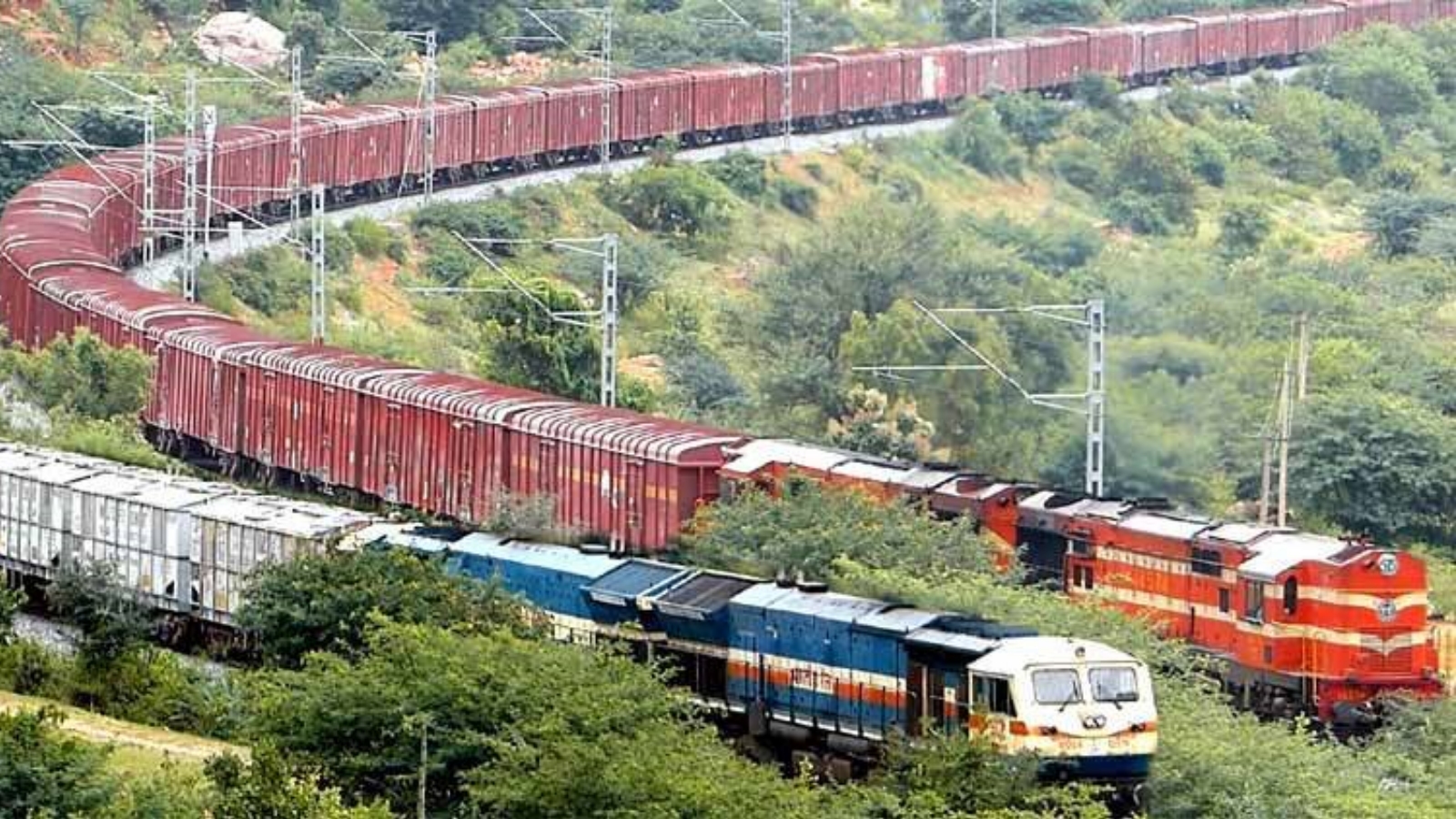
In a landmark decision, Indian Railways is set to construct six new freight lines spanning 647 km through private sector collaboration. The project will utilize the Hybrid Annuity Model (HAM), a strategy previously reserved for the highway sector.
- Indian Railways will build 6 new freight lines in collaboration with private firms.
- The projects will follow the Hybrid Annuity Model (HAM), splitting costs and risks between the government and private builders.
- The total project bid cost is ₹15,976 crore, with a total capital cost of ₹40,866 crore over the concession period.
- Key commodities to be transported include coal, iron ore, bauxite, and food grains.
New Delhi: In a significant move to bolster private investment in the nation's transport infrastructure, the Public Private Partnership Appraisal Committee (PPPAC) under the Ministry of Finance has approved the development of six railway lines spanning 647 km. These lines are designed to strengthen freight corridors across several states.
The most groundbreaking aspect of this initiative is the implementation of the Hybrid Annuity Model (HAM). This model, widely successful in the highways sector, involves the government and private developers sharing both the financial burden and the operational risks. This marks the first time Indian Railways is adopting this specific PPP variant.
Regional Breakdown of Projects
The proposed projects are strategically located in mineral-rich regions. Four projects are slated for Odisha: the Balaram-Putgadia-Tentuloi (Inner Corridor), Budhapank-Tentuloi-Luburi (Outer Corridor), Jajpur-Keonjhar Road-Aradi-Dhamara Port, and the Tikiri Station to Waltair Bauxite Mines line. The remaining two projects include the Manuguru-Ramagundam line in Telangana and the Pakur/Nagarnabi to Godda line in Jharkhand.
Why This Matters
BozokMedia analysis shows that this transition to the HAM model is a calculated effort to overcome historical financial bottlenecks. By bearing the traffic and tariff risks, the Ministry of Railways significantly lowers the entry barrier for private players, making long-term infrastructure investment more predictable and attractive for global and domestic capital.
The integration of the Hybrid Annuity Model into the railway sector signifies a paradigm shift toward de-risking private participation in massive infrastructure projects.
Under the HAM structure, the Ministry of Railways (MoR) will provide 40% of the bid project cost as a grant during the construction phase. The private entity will finance the remaining 60%. Once operational, the Railways will repay the private partner through annuities or installments, plus interest, while retaining full control over train operations and freight revenue.
Historical Background
While the Railways previously utilized the Design, Build, Finance, Operate, and Transfer (DBFOT) model, market feedback necessitated a shift toward HAM to ensure better project viability. Currently, there are 49 other projects worth approximately ₹1.80 lakh crore in the pipeline under the PPP mode, indicating a massive overhaul of the railway's financial and operational strategy.
Frequently Asked Questions
1. What is the main advantage of the HAM model for Railways?
It attracts private capital by sharing risks, specifically where the government absorbs traffic and tariff fluctuations.
2. When is construction expected to start?
The construction for all six proposed projects is slated to commence from April 2028.